GOP Floods Campaigns With $740 Million, Polls Barely Budge: The Global Market Effect
Baca dalam 60 detik
- Partai Republik menggelontorkan lebih dari $740 juta untuk iklan politik sejak Hari Buruh, tetapi polling di sembilan negara bagian kunci nyaris tak bergerak.
- Dominasi dana dari kelompok pro-Trump dan Elon Musk justru memicu pemborosan karena super PAC membayar tarif iklan lebih mahal ketimbang kandidat.
- Alih-alih menyerang, Partai Republik kini terpaksa merogoh kocek dalam-dalam untuk mempertahankan kursi di Texas, Kansas, dan Nebraska yang selama ini aman.
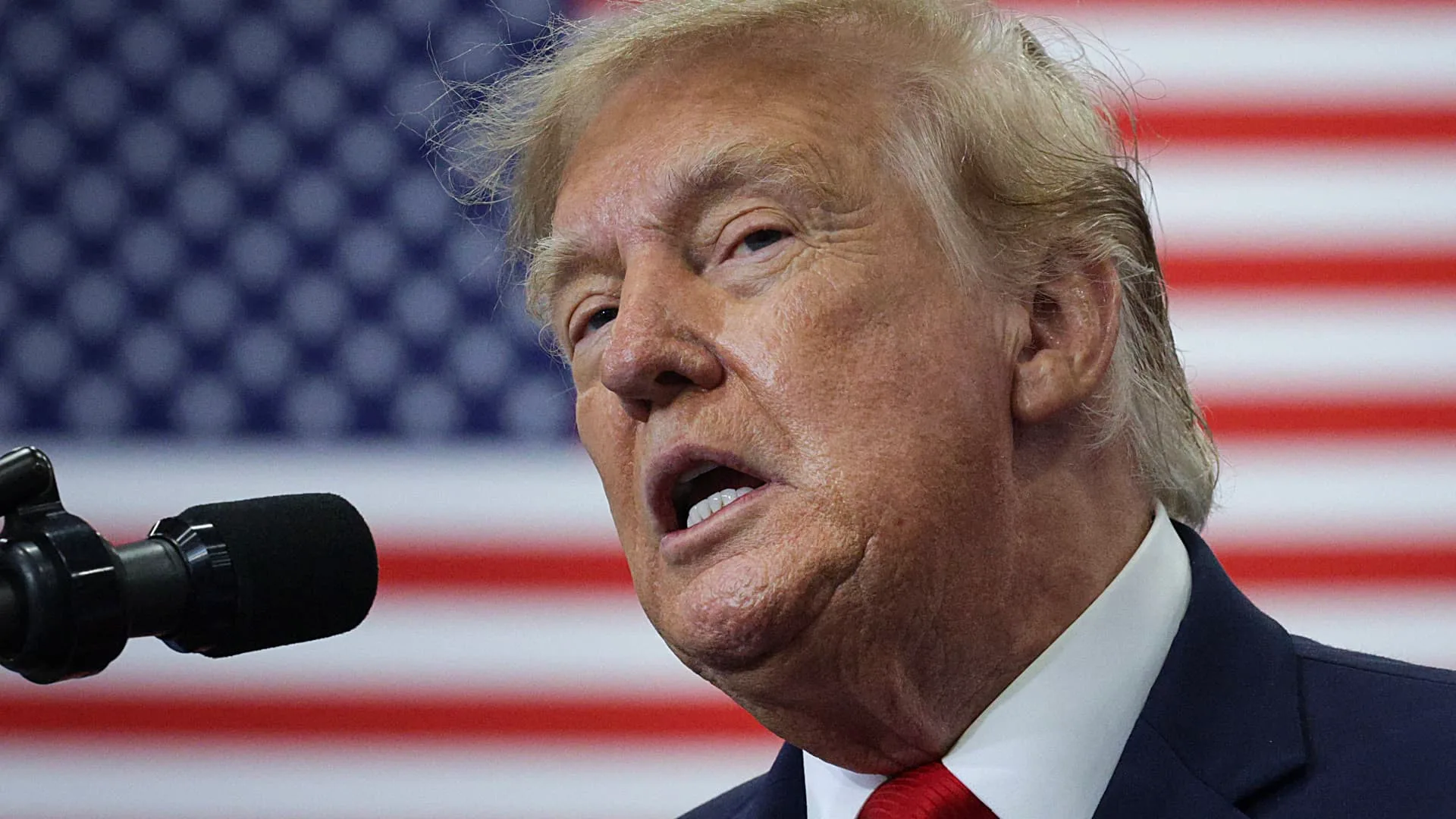
The Republican Party has spent more than $740 million on political advertising in the congressional elections since early September, but the flood of money has yet to redraw the electoral map ahead of the November 3 vote. Instead, the party is boxed in: rather than expanding its base, it is now busy defending territory it has long held.
A CNBC analysis of AdImpact data shows that from Labor Day through October 14, GOP-aligned groups poured fresh money into hundreds of House and Senate contests. About $220 million of that came from organizations affiliated with President Donald Trump. Elon Musk, who had said he would scale back his political involvement, instead added firepower by donating $276 million since July—including $158 million to the Senate Leadership Fund (SLF), a super PAC backing Republican Senate candidates.
Yet according to the FiftyPlusOne polling average, Democrats still lead in nine of the eleven most competitive Senate races—Alaska, Georgia, Iowa, Kansas, Maine, Michigan, Minnesota, New Hampshire, North Carolina, Ohio, and Texas. That position has barely shifted from before the money surge. More worrying for the GOP, the Cook Political Report with Amy Walter projects that Democrats have a chance to take the House, while the Senate remains competitive.
The failure to lift poll numbers is not simply a matter of messages that fail to resonate. There is a structural problem: super PACs—the main vehicles for political spending—do not get the discounted ad rates that the law requires broadcasters to offer candidates in the final 60 days before an election. As a result, the same money buys less reach. In Dallas, the Talarico campaign spent $2.4 million on local broadcast ads and aired about 48 times per viewer. Meanwhile, a Texas PAC backing Paxton shelled out $7.8 million for about 81 airings—more than three times the cost for only about 70% more exposure.
“Money is an amplification tool, not a magic wand. You can buy all the airtime, but if the political climate is blowing hard against you, ad volume won’t change the direction of the wind,” said Neil Newhouse, a partner at the Republican polling firm Public Opinion Strategies.
As voting day approaches, the law of diminishing returns starts to bite. Political advertising experts say undecided voters are already immune to the 21st ad after seeing 20 negative spots on the same day. “Their eyes glaze over,” said Michael Beckel, director of money-in-politics reform at Issue One.
The most visible shift is in how money is allocated. In April, the SLF announced a record $342 million ad program across eight states to defend its majority. Texas, Kansas, and Nebraska were not included. But since September 1, the SLF and its affiliated groups have spent or committed about $180 million in the three states Trump won by double digits in 2024. In North Carolina, the SLF pulled most of a $71 million ad reservation to boost Michael Whatley after Democratic candidate Roy Cooper opened a wide lead. In the House, the Congressional Leadership Fund stopped spending on two vulnerable incumbents and shifted about $10 million to 16 other districts, including a South Texas seat held by Rep. Monica De La Cruz.
For Indonesia, the political turmoil in the United States is more than a spectacle. Uncertainty over the congressional election results could shape the direction of US fiscal and monetary policy, which in turn affects global capital flows, the rupiah exchange rate, and commodity prices. Foreign investors holding emerging-market government bonds tend to hold back until the US political map is clearer. If Republicans lose control of Congress, the infrastructure spending and energy subsidy agenda that has underpinned global demand could stall.
The question now: will this wave of money—whose effectiveness is far from assured—serve as a lesson for political donors around the world, or will it instead trigger a bigger auction of cash in future elections? One thing is clear: democracy is getting more expensive—and the results are not necessarily worth the price.