Neo Gen Football Academy Launches in Bandung, Sergio van Dijk Promises International Pathway for Young Talent
Baca dalam 60 detik
- Neo Gen Football Academy resmi berdiri di Bandung dengan misi membangun ekosistem pembinaan usia dini yang terarah.
- Akademi ini menjadwalkan tim U-10 dan U-14 berlaga di turnamen Singapura dan ASEAN Youth Cup sebagai batu uji awal.
- Pendekatan kurikulum dan pengalaman internasional menjadi pembeda dari model pembinaan konvensional yang mengejar trofi semata.
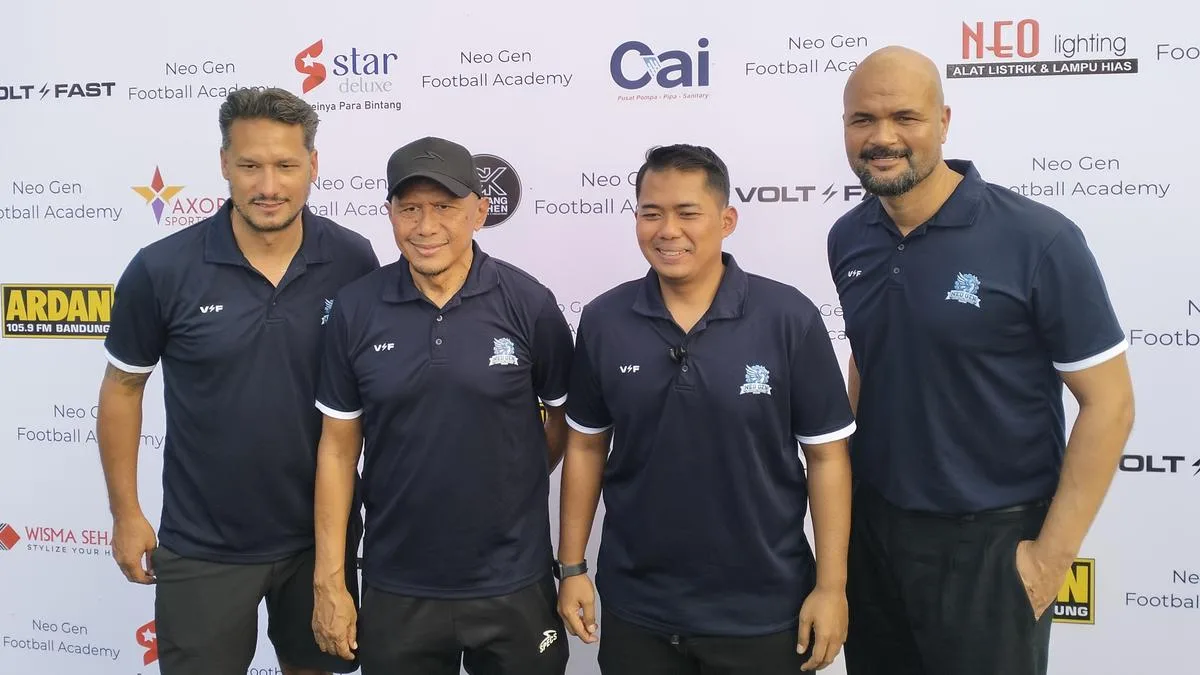
Bandung has added another chapter to its youth football development scene with the launch of Neo Gen Football Academy at Tarantula Soccer Field on Saturday (10/10/2026). The academy, initiated by former Persib Bandung striker Sergio van Dijk together with Rizky Bagja and Raphael Maitimo, offers a different approach: not merely routine training, but a structured pathway toward the professional level and international competition.
The move targets a gap long lamented in the national football ecosystem—the scarcity of sustained development channels outside professional clubs. According to Sergio, children in West Java, particularly Bandung, need more open access to hone their skills from an early age. "Through Neo Gen FA, we want to help children in West Java, especially Bandung, to have a pathway toward professional football," he said at the launch.
The focus on cross-country match experience sets Neo Gen FA apart. The U-10 team will compete in the Singa Cup in Singapore in late October 2026, while the U-14 team is being prepared for the ASEAN Youth Cup this November. In addition, the academy plans to bring in teams from Australia and Thailand for friendly matches. For Sergio, exposure to international competition from a young age is key to accelerating a player's maturity. "We want the children who are part of the future of Indonesian football to have international experience. That is why we are trying to open opportunities through matches against foreign teams," said the former Indonesia national team striker.
This approach aligns with criticism often leveled at youth development in Indonesia, which frequently gets stuck on an orientation toward instant results. Sergio believes the current progress of the national team needs to be balanced by a strong grassroots foundation. "Football development must also start from the grassroots. What is happening now may be a short-term result, but we want to see development over the long term," he said.
Echoing Sergio, Rizky Bagja stressed that an academy's success is not measured by trophies, but by how well players absorb the curriculum and the principles of play. "What we are progressing is not really the results, but how these children can apply the curriculum," said the former Persib Bandung goalkeeper. He hopes the system in place can produce players with strong technical ability as well as mature tactical understanding.
Neo Gen FA's presence has also received support from the regional government. West Java Deputy Governor Erwan Setiawan and West Java DPRD Speaker Bucky Wibawa attended the launch, signaling that youth football development is beginning to be seen as a strategic regional agenda. This political support is important to ensure the program's sustainability, especially regarding access to facilities and long-term funding.
Even so, challenges loom. Private academies such as Neo Gen FA must compete with big clubs that have greater resources, and face uncertainty in domestic youth competitions. However, by prioritizing curriculum and an international network, Neo Gen FA has the potential to become an alternative development model in a field long dominated by academies owned by professional clubs.
Going forward, Indonesian football observers will be waiting to see whether Neo Gen FA's move can produce players who truly break through to the professional level, or whether it will stumble on classic problems such as the lack of tiered competitions. If successful, this academy could become a blueprint for other regions wanting to build a similar foundation.