Welcome Back: Wētāpunga, the World's Heaviest Insect, Claws Back from the Brink of Extinction
Baca dalam 60 detik
- Populasi wētāpunga Selandia Baru resmi berstatus 'pulih' setelah program penangkaran melepas 11.000 serangga ke alam liar.
- Status konservasi naik dari 'terancam punah secara nasional' menjadi 'pulih secara nasional', dengan generasi keempat dan kelima terpantau mandiri di dua pulau.
- Keberhasilan ini menjadi cetak biru bagi upaya pemulihan invertebrata di negara lain, termasuk Indonesia yang menghadapi tekanan serupa terhadap fauna endemik.
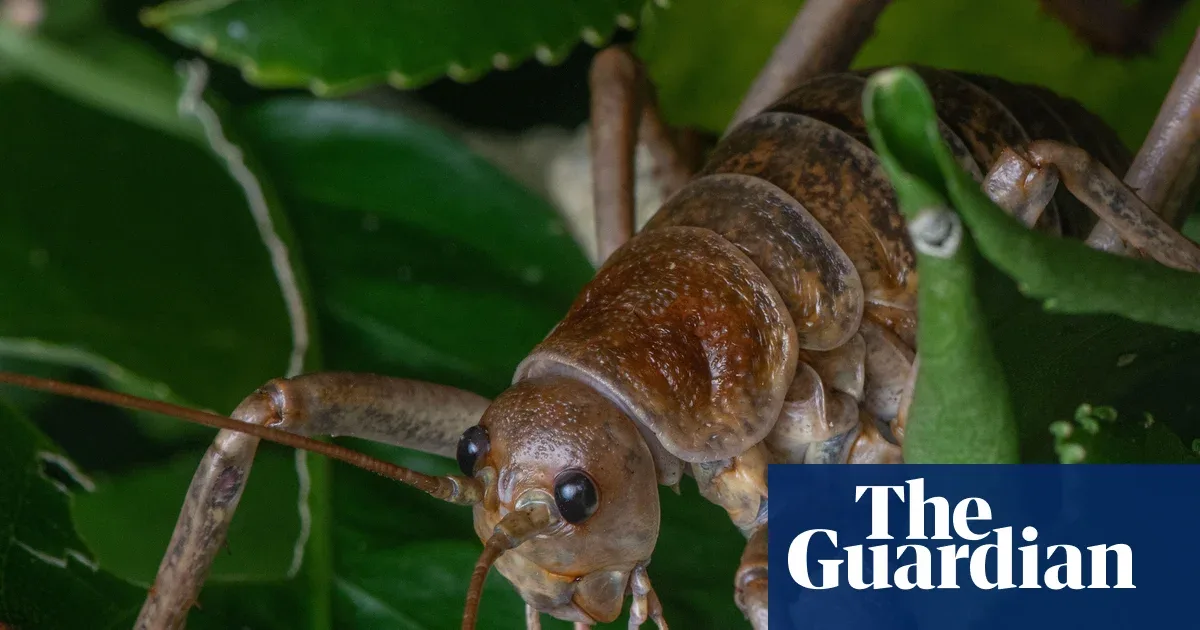
After decades of pressure from invasive predators and habitat loss, the wētāpunga — a New Zealand endemic insect believed to be the heaviest in the world — has officially been declared recovered. Its conservation status has been upgraded from "nationally endangered" to "nationally recovered" thanks to a captive breeding program that has released 11,000 individuals into the wild.
The success is detailed in a report released on 2 October in the New Zealand Journal of Zoology. Dr Chris Green, an honorary researcher at the New Zealand Department of Conservation who co-authored the report, called the figure of 11,000 individuals "remarkable and outstanding". He added, "The future of the wētāpunga looks bright."
A female wētāpunga can weigh as much as a small rat, with a body length of up to 10 centimetres and a leg span reaching 20 centimetres. The species is the largest of 70 wētā species and once inhabited parts of the North Island. However, predation by introduced species and habitat damage caused its population to shrink drastically. In the 1990s, its status changed to "endangered", and it is now considered extinct in the wild on mainland New Zealand. The insect survives only on a number of predator-free islands in the Hauraki Gulf, Auckland, and off the coast of Northland.
Over the past 15 years, tens of thousands of wētāpunga have been bred at Butterfly Creek, a wildlife facility, and Auckland Zoo. Both institutions developed husbandry techniques that allow mass hatching in communal "nursery rooms". Wētāpunga nymphs are given a three-component diet: fresh foliage, protein from fish flakes, and leaf litter. According to Green, protein is crucial for the survival of the youngest nymphs.
Once large enough to defend themselves, the insects are moved to new habitats. This effort has resulted in 45 separate translocations — a number that is "very high in any species recovery", Green said. Monitoring on two islands shows the wētāpunga population has become self-sustaining, with fourth and fifth generations born there. "This is very encouraging, because we cannot report the same for many other threatened species," he said.
"If other institutions can reach a position like this, there will be great benefits for threatened species in New Zealand." — Dr Chris Green
New Zealand is highly vulnerable to species decline because of its high level of endemism and introduced pest problems. Green considers his country to be at the forefront of invertebrate recovery efforts and does not know of another captive breeding program operating at a similar scale or with similar success. By documenting this project, he hopes other institutions will be encouraged to develop similar programs.
The wētāpunga story highlights the importance of a systematic approach to conservation: identifying threats, developing breeding techniques, releasing into safe habitats, and long-term monitoring. For Indonesia, which has extraordinary endemic richness but faces similar pressures — from deforestation to illegal wildlife trade — this model offers valuable lessons. Species such as the komodo dragon, the anoa, or the bird of paradise face threats that are not much different. New Zealand's success shows that with commitment and innovation, extinction is not an inevitable fate.
Going forward, the biggest challenge is ensuring the wētāpunga population remains stable in the wild without ongoing intervention. Can this large-scale captive breeding model be replicated for other invertebrate species that are less charismatic but equally important to ecosystems? The answer will determine how far humanity can reverse the damage it has done.