BMKG: Kalimantan Forest Fire Haze Pollutes Makassar Air, PM2.5 Unhealthy
Baca dalam 60 detik
- BMKG Wilayah IV Makassar mencatat konsentrasi PM2,5 di Makassar dan Maros masuk kategori tidak sehat hingga sedang akibat kiriman asap karhutla dari Kalimantan.
- Pola angin barat–barat laut membawa partikel asap melintasi Selat Makassar, sementara kendaraan bermotor dinilai bukan penyebab utama.
- Titik panas di Kalimantan masih terpantau banyak, sehingga risiko penurunan kualitas udara di Sulawesi Selatan berlanjut dalam beberapa hari ke depan.
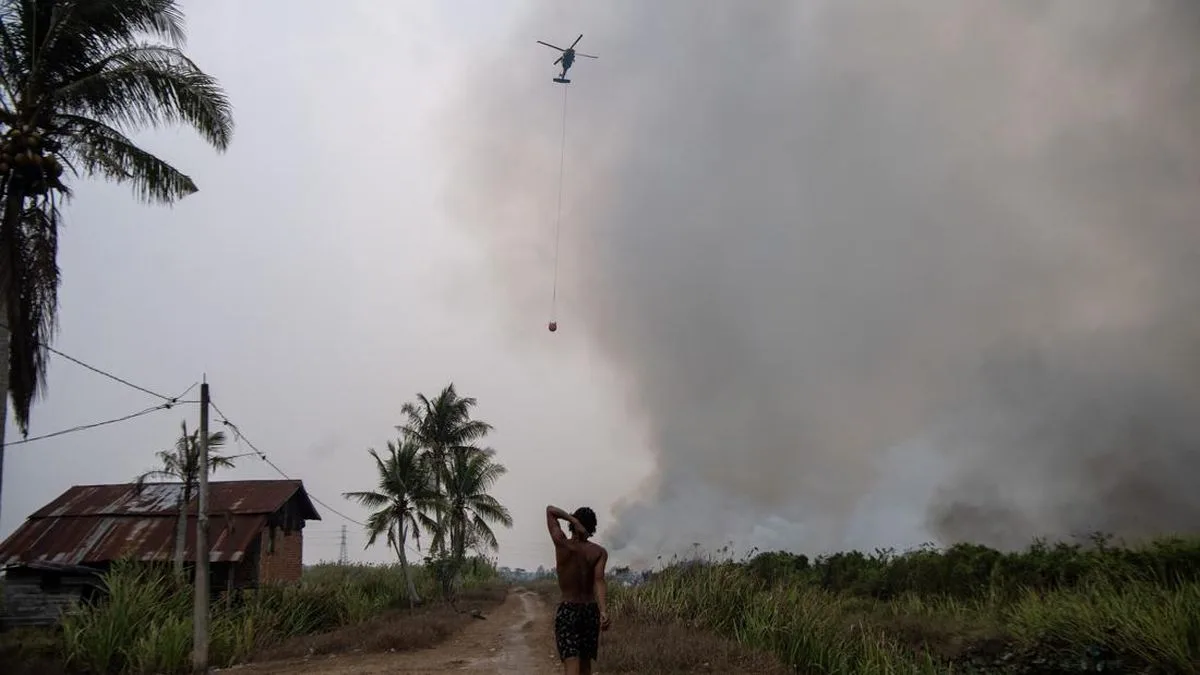
Air quality in Makassar and its surroundings has worsened in recent days. The Meteorology, Climatology, and Geophysics Agency (BMKG) Region IV Makassar suspects the decline is due to haze from forest and land fires (karhutla) in Kalimantan carried by winds across the Makassar Strait toward South Sulawesi.
BMKG Makassar forecaster Asriani Idrus said the PM2.5 indicator in Maros and Makassar was in the unhealthy to moderate range. "In recent days, the quality for the PM2.5 indicator in Maros and its surroundings, including Makassar, has been in the unhealthy to moderate category," she said on Sunday (4/10).
Air quality fluctuations follow a daily cycle. Particle concentrations tend to peak in the early morning to morning hours, then gradually improve during the day and afternoon. Monitoring on Sunday morning showed improvement after 11.00, along with changes in local atmospheric conditions.
Wind direction analysis strengthens the suspicion that the pollutants come from outside South Sulawesi. When winds blow from the west to northwest, smoke particles from Kalimantan can be carried to South Sulawesi. Conversely, the dominance of easterly winds opens the possibility of haze entering from Papua and Maluku. "Because earlier I saw the wind direction was generally from the west, so it was likely carried from Kalimantan toward the South Sulawesi region," Asriani explained.
BMKG stressed that motor vehicles are not yet the main contributor to the rise in PM2.5. "Vehicle smoke, it seems not yet. Because it is still normal. So the main factor is smoke," she said. This finding directs attention to forest and land fires as a cross-regional pollution source, not daily transportation activity in the city.
"If you look at it, it is still very red, the hotspot points in Kalimantan are still very strong, not yet subsiding. So there is still a possibility it will happen in the coming days." — Asriani Idrus, BMKG Makassar forecaster
Monitoring of hotspots in several parts of Kalimantan still shows high intensity. This condition means the potential for haze being sent to South Sulawesi has not fully subsided. Residents are asked to remain alert, especially vulnerable groups such as children, the elderly, and people with respiratory disorders, by limiting outdoor activities when air quality worsens.
On the other hand, the scorching air temperature in Makassar and several areas of South Sulawesi is still considered within normal limits. South Sulawesi is in its dry season period, so a temperature of 30–35 degrees Celsius is a reasonable condition. However, the heat felt by the body can be higher because it is affected by the heat index, which takes into account humidity, wind direction, and solar radiation.
"So this hot air temperature is our body's condition being affected by pressure from environmental heat," Asriani said. The combination of air pollution and high temperatures could worsen the physiological burden on the public, especially for those who work outdoors.
Worsening air quality in Makassar highlights the need for a cross-regional response. Forest and land fires in Kalimantan not only have a local impact but also cross provincial borders through wind movement. Tackling the fire sources in upstream areas is key to preventing repeated haze episodes. Without rapid handling, cities in South Sulawesi risk facing health disruptions and economic activity impacts, including the aviation and tourism sectors.
The question is, how prepared are local governments to anticipate incoming haze if hotspots in Kalimantan have not subsided within the next week?