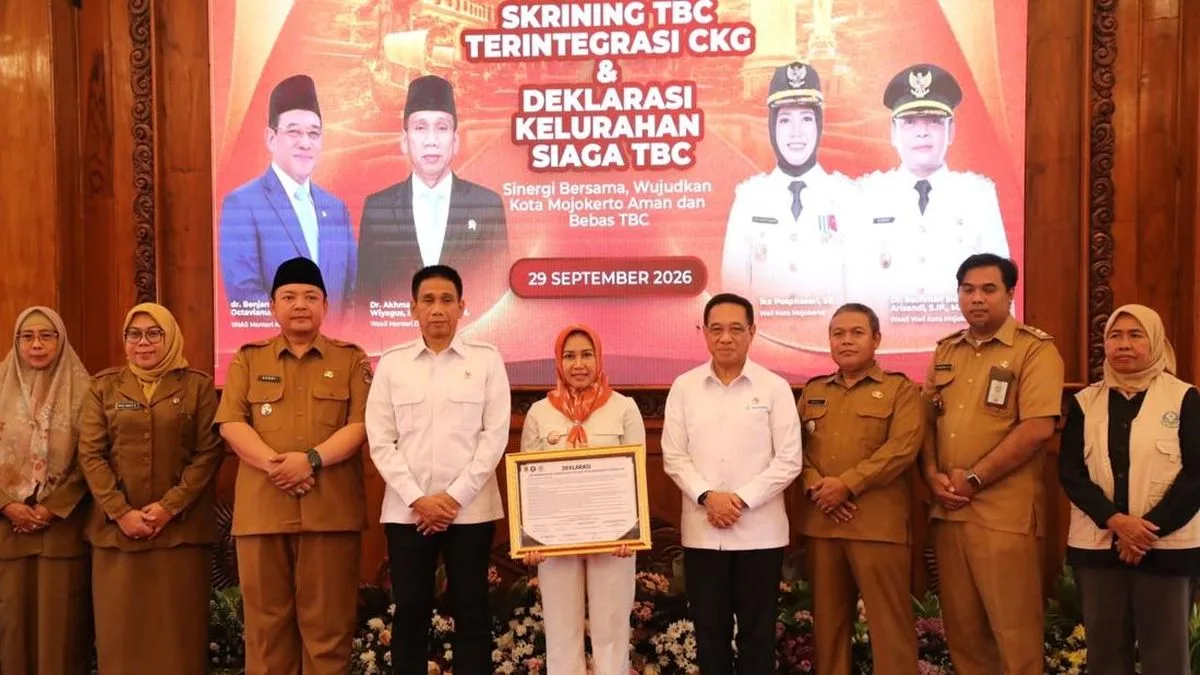
Deputy Home Minister Stresses Data Integration and Faster TPT for TB Elimination in Sidoarjo
Baca dalam 60 detik
- Wakil Menteri Dalam Negeri Akhmad Wiyagus menekankan pentingnya percepatan Terapi Pencegahan Tuberkulosis (TPT) di Sidoarjo, Jawa Timur.
- Ia meminta pemerintah daerah memaksimalkan sisa waktu hingga akhir 2026 untuk mengejar capaian TPT, agar tidak lebih rendah dari tahun sebelumnya.
- Penguatan Desa dan Kelurahan Siaga TBC serta kolaborasi lintas sektor menjadi kunci perluasan penanganan hingga tingkat masyarakat.
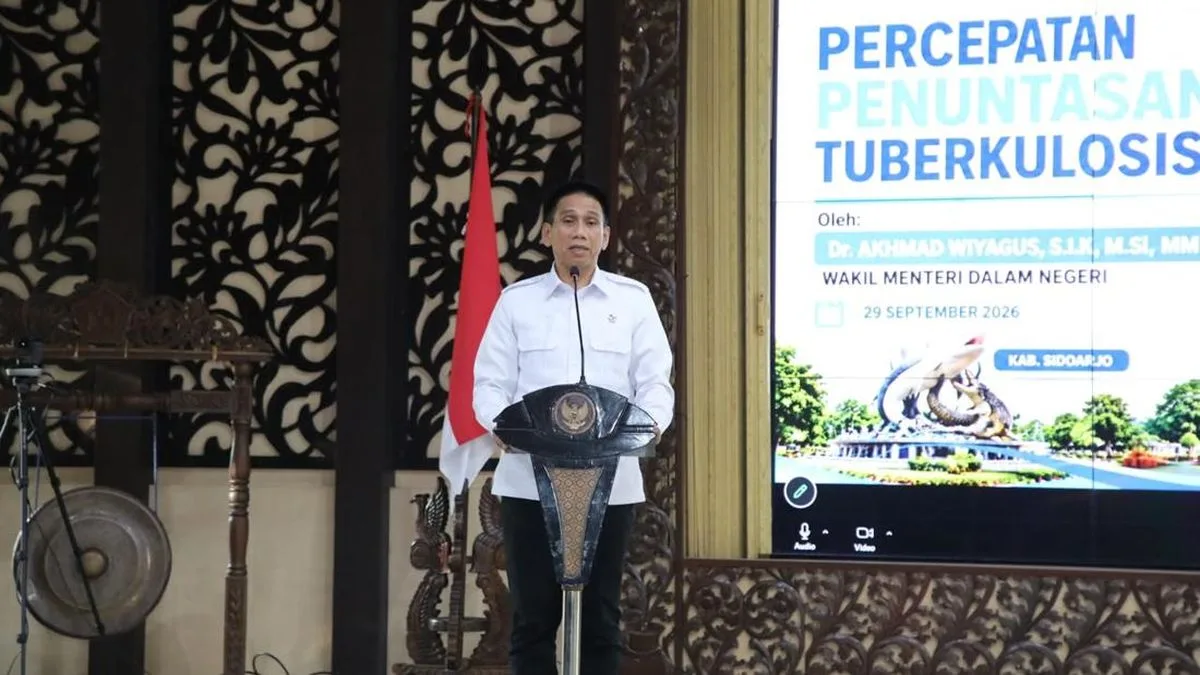
Deputy Minister of Home Affairs (Wamendagri) Akhmad Wiyagus is pushing for faster provision of Tuberculosis Preventive Therapy (TPT) in Sidoarjo Regency, East Java. He made the call at the declaration of TB-Ready Villages and Urban Wards titled "Sinergi Bersama Menuju Eliminasi Tuberkulosis" on Tuesday (29/9). According to Wiyagus, accelerating TPT must go hand in hand with stronger case finding, close-contact tracing, data integration, and cross-sector collaboration.
In his remarks, Wiyagus stressed that integrated data is the main foundation for shaping TB response strategies. "So please make case finding effective, and then data integration is the most important. That is our starting capital for deciding where we go. What strategy we will take," he said. He explained that once cases are found and patients receive treatment, close-contact tracing must be carried out to identify groups that need preventive intervention through TPT.
Wiyagus also reminded the audience of the importance of orderly reporting. The various TB response efforts already carried out in the field must be properly recorded so that achievements can be known accurately and serve as a basis for evaluation and planning the next steps. According to him, accelerating TPT needs to be supported by proper outreach and education, especially for close contacts. "TPT does need outreach and education. The way it is conveyed is not by offering it as an option for close contacts, whether they take it or not. But the narrative conveyed must be that it has to be taken to kill the germs in the body," he stressed.
Beyond accelerating TPT, Wiyagus stressed the importance of strengthening TB-Ready Villages and Urban Wards as part of efforts to expand the response to the community level. TB control requires the involvement of various stakeholders according to their respective roles. "TB response must indeed be well collaborated, as in the composition later of the villages and urban wards that will be declared today," he said.
He added that TB response is not only about health aspects but also touches on community productivity as well as social and environmental conditions. Therefore, interventions need to be carried out across sectors, including in the provision of sanitation and clean water, adequate nutrition, and improvement of housing conditions that require action. On that occasion, Wiyagus also appreciated the commitment of the Sidoarjo Regency Government in strengthening TB control. He hoped that accelerating TPT, coupled with stronger case finding, data integration, orderly reporting, and cross-sector collaboration, would further speed up TB elimination efforts in the region.
The step taken by Sidoarjo is in line with the national target of tuberculosis elimination by 2030. With Indonesia's large population and still-high TB burden, accelerating TPT is one of the key interventions to break the chain of transmission. However, challenges on the ground are not light: from social stigma and limited access to services to inter-agency coordination that is often hampered by sectoral ego. Therefore, Wamendagri's directive for regional governments to use the remaining time until the end of 2026 is a test of regional commitment to allocating resources and strengthening the primary health system.
Going forward, the success of accelerating TPT in Sidoarjo could serve as a model for other regions. If data integration and close-contact tracing run effectively, it is not impossible that the national TB elimination target can be achieved. The question is how far other regional governments will emulate Sidoarjo's steps, and whether budget support and health workers are adequate to carry out this strategy sustainably?