50 Senior Police Officers and 4 Civil Servants Promoted, Roycke Harry Langie Becomes Commissioner General: What Does It Mean for Institutional Reform?
Baca dalam 60 detik
- Sebanyak 50 perwira tinggi dan 4 PNS Polri resmi menyandang pangkat baru usai upacara Korprapot di Jakarta, Jumat (25/9/2026).
- Kenaikan ini menempatkan Roycke Harry Langie sebagai Komjen Pol, sementara 15 lainnya menjadi Irjen dan 34 menjadi Brigjen.
- Langkah ini dinilai sebagai bagian dari pembinaan karier, namun publik menanti bukti peningkatan profesionalisme dan akuntabilitas.
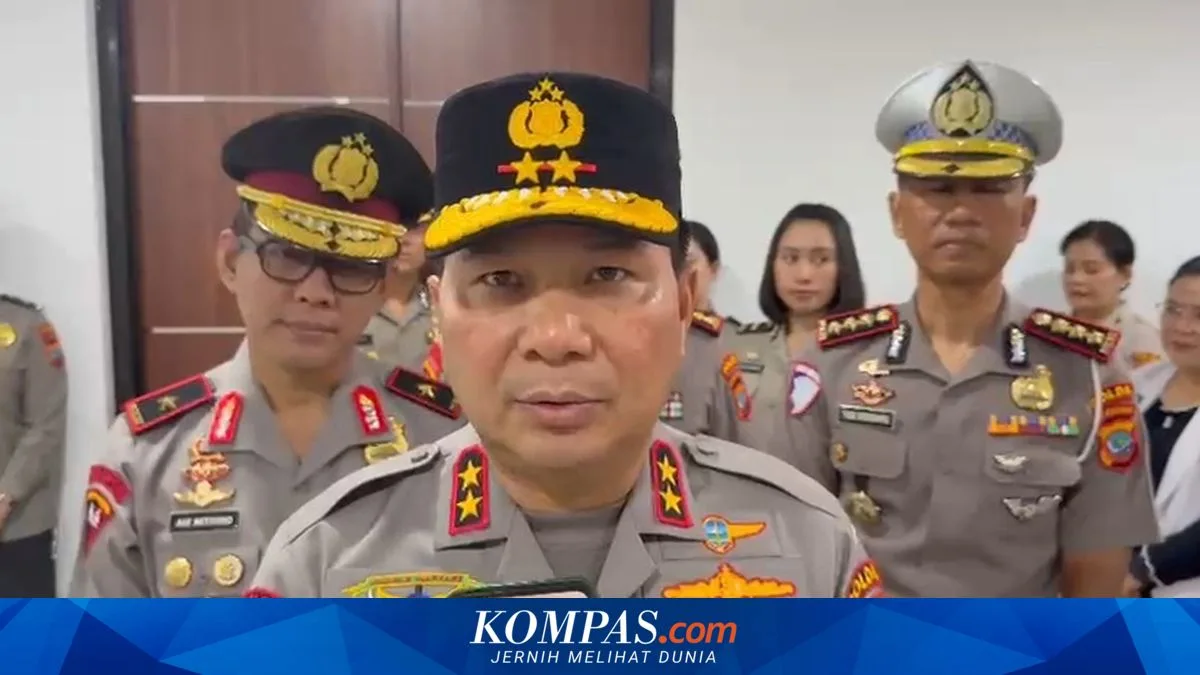
The Indonesian National Police (Polri) has once again carried out rotations and promotions among its senior officers. At the Corps Promotion Report ceremony (Korprapot) held in Jakarta on Friday (25/9/2026), 50 senior officers (Pati) and four Polri civil servants (PNS) received promotions. One of the main highlights was the promotion of Roycke Harry Langie, who now holds the rank of Commissioner General (Komjen) Pol, equivalent to a strategic position in the upper echelons of the police force.
These promotions are not merely a routine ceremony. The distribution of ranks shows a significant composition: one senior officer became a Commissioner General, 15 senior officers were promoted to Inspector General (Irjen), and 34 senior officers became Brigadier General (Brigjen). In addition, four Polri civil servants also received promotions, with three becoming Pembina Utama and one becoming Pembina Utama Madya. These figures reflect the scale of regeneration and mobility within the Bhayangkara corps.
According to the Head of the Polri Public Relations Division, Inspector General Pol Johnny Eddizon Isir, promotions are part of personnel career development accompanied by greater responsibility. "Every promotion is a form of appreciation for the dedication, loyalty, and performance of personnel. However, behind every promotion there is a mandate and an increasingly greater responsibility to continue contributing the best to the institution, the nation, and society," Johnny said in a written statement on Saturday (26/9/2026).
He added that the promotions also represent the organization's trust in personnel deemed to have performed well. The hope is that the promoted officers can uphold the honor of the institution and serve as role models in carrying out their duties. "This promotion is not only a personal achievement, but also new energy to keep working, making positive contributions, and delivering police services that are increasingly professional and humane," he concluded.
For the public, promotions within the police institution always raise dual expectations. On one hand, promotion is inevitable in the career management of a large organization. On the other hand, the public demands that every promotion correlate directly with improved service quality, fair law enforcement, and corruption eradication. Moreover, Polri is currently facing various challenges, from internal reform to strengthening external oversight.
Police observers assess that the promotion of these senior officers could be a momentum to strengthen institutional reform. However, without transparent performance evaluations and a meritocracy-based promotion mechanism, promotions risk becoming merely administrative routine. The public has the right to know the assessment indicators used, especially for strategic positions such as Astamaops Kapolri, now held by Roycke Harry Langie.
From a governance perspective, the composition of 34 new Brigadier Generals indicates an expansion of the structure at the lower level of senior officers. This could affect coordination effectiveness and budget efficiency. If not matched by sharpening duties and functions, the addition of senior officers could potentially create overlapping authority. Therefore, organizational design and personnel placement become crucial.
For investors and businesses, the stability and professionalism of Polri are important factors in the investment climate. Legal certainty, security, and contract enforcement depend heavily on the performance of officers. Appropriate promotions can strengthen trust, while promotions perceived as non-transparent could create uncertainty. The business world will observe whether the promoted officers can improve public services, including in licensing, dispute handling, and the eradication of illegal levies.
Going forward, the public will test whether these promotions are followed by real breakthroughs. For example, accelerating the handling of public reports, strengthening internal oversight, and collaborating with anti-corruption agencies. Without that, mass promotions will only be a ceremonial record. The question is whether the Bhayangkara Corps can make this moment a turning point toward an increasingly professional and humane police force, or merely a routine rotation that escapes public evaluation?