Prabowo Targets Land-Burning Corporations: Eight Regional Bylaws as Loopholes, a Thousand Officers Deployed
Baca dalam 60 detik
- Presiden Prabowo Subianto memerintahkan penyelidikan berkelanjutan terhadap perusahaan yang sengaja membakar lahan, dengan fokus pada kawasan gambut.
- Pemerintah menemukan celah regulasi di delapan peraturan daerah kabupaten yang masih mengizinkan pembakaran hingga dua hektare per orang.
- Sebanyak seribu perwira TNI dan Polri akan dikerahkan ke kabupaten rawan karhutla untuk mengedukasi masyarakat sekaligus menyiapkan solusi pengelolaan lahan tanpa api.
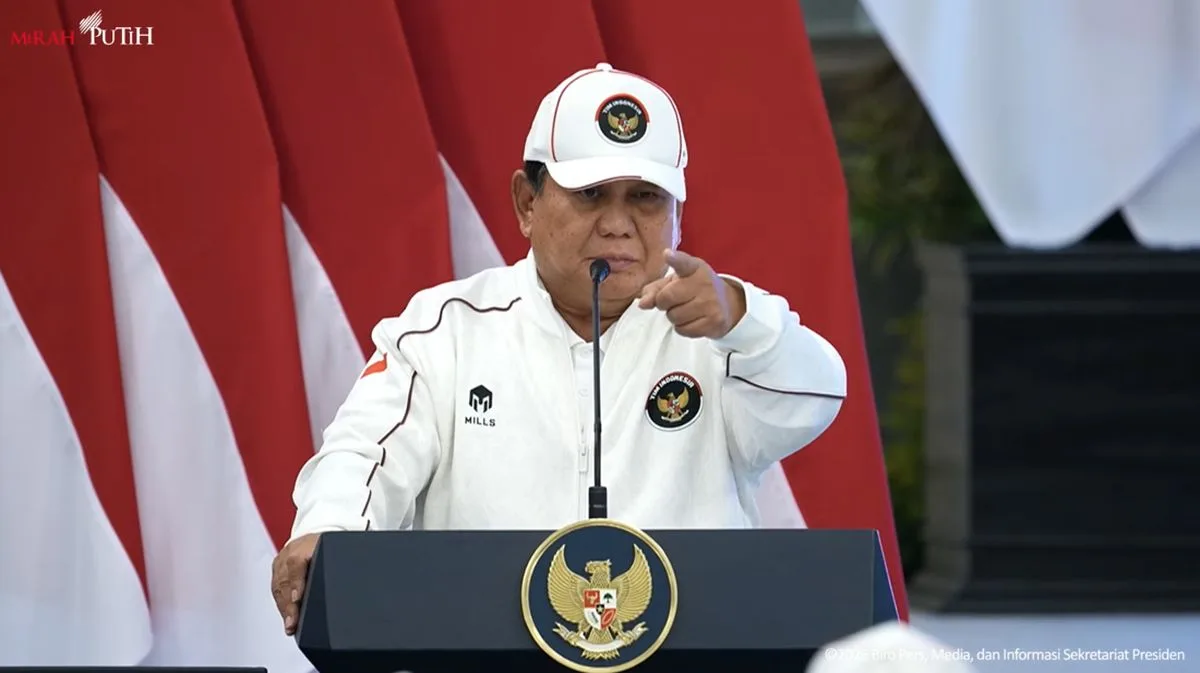
President Prabowo Subianto has stressed that the government will not stop pursuing corporations that deliberately burn forests and land, especially in peat areas. The instruction was delivered in a closed meeting with academics from various research institutions and universities at the Merdeka Palace in Jakarta on Thursday (24/9), the recording of which was only published a day later through the Presidential Secretariat's YouTube channel.
The move marks a shift in policy pressure: from merely handling the smoke emergency to addressing the root of the problem at the regional regulatory level. Prabowo highlighted the existence of eight regional bylaws (Perda) at the district level that still provide legal room for land burning of up to two hectares. According to him, such rules become a dangerous loophole when fires spread uncontrollably.
"There are still eight Perda in districts. Imagine those who want to use the loophole that allows burning two hectares—to me it makes no sense at all that one person may burn two hectares," Prabowo said, as quoted from the press release.
The statement underscores a classic problem of environmental governance in Indonesia: central policy often clashes with local interests. Loose bylaws not only complicate law enforcement but also give economic actors room to shift responsibility for burning to other parties. In the context of land and forest fires that recur every dry season, such regulatory loopholes become a trigger that is hard to extinguish.
In addition to taking action against corporations, the government is preparing a preventive approach through the deployment of personnel. Prabowo said he has assigned the TNI, and is considering Polri, to send a thousand officers with the rank of major to colonel to the regions. They will be tasked with educating residents so they no longer clear land by burning.
This approach is accompanied by a promise to provide concrete solutions. The government will facilitate replacement land and water pumps for people who need means to work the soil without fire. "If you need land, report it, we will arrange it. We will prepare pumps for you," Prabowo said. He stressed that the welfare of farmers and smallholders must still improve without damaging the environment.
On the other hand, corporate obligations were reaffirmed. Every plantation or forestry company is required to meet the prevention standards already stipulated, from building watchtowers and retention basins to forming firefighting teams from among employees. "The regulation already exists. You must have a firefighting team from your own employees," he said.
For Indonesia, the land and forest fire problem is not merely an environmental disaster. Haze that crosses national borders often triggers diplomatic tensions with Malaysia and Singapore, while health costs and economic losses from flight disruptions and lost productivity reach trillions of rupiah every year. The palm oil and pulp-and-paper sectors—the backbone of exports—are most often in the spotlight because of the practice of clearing land with fire. Therefore, law enforcement against corporations will be a test of the credibility of Indonesia's climate commitment in the eyes of global investors and trading partners.
However, the effectiveness of the presidential instruction depends heavily on two things: political will to revise problematic bylaws, and consistency of officials in the field. Without both, the deployment of a thousand officers will only be a symbolic operation that ends with the dry season. The public is now waiting to see whether the eight bylaws are truly revoked, and whether any corporate names are actually brought to court—not merely questioned and then released.