Prabowo Forms National Peat and Mangrove Agency, Focus on Preventing Recurring Forest Fires
Baca dalam 60 detik
- Presiden Prabowo Subianto membentuk Badan Pengelolaan Gambut dan Mangrove Nasional (BPGMN) untuk memperkuat tata kelola lahan basah dan mencegah kebakaran hutan dan lahan (karhutla) yang kerap terulang setiap tahun.
- BPGMN akan melibatkan ilmuwan dan profesional guna memperkuat riset, pemetaan, sistem deteksi dini titik panas, serta operasi darat dan pemanfaatan pompa air di kawasan gambut.
- Langkah ini diharapkan dapat mengintegrasikan pengetahuan ilmiah, teknologi, dan partisipasi masyarakat dalam pengelolaan gambut, sekaligus menjaga ekosistem dan mencegah karhutla berulang.
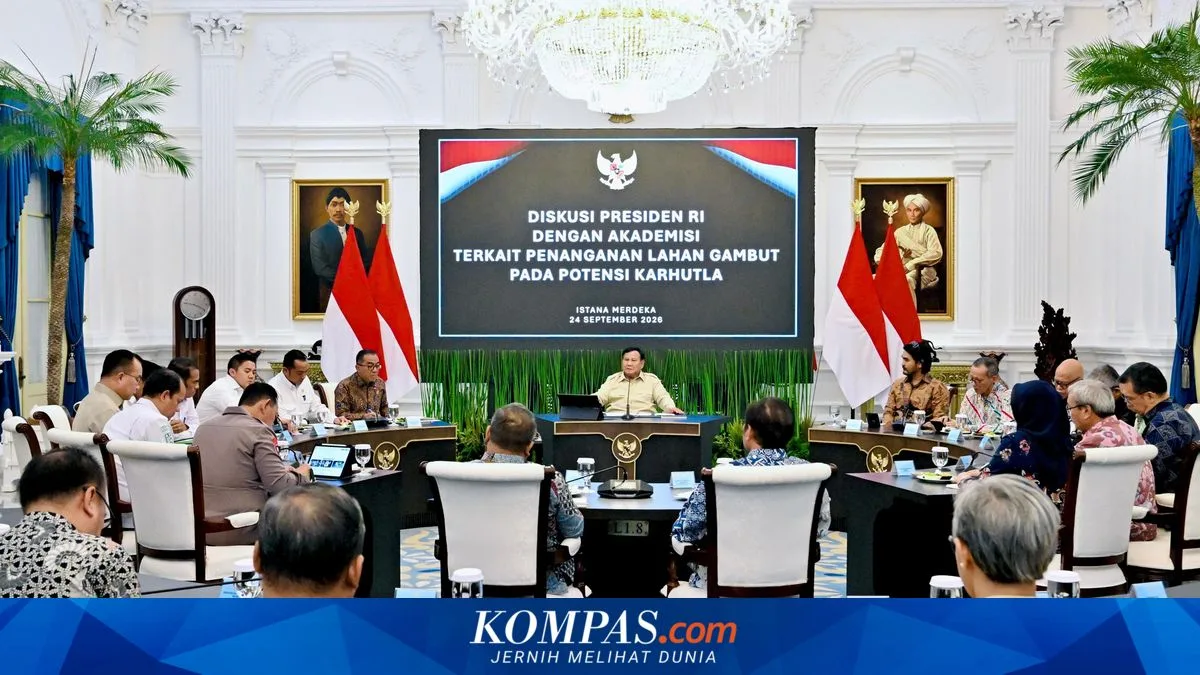
President Prabowo Subianto has officially formed the National Peat and Mangrove Management Agency (BPGMN) in response to the recurring problem of forest and land fires (karhutla) that happen every year. The decision was made after the President discussed the issue with dozens of academics at the Merdeka Palace in Jakarta on Thursday (24/9/2026), in order to gain a comprehensive understanding of peatland management and fire potential.
According to Teddy Indra Wijaya, Deputy for Protocol, Press, and Media at the Presidential Secretariat, the formation of BPGMN is part of efforts to strengthen peatland management while preventing forest and land fires from continuing to occur. "Hearing directly from experts is an important step to understand the issue from various perspectives," Teddy said in a press release on Friday (25/9/2026).
BPGMN will later involve scientists and professionals. Their involvement is directed at strengthening prevention efforts, research, mapping, as well as early detection and hotspot systems as part of a more comprehensive management of peat areas. In addition, strengthening ground operations is also a focus. The Ground Task Force will be optimized so it can respond to and handle fires directly at the location, enabling the earliest possible response.
The next step is to optimize the use of water pumps, including portable pumps and shallow drilling. These tools are part of strengthening fire-handling capacity, especially in peat areas that have special characteristics and require rapid response in the field.
Teddy also stressed the importance of involving village officials and surrounding communities through the Fire-Aware Community (MPA) groups. Communities living closest to peat areas are considered to have an important role in carrying out prevention as well as providing a rapid initial response when fires occur.
"By bringing together the knowledge of scientists, technology, and the experience of communities in the field, peat management is expected to be carried out more comprehensively, while preserving the ecosystem and preventing forest and land fires from continuing to recur," Teddy said.
This approach shows the government's effort to integrate scientific knowledge, technology, strengthened field operations, and community participation in peat management and forest and land fire prevention. For Indonesia, this step is strategic because peatlands store large carbon reserves and play an important role in maintaining environmental balance. Fires on peatlands not only damage ecosystems but also produce significant carbon emissions and affect public health and the economy.
From an investment and business perspective, better peat management can reduce the risk of operational disruptions caused by haze and fires, which have often affected the aviation, plantation, and tourism sectors. Regulatory and institutional certainty through BPGMN is also expected to improve the green investment climate, including for restoration and carbon economy projects. However, the effectiveness of this agency will depend on cross-ministerial coordination, budget support, and law enforcement against illegal land clearing.
Going forward, the public will watch whether BPGMN can translate academic discussion into real action in the field. With the dry season predicted to continue, the question is: will this new agency operate quickly enough before hotspots reappear, or will we witness the same forest and land fire cycle next year?