UK Sustainable Farming Incentive Fund Runs Out in Six Hours, Farmers Threaten to Abandon Environmental Program
Baca dalam 60 detik
- Skema Sustainable Farming Incentive (SFI) Inggris 2026 kehabisan dana hanya dalam enam jam setelah dibuka, meninggalkan ribuan petani tanpa akses pembiayaan lingkungan.
- Kegagalan ini memperparah tekanan finansial petani yang sudah dihantam tiga panen buruk, biaya pupuk melonjak, dan cuaca ekstrem akibat perubahan iklim.
- Tanpa kepastian pendanaan, petani berencana membatalkan praktik ramah lingkungan dan beralih ke monokultur, memicu kekhawatiran krisis pangan dan keanekaragaman hayati.
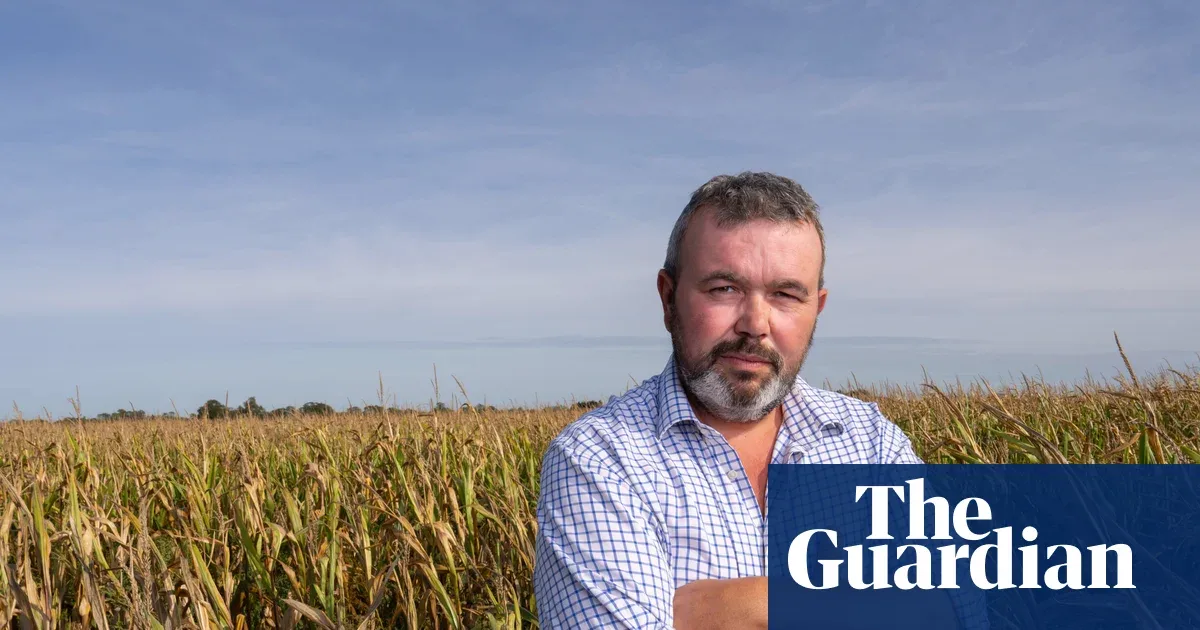
The UK's Sustainable Farming Incentive (SFI) scheme for 2026 ran out of funding just six hours after opening on Tuesday this week, sparking anger and panic among farmers who depend on the environmental payments for their livelihoods. A farmer from Cambridgeshire, Peter Hatley, said he failed to register despite preparing since 10 a.m. because the registration system kept showing error messages. By the time the technical problems were resolved, the money was gone.
The incident highlights the fragility of the post-Brexit agricultural payment system that replaced the European Union's Common Agricultural Policy (CAP). The SFI is designed to reward farmers who manage land in an environmentally friendly way, rather than simply producing food. But the extraordinary surge in demand—compared to the scramble for Oasis concert tickets—shows how many farmers genuinely need the money to survive.
Preliminary data estimate that up to 10,000 farmers whose funding agreements end in March 2027 were unable to apply or chose not to apply because of the uncertainty. The government, through the Department for Environment, Food and Rural Affairs (Defra), claims it has allocated a total of £310 million for new agreements, including an additional £20 million on top of the £50 million announced by the Prime Minister in August. But for many farmers, that figure is not enough and the process is seen as chaotic.
"We tried our best. Everything was checked and double-checked, but through no fault of our own, we were still rejected. I was very surprised," Hatley said.
Hatley, who runs a 240-hectare family farm, said he had been able to withstand harvest uncertainty until now. But climate change has erased that assumption. "In 2024 we were hit by extreme rain, in 2025 drought suppressed yields, and this year temperatures reached 25 degrees Celsius in late September. We are at breaking point. We cannot weather this storm," he added.
Martin Lines, CEO of the Nature Friendly Farming Network, said the speed at which the fund ran out reflected the "desperation" gripping farmers. Mat Cole, an upland farmer in southern England, experienced the same thing: he could only apply at 3:50 p.m. and immediately received an error message. "I thought I had about a week to apply," he said. Cole had used previous funding to improve hedgerows, grassland, and water quality. "To see the drawbridge pulled up just like that is truly shameful," he said.
This crisis is not just about money. English farmers are facing a series of blows: the loss of access to the post-Brexit Basic Payment Scheme (BPS), rising fuel and input prices due to global conflicts, and extreme weather damaging harvests. The National Farmers' Union (NFU) is urging the government to immediately announce a commitment to the 2027 SFI scheme. "For food-producing businesses already questioning whether they can survive next year, this clarity is crucial," said Robyn Munt, NFU vice president.
If funding is not secured soon, Hatley plans to abandon all the environmentally friendly practices he has built over 20 years and switch to maize monoculture. "I will undo all the hard work of 20 years and switch to maize monoculture. This is not a threat, this is what I will do for my family. Our hearts will break, but my children come first," he said. He also highlighted the ecological impact: skylarks and lapwings will disappear, insects and dragonflies will suffer. "If I said this to anyone else, it might sound like blackmail, but this is business reality. How do I explain to the bank that I cannot pay the mortgage because I prioritised doves and birds of prey?"
For Indonesia, this dynamic is an important mirror. When a developed country like the UK struggles to fund a green agricultural transition, similar pressure could threaten environmental programs in developing countries. Indonesia has similar schemes such as Kartu Tani and social forestry programs, but with limited budgets. Dependence on export commodities such as palm oil and rubber also makes farmers vulnerable to climate and global market shocks. The lesson from the UK shows that without a stable funding safety net, environmental conservation efforts in the agricultural sector can collapse within hours.
Going forward, the question is whether the UK government will change the funding allocation mechanism to make it fairer and more predictable, or simply let farmers choose between environmental sustainability and economic survival. If the latter happens, not only ecosystems will be affected, but also national food security. The world, including Indonesia, should watch whether green incentives will become the norm or merely promises that evaporate as budgets run out.