Dompet Dhuafa Wins Prominent Awards 2026, Proof That Mustahik-to-Muzakki Empowerment Is Real
Baca dalam 60 detik
- Dompet Dhuafa menerima penghargaan Excellence in Philanthropreneurship and Mustahik-to-Muzakki Empowerment pada ajang Prominent Awards 2026 yang digelar Metro TV.
- Penghargaan ini menegaskan peran lembaga filantropi Islam dalam mendorong kemandirian ekonomi penerima manfaat, bukan sekadar bantuan konsumtif.
- Ke depan, model pemberdayaan berbasis zakat ini berpotensi menjadi rujukan kebijakan pengentasan kemiskinan yang melibatkan sektor swasta dan pemerintah.
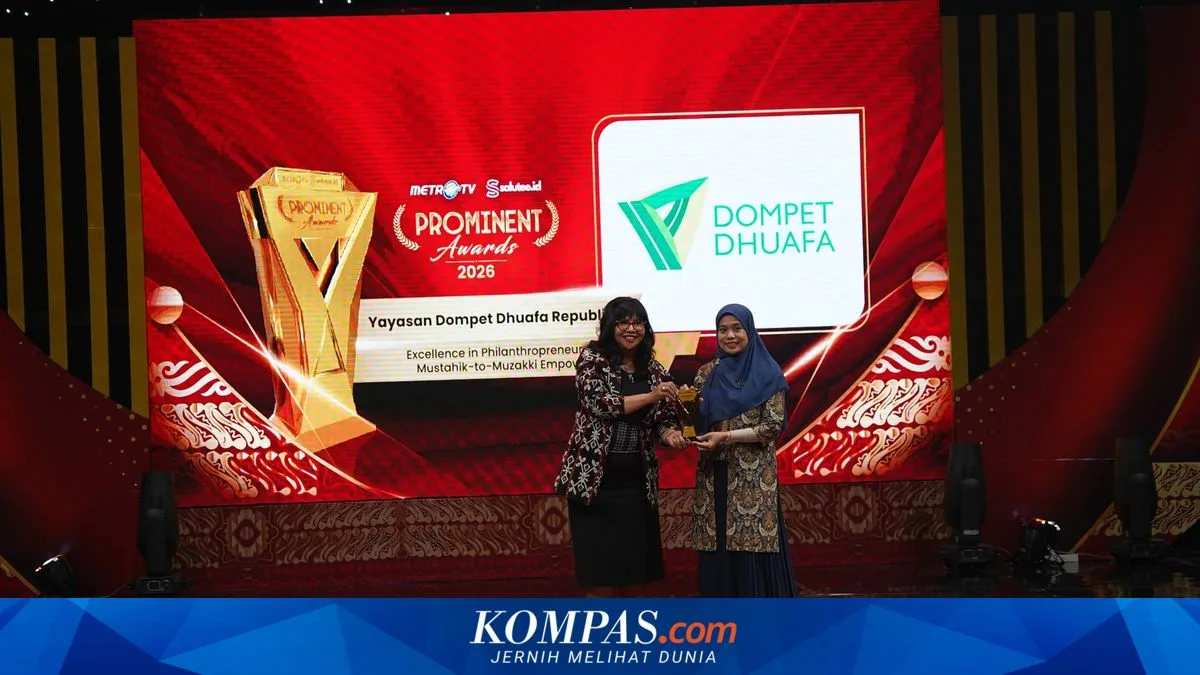
Dompet Dhuafa received the prestigious Prominent Awards 2026 in the category Excellence in Philanthropreneurship and Mustahik-to-Muzakki Empowerment at a ceremony held at Studio Grand Metro TV, Jakarta, on Wednesday (23/9/2026). The award was presented by the Prominent Awards 2026 jury, Istianingsih, an accounting and good governance expert from Universitas Bhayangkara Jakarta Raya, to Dompet Dhuafa's Director of Resources Mobilization, Etika Setiawanti.
This achievement is not merely symbolic recognition. Amid global economic pressure still shadowed by geopolitical uncertainty, technological disruption, and market volatility, a philanthropic institution's ability to turn beneficiaries (mustahik) into benefactors (muzakki) is an important indicator of successful, sustainable empowerment programs. Dompet Dhuafa is considered consistent in carrying out that mandate.
Etika Setiawanti said the award was a moment for reflection as well as motivation to keep strengthening the program's impact. According to her, the achievement was the fruit of collaboration among many parties, including strategic partners and the beneficiary communities striving to change their lives. "Those who were initially beneficiaries can now also give benefits," she said in a press release received by the newsroom on Friday (25/9/2026).
She added that beneficiaries who managed to raise their incomes can now meet daily needs and even grow community business units. This kind of socio-economic transformation proves that empowerment programs based on zakat, infak, and sedekah can create a real multiplier effect, rather than relying only on short-term aid.
"The situation we face is not easy. That is why this nation needs mutual cooperation, spirit, and benefits for one another. So far, the award recipients have worked quietly for the nation's progress."
— Arief Hidayat Thamrin, Founder of Prominent Awards
Prominent Awards founder Arief Hidayat Thamrin stressed that the theme "Indonesia Berdaya" was chosen to describe the nation's journey toward a more solid future. According to him, the award is not just a ceremony but a form of appreciation for figures and institutions that drive change, empower communities, and create positive impact. He hopes the theme invites the public to see how much benefit has been given, not merely how long the journey has been.
Metro TV President Director Arief Suditomo added that the selection of award recipients was carried out through deep consideration and discussion. "We also looked at their various journeys and contributions. Hopefully this appreciation becomes part of the journey to keep giving the best for our nation," he said.
Indonesian Context: The Urgency of Productive Philanthropy Amid Uncertainty
For Indonesian readers, especially business players and investors, this award highlights a paradigm shift in philanthropy from mere consumptive donations toward productive empowerment. The mustahik-to-muzakki model promoted by Dompet Dhuafa aligns with the national development agenda that emphasizes self-reliance-based poverty alleviation. As the government encourages measurable social investment and corporate social responsibility (CSR), the success of institutions like Dompet Dhuafa can serve as a benchmark for the effectiveness of empowerment programs.
Furthermore, this recognition could strengthen public trust in zakat management institutions. With good governance and verified impact, philanthropic institutions can become strategic partners of the government in distributing social assistance more precisely. This matters given the limited state budget, while the need for community empowerment keeps rising.
Going forward, the challenge is to expand the scale of impact. Can this kind of empowerment model be replicated massively across regions, especially in areas with high poverty rates? And how can the integration between philanthropic programs, government policy, and private investment be strengthened so that the benefits reach more recipients? The public awaits the next concrete steps.