KPU Admits It Did Not Check Gibran's Diploma with Education Ministry, Constitutional Court Justice: Why Different from Regional Elections?
Baca dalam 60 detik
- Ketua KPU Mochammad Afifuddin menyatakan lembaganya tidak melakukan verifikasi langsung ke Kementerian Pendidikan atau dinas pendidikan terkait syarat pendidikan Gibran Rakabuming Raka sebagai cawapres.
- Hakim MK Saldi Isra mempertanyakan inkonsistensi karena KPUD disebut aktif mengecek persyaratan pendidikan calon kepala daerah pada Pilkada 2024.
- KPU berdalih surat keterangan penyetaraan ijazah yang ditandatangani pejabat berwenang sudah cukup, sehingga keabsahan dokumen tidak diuji lebih jauh.
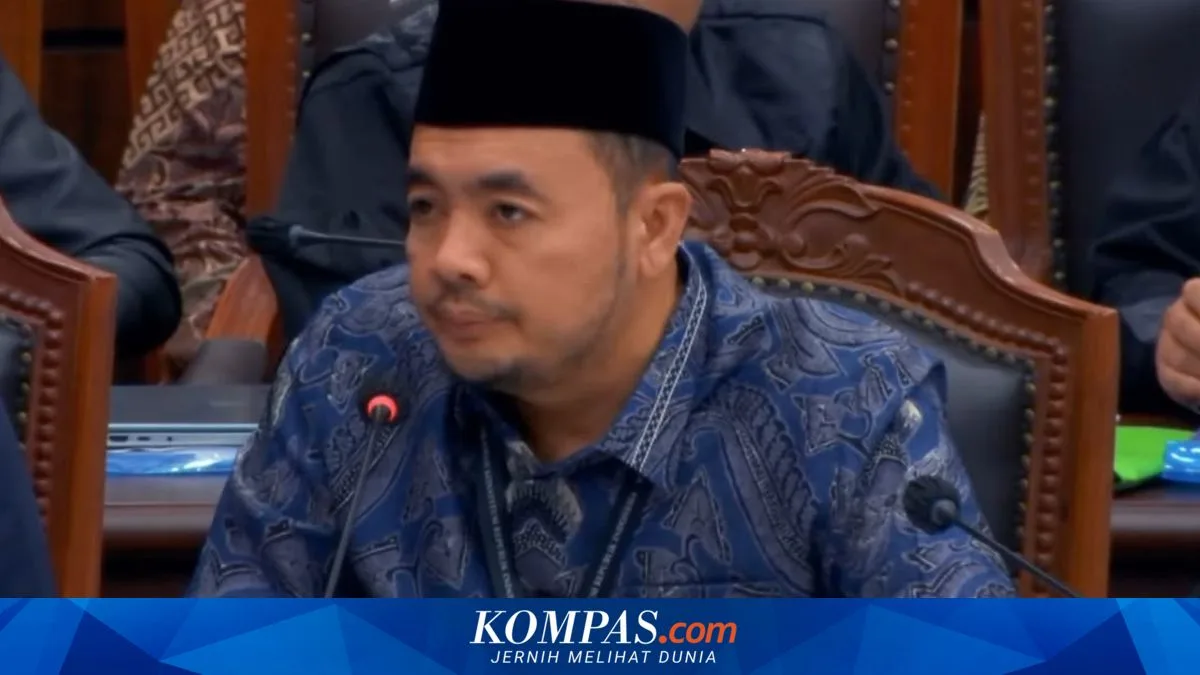
The General Elections Commission (KPU) admitted it never visited the Ministry of Education or any education office to verify the educational background of Gibran Rakabuming Raka when he registered as a vice-presidential candidate in the 2024 presidential election. The admission was made by KPU Chairman Mochammad Afifuddin during a follow-up hearing on the presidential election result dispute at the Constitutional Court on Wednesday (23/9/2026) evening.
Afifuddin answered firmly when Constitutional Court Justice Saldi Isra pressed him on whether the KPU conducted direct checks with educational institutions. "No, we did not come. Because at that time we had already received a certificate. And there was also no report," Afifuddin said, as quoted from the hearing.
That answer contrasted with the practice Saldi said occurred at the regional level. He compared it with the Regional General Elections Commission (KPUD), which he said actively visited schools or education offices to confirm the validity of regional head candidates' diplomas in the 2024 regional elections. "Even regional KPU in regional head elections goes everywhere for verification, but this KPU did not come?" Saldi asked, which Afifuddin confirmed with a brief answer of "did not come".
Saldi then raised Afifuddin's statement at another forum asking KPUD to examine in detail the educational requirements of regional head candidates, including tracing the origin of schools and institutions that issued paket C diplomas. According to Saldi, the KPU should also have confirmed the validity of the Certificate of Equivalence for Gibran's diploma. "Well, this is why it was important to ask earlier," he stressed.
Afifuddin argued that the KPU received a Certificate of Equivalence for the diploma that had been signed by an official of the relevant ministry. Because the document was considered to have come from an institution with the authority, the KPU deemed Gibran's educational requirement fulfilled without the need for additional confirmation. "Because it was considered to come from an institution with the authority, we considered it correct," Afifuddin said.
"Even regional KPU in regional head elections goes everywhere for verification, but this KPU did not come?" — Constitutional Court Justice Saldi Isra
Saldi's question highlighted a double standard that could undermine public trust in the integrity of election organizers. If the KPU demands high scrutiny in regional elections, why is a similar approach not applied to the far larger presidential election? This difference could be an entry point for the petitioner to prove procedural weaknesses in candidate verification.
For markets and businesses, legal uncertainty over the quality of presidential and vice-presidential candidate verification can affect investment risk perception. The stability of economic policy depends heavily on the legitimacy of the electoral process. When the verification mechanism is questioned, market players tend to hold back expansion and wait for certainty over the Constitutional Court's ruling. The impact is felt in sectors sensitive to political cycles, such as infrastructure, property, and capital-intensive industries.
The KPU argues there was no official report that triggered suspicion, so additional verification was unnecessary. However, that argument actually strengthens the case that the KPU relied more on administrative documents than on factual testing. In the context of modern elections, such passive verification is vulnerable to abuse, especially if there are indications that a document's validity is being questioned.
The Constitutional Court now has room to assess whether the failure to verify constitutes a violation that can annul a candidacy or merely a procedural defect that does not affect the outcome. The upcoming ruling will serve as a precedent for election organizers in handling candidates' administrative requirements in the future. If the Constitutional Court lets this practice stand, the KPU could repeat a similar pattern in the next election.
What is most awaited is whether the KPU will change its operating standards by requiring direct confirmation with educational institutions for all candidates, or stick to the principle of trusting documents. The public and investors should closely watch the direction of the Constitutional Court's ruling, because from it will be seen how seriously the state safeguards the quality of its procedural democracy.