Electra EL2 Makes First Flight at Commercial Airport Using Helicopter IFR Procedures
Baca dalam 60 detik
- Pesawat sayap tetap hybrid-electric Electra EL2 berhasil lepas landas dan mendarat di lima bandara Virginia menggunakan prosedur instrumen ala helikopter, menandai pertama kalinya akses ke area non-runway di bawah kondisi IFR.
- Keberhasilan ini menjadi fondasi regulasi dan operasional bagi EL9, pesawat produksi sembilan penumpang yang ditargetkan melayani rute komersial pada 2030.
- Dengan lebih dari 2.200 surat minat dari 60 pelanggan, Electra berupaya membuktikan konsep Direct Aviation yang menghubungkan penumpang dari lokasi dekat hunian tanpa harus ke bandara besar.
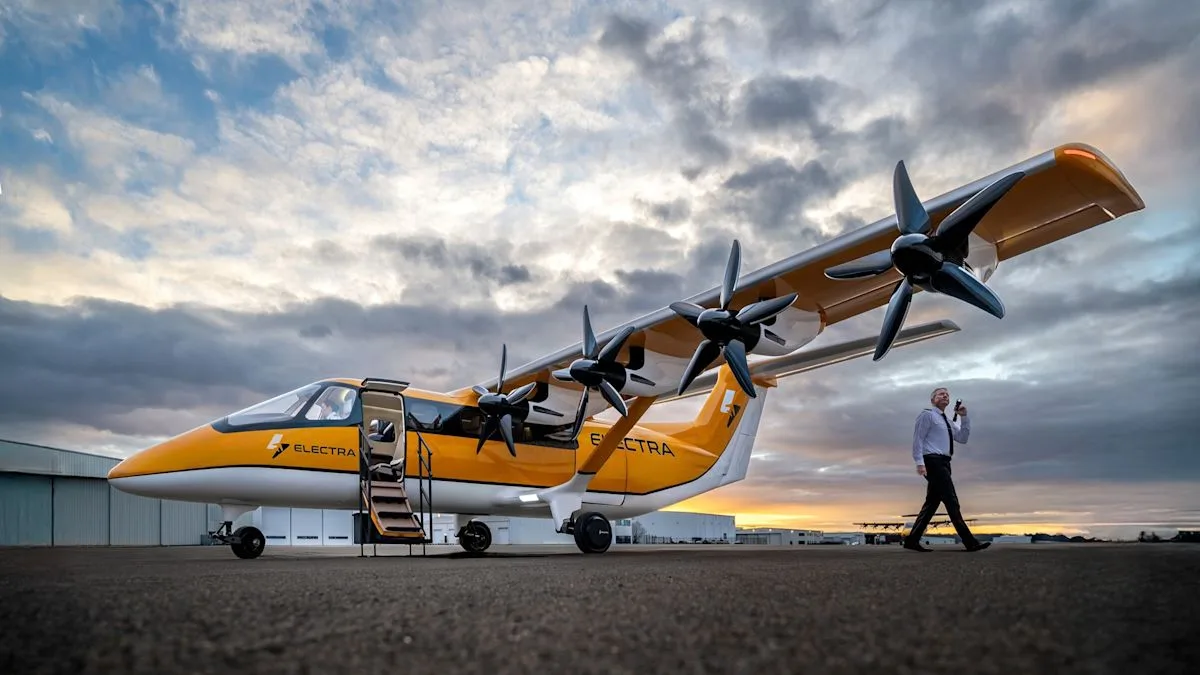
Electra's hybrid-electric EL2 Ultra Short demonstrator has made aviation history: for the first time, a fixed-wing aircraft landed at a commercial airport using instrument procedures normally reserved for helicopters. A series of test flights across five Virginia airports was part of the FAA's eVTOL and Advanced Air Mobility Integration Pilot Program.
The test flights, announced on 22 September, took place at Roanoke–Blacksburg Regional Airport (KROA), Virginia Tech/Montgomery Regional Airport (KBCB), Allan C. Perkinson/Blackstone AAF Airport (KBKT), plus two additional locations in Newport News and Richmond. At each location, the EL2 took off and landed from heliports, vertiports, taxiways, and new access points that until now could only be reached by rotorcraft.
What sets this apart from ordinary short-field demonstrations is the use of point-in-space procedures and dedicated instrument routes designed for the Ultra Short performance profile. These IFR (instrument flight rules) procedures allow the aircraft to approach and depart from non-runway surfaces in low visibility, with the predictability and safety margins required for commercial operations. The EL2 did not merely operate from confined areas; it did so in the same airspace as airline traffic at Roanoke–Blacksburg Regional.
Data from each flight will directly inform the development of operational guidelines and standards for the upcoming EL9 commercial service. "What happened in Virginia gives a glimpse of the future of flight," said Marc Allen, CEO of Electra. "We showed that an Ultra Short fixed-wing aircraft can use vertical flight landing areas and a new generation of instrument procedures to reach places conventional aircraft were never designed for."
The operational concept Electra calls Direct Aviation rests on the idea that passengers should be able to reach an aircraft from a location near where they live and work, without having to drive to a large airport. A heliport on a commercial airport apron is one link, but similar access points could be extended to parking lots, barges, and sports fields in the future.
The EL2 flights explicitly pave the way for the EL9 Ultra Short, a nine-passenger production aircraft scheduled to serve commercial routes in 2030. With the FAA G-1 certification basis secured—establishing the regulatory framework for EL9 certification—and eIPP flights now generating operational data on instrument procedures and new landing areas, Electra is building its regulatory and procedural foundation in parallel with the aircraft's development.
The test flights were conducted with Virginia Tech's Mid-Atlantic Aviation Partnership, the Virginia Department of Aviation, the Virginia Smart Airspace Program, and PennDOT, which is a lead eIPP participant for operations in Virginia. "The goal is not just to fly routes, but to generate the data and operational insights needed to help a new aircraft type integrate safely, efficiently, and repeatably into the airspace system," said Tombo Jones, Director of Virginia Tech's Mid-Atlantic Aviation Partnership.
For Indonesia, Electra's move highlights both opportunity and challenge. An archipelago of more than 17,000 islands with many pioneer airports faces a similar connectivity problem: how to link remote areas without large runway infrastructure. The Direct Aviation concept could serve as a reference for delivering more flexible air services, especially in remote regions accessible only by small aircraft or helicopters. However, adoption of this technology at home will depend on regulatory readiness, airworthiness certification, and human resource development. Indonesian aviation authorities need to start studying IFR procedures for Ultra Short aircraft and prepare a framework for integration into the national airspace.
With more than 2,200 letters of intent from various airlines and helicopter operators, plus contracts with the US military and NASA, Electra appears serious about building an ecosystem. The question is whether regulators in other countries—including Indonesia—will move as fast as needed to accommodate this new wave of aircraft, or fall behind in the race for advanced air mobility.