Rp10.4 Trillion Outflow from Bitcoin ETFs Signals Institutional Investors Starting to Retreat
Baca dalam 60 detik
- ETF Bitcoin spot AS mencatat arus keluar bersih harian terbesar sejak Juni, menghapus lebih dari separuh aliran masuk sepanjang 2026.
- Aksi jual dipicu kombinasi tekanan pasar yang sudah berlangsung dan insiden peretasan besar di bursa kripto Binance.
- Beberapa agenda penting dalam sepekan ke depan berpotensi menentukan arah apakah koreksi ini berlanjut atau berbalik.
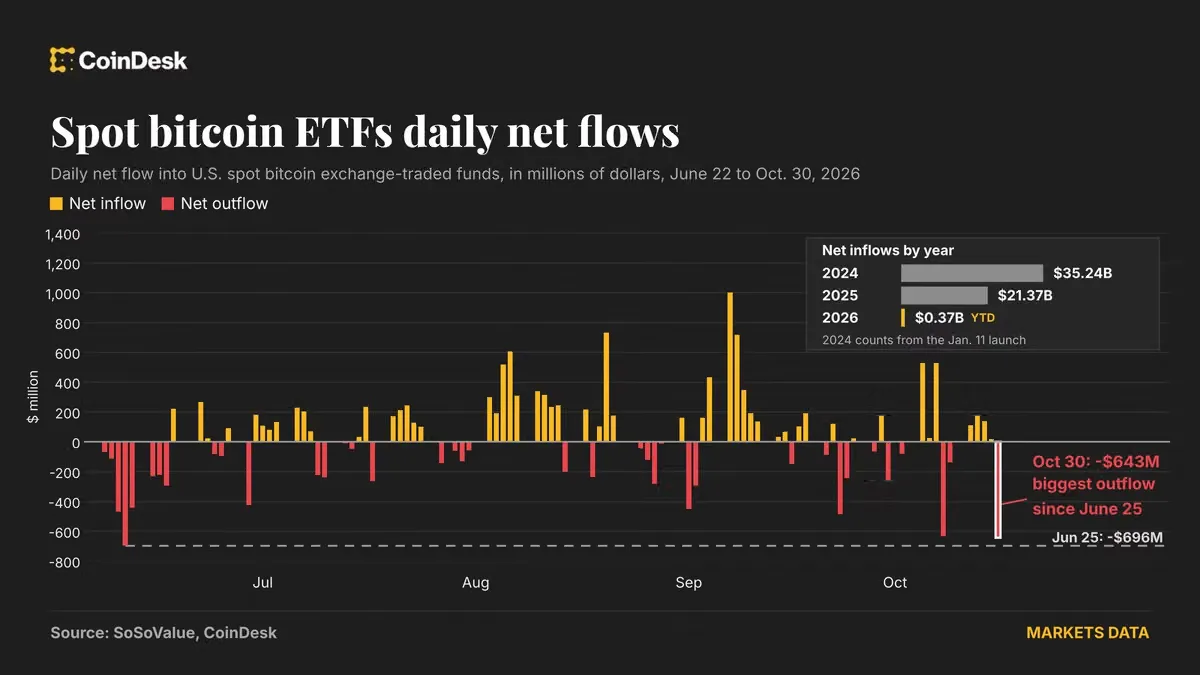
Outflows from spot Bitcoin exchange-traded funds (ETFs) listed on United States exchanges reached 643.3 million USD (around Rp10.4 trillion) last Friday, the largest single-day figure since June 25. The number is the clearest sign that institutional investor interest in crypto assets is falling sharply.
According to SoSoValue data, before that Friday the investment products still recorded net inflows for 2026 of slightly above 1 billion USD. That means a single trading day wiped out nearly two-thirds of the year's accumulated inflows. It was also the 12th-largest daily outflow since Bitcoin ETFs began trading in January 2024, behind only the June 25 record of 696.3 million USD.
BlackRock, through its IBIT product, led the outflows with 233.7 million USD, followed by Fidelity's FBTC at 201.4 million USD. The two investment management giants reflect how large institutions are also reducing their exposure to Bitcoin.
Bitfire Research noted in its report that the outflows did not stand alone. Spot Ethereum ETFs also posted sustained weekly net outflows, while the Coinbase premium, usually an indicator of US investor demand, remained in negative territory. "Institutional and spot buying momentum appears to be fading," Bitfire said, as quoted by CoinDesk.
Selling pressure deepened after the Binance exchange suffered a hack worth 6.3 billion USD on Thursday night. Nick Forster, founder and CEO of Derive, a decentralized exchange for options trading, said the incident added another layer of uncertainty to an already fragile market. "The market was already under pressure, but the Binance hack added new concerns. The reaction from traditional investors was significant because Friday was the first trading session after the incident," he said.
For the global crypto market, the episode reinforces that spot ETFs are no longer merely passive vehicles that always absorb funds. The products are highly sensitive to macro sentiment and cybersecurity events. When the two factors meet, a reversal can happen within hours, as seen last Friday.
In the Indonesian context, the movement of US Bitcoin ETFs remains relevant even though the instrument is not yet available on the domestic exchange. Many Indonesian retail investors access crypto through global platforms or local exchanges whose reference prices are directly affected by liquidity in the US market. Weakening ETF inflows can pressure the Bitcoin price, which in turn affects the value of domestic crypto portfolios. In addition, deteriorating global risk sentiment often makes domestic retail investors more cautious, especially toward the end of the year when liquidity needs rise.
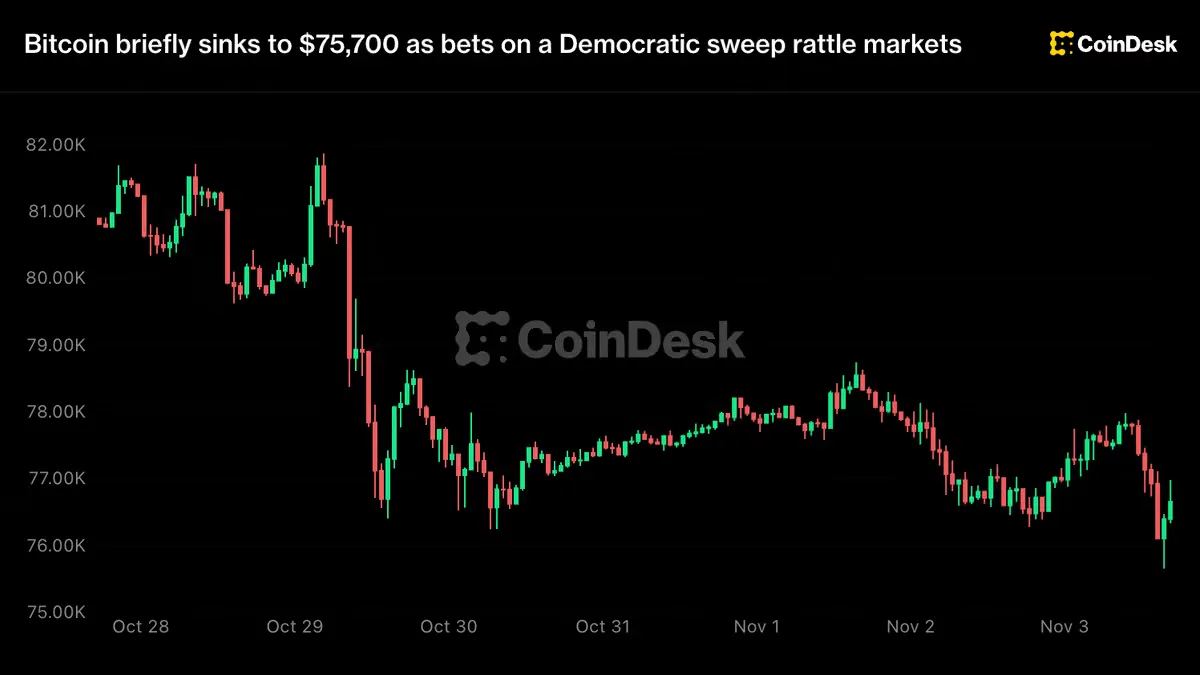
Looking ahead, Bitfire highlighted three events that will determine the short-term direction. First, the US midterm elections on November 3, which could affect the outlook for crypto regulation over the remainder of President Donald Trump's term. Second, the nonfarm payrolls report on November 6, which will offer clues on US labor market conditions and Federal Reserve interest rate expectations. Third, the final MSCI list for non-operating companies, which could include Strategy (MSTR) and Metaplanet as exclusion candidates, potentially triggering selling pressure from passive funds and affecting both companies' ability to add to their Bitcoin holdings.
The question now is whether these outflows are temporary or the start of a longer trend reversal. The answer will depend heavily on how institutional investors respond to those three events over the coming week.