Four African Women Build Businesses From Waste and the Climate Crisis
Baca dalam 60 detik
- Ifedolapo Runsewe mendirikan Freee Recycle pada 2020, mengubah ban bekas menjadi produk bernilai jual dan menyerap 62 tenaga kerja.
- Kyokushaba Shine merancang sistem irigasi tenaga surya untuk petani kecil Uganda, dengan 80% karyawan perempuan.
- Wawira Njiru dan Chifuno Stevens memimpin operasi pangan dan energi bersih yang menekankan keberlanjutan serta pemberdayaan ekonomi perempuan.
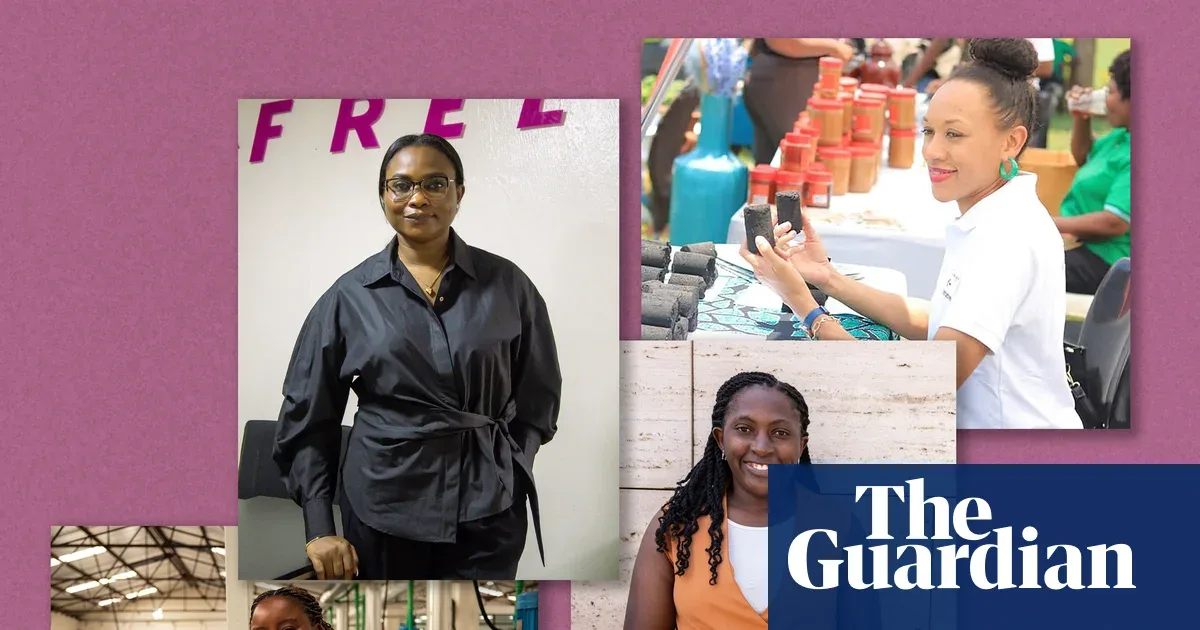
On the outskirts of Ibadan, Nigeria, piles of used tires that are usually burned and pollute the air have instead become the raw material for the Freee Recycle factory. Its founder, Ifedolapo Runsewe, proves that waste can become a value-added industry—a leap in a sector rarely led by women.
World Bank data shows that Nigerian women own about 40% of small businesses, but 56% of their most recent loan applications were rejected, compared with 17% for men. This financing gap is a structural barrier for women who want to enter capital-intensive industries such as recycling. Runsewe herself says she often faces the assumption that the business owner is the man sitting next to her. “As soon as I speak, the question comes: why should we give women millions?” she said, as quoted by The Guardian.
Nevertheless, Freee Recycle has established partnerships with Michelin, Save the Children, and the International Committee of the Red Cross. Its factory employs 62 people and collects tires from four states: Oyo, Lagos, Osun, and Kwara. In addition to rubber products, the company launched an art residency in 2025 that turns used tires into large-scale artworks, including pieces inspired by African culture such as Bata drums and the Ikom monoliths.
In southern Uganda, Kyokushaba Shine (31) remembers her childhood watching her mother struggle to work an onion garden without adequate water access. Now, through Winta Engineering Solutions, founded in February 2025, she designs low-cost solar irrigation systems for smallholder farmers. Within a year, 30 systems have been installed, more than 10 of them for women farmers. Her company employs a team that is 80% women.
Shine also partners with local microfinance providers to channel loans of about 5 million Ugandan shillings (around £1,000) that can be repaid within two years. She stresses the importance of soil health, not just water availability. “Farmers want quick results, so they use fertilizer, but sometimes ignore soil health,” she said. Awareness campaigns are also run so that sustainable farming practices spread.
In Kenya, Wawira Njiru started Food4Education in 2012 with a simple kitchen that fed 25 children. Today, the organization operates 209 kitchens and serves more than 700,000 daily portions. The flagship kitchen in Nairobi, which serves 60,000 children, uses solar power and steam, and has switched to environmentally friendly briquettes made from sawdust and agricultural waste. Njiru estimates that if all Kenyan children were cooked for with firewood, it would be equivalent to 1.1 million acres of forest cut down—three times the area of London.
Food4Education also absorbed 1.3 million mangoes from Murang’a farmers who had a supply surplus in early 2026, distributing them to schools. About 80% of raw materials are bought from local smallholder farmers, and the organization purchases about 130 tons of food per day. With 6,000 employees, mostly women, Njiru sees a tangible impact: many women are now able to build their first home or finance their children's education.
In Malawi, Chifuno Stevens (35) founded the Chifuno Changa Green Initiative (CCGI) in September 2020 to address two problems: poor waste management and rapid deforestation. CCGI produces charcoal briquettes from groundnut shells, involving 18 women from the Dauya Ladies Environmental Group. The briquettes are also used as supplementary fuel by Dedza Pottery, its business partner. Since early 2026, CCGI has opened sewing classes to make kitenge fabric bags and offers briquette workshop tours to tourists.
Stevens acknowledges the dual challenge: keeping prices affordable for low-income consumers while growing the business. “I want the growth of this business to become a sustainable source of income for the women involved,” she said. She hopes CCGI will be financially self-reliant, not dependent on external aid. Year-round groundnut shell supply and equipment investment remain unfinished business.
The stories of these four women show that environmental innovation and economic empowerment can go hand in hand. However, without equal access to financing, many African women risk remaining stuck in small, informal enterprises. The question is whether financial institutions and governments in the region can change the policy framework to be more inclusive—so that more women can move up from waste collectors to factory owners.