Thai Legend Predicts Indonesia Will Reach 2030 World Cup, but Warns About Foundations
Baca dalam 60 detik
- Teeratep Winothai menilai Timnas Indonesia punya kans terbesar di Asia Tenggara untuk tampil di Piala Dunia 2030.
- Vietnam disebut sejajar dengan Indonesia, sementara Thailand dinilai masih tertinggal jauh.
- Winothai menekankan pembangunan piramida sepak bola sebagai syarat mutlak, bukan sekadar naturalisasi.
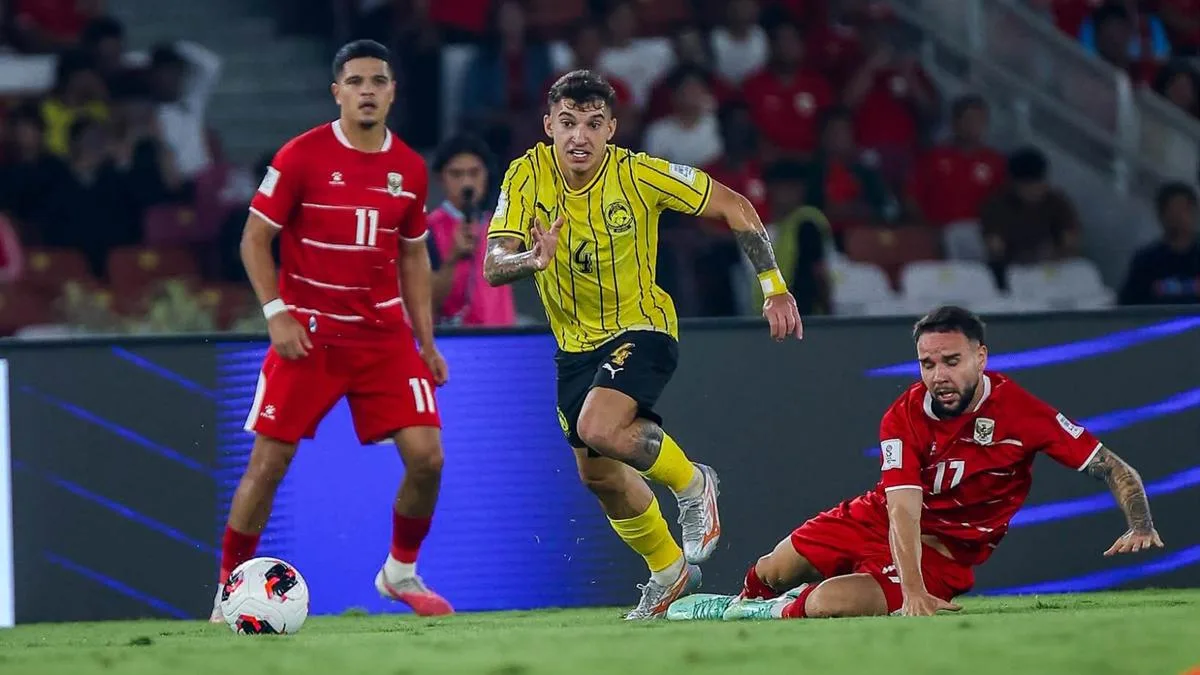
Former Thailand national team striker Teeratep Winothai has placed Indonesia as Southeast Asia's strongest candidate to reach the 2030 World Cup finals. He made the assessment in an exclusive interview with Bola.com recently, and it immediately signaled that the competitive landscape in the region has shifted.
Winothai did not speak without basis. He watched how the Garuda came close to reaching the 2026 World Cup before their run ended in the fourth round of qualifying. That failure was painful, but it left behind experience of competing at the highest level that is now a valuable asset.
According to the 41-year-old, Indonesia's current squad composition is far more mature than it was a few years ago. The FIFA ASEAN Cup 2026 title they have just won is concrete proof that the development process is starting to bear fruit. "Indonesia probably has a bigger chance of qualifying for the 2030 World Cup," he said.
In Winothai's view, Vietnam is the only other team in the region with a comparable chance. Under Kim Sang-sik, Vietnam have been stable, relying on local players and several naturalized players from the domestic league. "I think Indonesia and Vietnam are currently close enough to qualify for the 2030 World Cup, but for Thailand I think it is still too far," he said.
The statement implies a shift in the map of Southeast Asian football power. Thailand, long the regional powerhouse, now faces a bitter reality: they are behind in squad depth and the quality of domestic competition. Meanwhile, Indonesia and Vietnam are moving faster, both through development and the shortcut of naturalization.
However, Winothai does not want naturalization to be seen as the only solution. He reminded that improving the national team's quality must be accompanied by structural reform at home. Infrastructure, youth development, and the competition ecosystem are foundations that cannot be compromised.
"We need to build a strong base, like a pyramid. That structure must be strong first before competing at the World Cup," Winothai said.
The warning is relevant for Indonesia. The wave of naturalization does accelerate performance gains, but without a solid development pyramid, achievements can be fragile in the long term. Winothai, who remembers Bambang Pamungkas as one of the best strikers he ever faced, seems to understand well that individual quality is not enough without a system to support it.
For Indonesian football fans, this prediction can be both a spur and a mirror. The chance to reach the 2030 World Cup is wide open, but the road there is not only about adding more player ammunition. PSSI and stakeholders need to ensure that youth development, healthy competition, and infrastructure keep being improved. If not, Winothai's prediction will only be empty praise that fades again in the qualifying rounds.