Alphabet Plunges 9%, Nasdaq Futures Weaken: A New Alarm for the AI Rally?
Baca dalam 60 detik
- Kinerja Alphabet kuartal III mengecewakan dengan laba per saham dan pendapatan di bawah ekspektasi, memicu aksi jual 9% pada sahamnya.
- Kontras dengan Microsoft yang melesat 3% berkat pertumbuhan Azure, menunjukkan selektivitas investor terhadap emiten AI.
- Pasar Asia-Pasifik dibuka mixed, sementara fokus beralih ke data PCE dan rilis laba Amazon serta Intel.
The Nasdaq-100 futures index fell 1.2% in Wednesday night trading in New York, triggering fresh concerns over the durability of the technology sector rally driven by artificial intelligence (AI). The main trigger was the plunge in Alphabet Inc. shares by as much as 9% after the third-quarter financial report of Google's parent company disappointed the market.
Alphabet reported adjusted earnings per share (EPS) and revenue below the analyst consensus. More worrying still, the company posted negative free cash flow of US$9.07 billion, even as it maintained its annual capital expenditure projection in the range of US$195 billion to US$205 billion. The figure signals that the massive expansion in AI infrastructure is starting to erode short-term profitability.
A sharp contrast came from Microsoft. The software giant posted a 3% gain in after-hours trading after its revenue and profit beat estimates, supported by growth in its Azure cloud business. The difference in the market's response to the two technology giants underscores that investors are no longer buying the AI narrative blindly, but are demanding clear evidence of monetization.
The pressure on Alphabet also spilled over into the semiconductor sector. The iShares Semiconductor ETF (SOXX) had weakened throughout October before rebounding in recent days. However, tonight's Alphabet sell-off could reverse that momentum. Earlier, Micron Technology shares jumped nearly 6% and Broadcom rose more than 2%, helping the S&P 500 post a third consecutive day of gains in Wednesday's regular session.
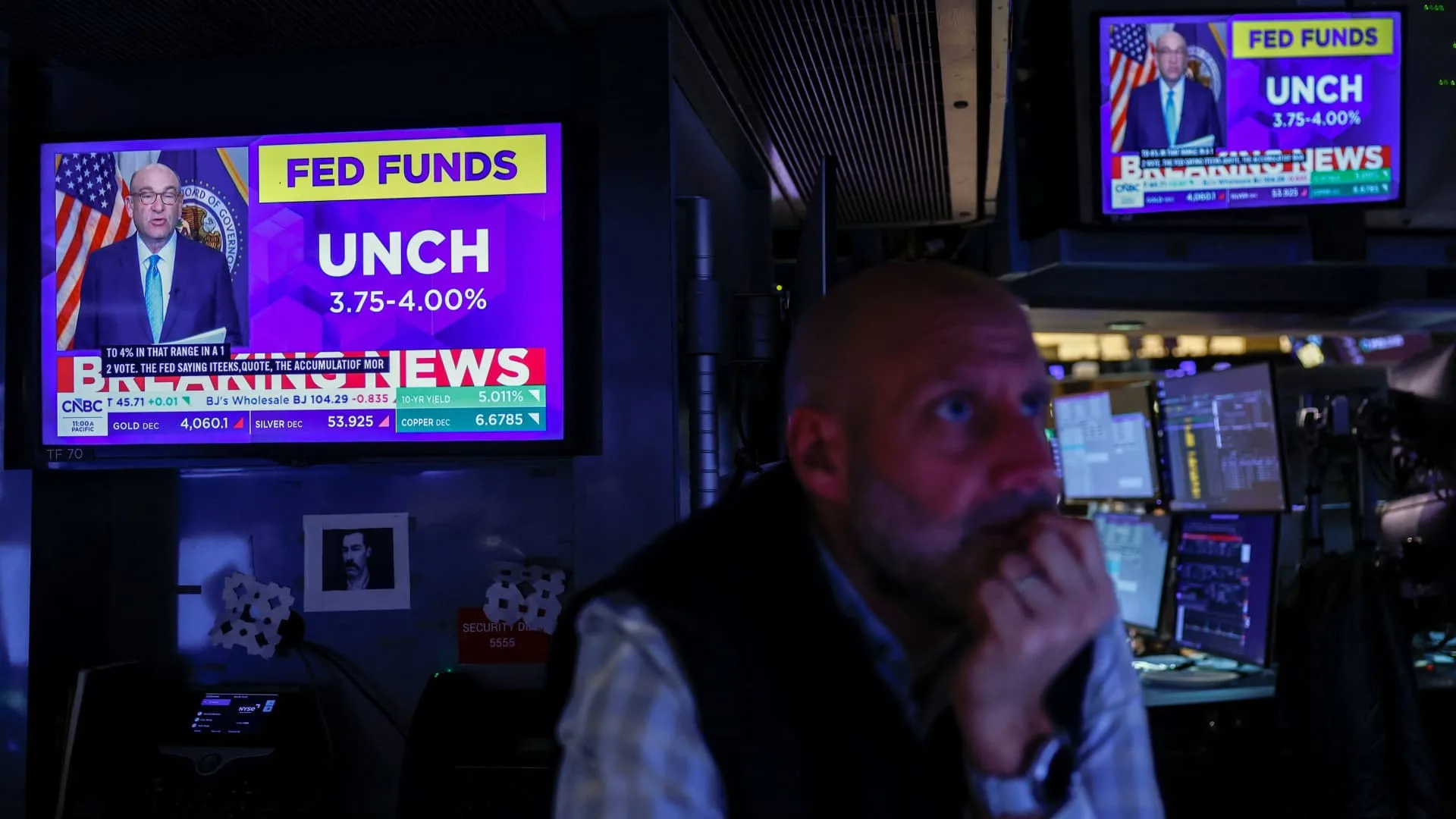
On the monetary policy side, the Federal Reserve decided to hold its benchmark interest rate in the 3.75%–4% range on Wednesday. The decision matched market expectations after the Fed raised rates by a quarter point in September. In its statement, policymakers noted that inflation was "still high" but wanted to see "further accumulation of information" before taking their next step. Daniel Siluk, Head of Global Short Duration and Liquidity at Janus Henderson Investors, said the Fed's stance could be read as slightly dovish, but is better interpreted as an expression of patience rather than a change in the tightening bias. "The door remains open to further tightening, but the Committee appears willing to wait for incoming data to validate the need for additional action," he said.
The market will scrutinize the release of the September PCE price index on Thursday, the Fed's preferred measure of inflation. In addition, the first reading of third-quarter GDP and weekly jobless claims will also be released. On the corporate side, quarterly reports from Caterpillar and Eli Lilly will be in focus in the morning session, followed by Amazon and Intel after the market close.
Meanwhile, in Asia-Pacific, markets opened mixed on Thursday morning. Hong Kong's Hang Seng index rose 0.24%, while mainland China's CSI 300 fell 0.64%. The health and energy sectors led gains on the Hang Seng. In Japan, the Nikkei 225 opened up more than 0.58%, while South Korea's Kospi edged up 0.11% but the Kosdaq plunged 3.43%. Advantest shares jumped 8% after the company raised its earnings outlook, supported by demand for semiconductor test equipment for AI. Samsung Electronics also reported third-quarter operating profit in line with estimates, with revenue surging 126.88% year-on-year.
For Indonesian investors, the turmoil on Wall Street is worth watching. Global technology and AI shares have an indirect correlation with the IHSG, mainly through global risk sentiment and foreign capital flows. The weakening of Nasdaq futures could trigger risk-off action in emerging markets, including Indonesia, in Thursday's trading. However, if the PCE data later shows inflation easing, pressure on the Fed to raise interest rates further will diminish, which could be a positive catalyst for emerging-market bonds and equities.
The question now is: will Alphabet's correction trigger a broader correction in the technology sector, or will it instead become an entry point for investors who believe in the long-term AI cycle? The answer will begin to emerge from the market's reaction to the earnings releases from Amazon and Intel, as well as the PCE inflation data due Thursday night Indonesian time.