Two Years of MBG: 57 Million Beneficiaries, 27,000 Kitchens, and a Budget Efficiency Test
Baca dalam 60 detik
- Program Makan Bergizi Gratis telah menjangkau 56,99 juta orang per 31 Agustus 2026, atau sekitar 76 persen dari target 74,56 juta penerima.
- BGN mengoperasikan 27.022 dapur SPPG dan menyerap 1,28 juta tenaga kerja serta 142 ribu pemasok, mayoritas UMKM dan koperasi desa.
- Pengamat menilai sasaran program perlu dipertajam ke wilayah tertinggal, sementara pemerintah daerah diminta aktif mengawasi keamanan pangan.
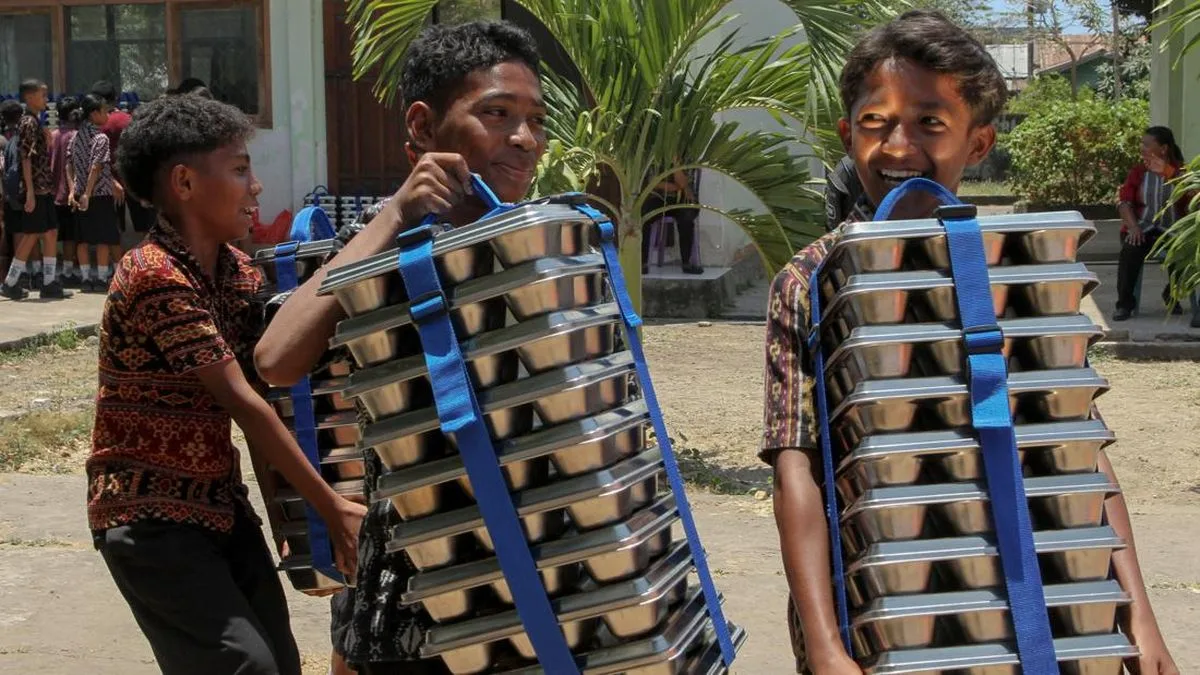
Entering two years of President Prabowo Subianto's administration at the end of October 2026, the Free Nutritious Meals (MBG) program had reached 56.99 million beneficiaries as of 31 August 2026. That figure equals 76.45 percent of the government's target of 74.56 million people, marking a major leap since the program was first launched in January 2025.
The expansion of services has been aggressive. The National Nutrition Agency (BGN) reported that around 340,000 of Indonesia's total 580,000 educational units had received MBG services as of 10 September 2026. On 2 October, BGN inaugurated 480 new Nutrition Fulfillment Service Units (SPPG) across 16 eastern provinces, including 3T areas (underdeveloped, frontier, outermost) and regions with high stunting prevalence. The addition brought the total number of operating SPPG kitchens to 27,022 units, after previously passing through a moratorium period.
The impact on students' consumption patterns is illustrated by Bappenas research presented by former Head of the Indonesian Government Communication Agency, Muhammad Qodari. Fruit consumption among students jumped from 26 percent to 84 percent, while animal protein intake rose from 65 percent to 90 percent. The number of students taking part in learning activities while full also surged from 43 percent to 84 percent.
"We see a major change in their enthusiasm for learning. The children are more focused in class, more active in asking questions, and more cheerful throughout the day," said Sientje Martentji Ajomi, principal of SD Negeri 24 Rufei in Sorong City.
The findings are reinforced by an evaluation survey of the Seven Great Indonesian Children's Habits (7KAIH) framework conducted by the Ministry of Primary and Secondary Education among 1,203,309 student respondents from May–June 2025 to November–December 2025. As a result, MBG-receiving schools recorded a 2.37 percentage point higher reduction in learning disruptions caused by hunger than non-receiving schools, with the most striking gap in eastern Indonesia.
On the economic side, a BPS survey shows MBG eases household spending burdens because families can shift their daily food budget to other needs. "The remaining income families have can be used to improve their welfare," said BPS Head Amalia Adininggar Widyasanti. The program also drives local supply chains by involving 1,285,250 workers and 142,387 suppliers, consisting of 59,291 MSMEs, 13,306 cooperatives, 690 KDKMP, 1,410 BUMDes, 157 BUMDesma, and 66,903 other suppliers.
Although the achievements are impressive, some observers highlight the need to sharpen targeting. Public policy researcher at IDP-LP, Riko Noviantoro, considers MBG a breakthrough because it targets schoolchildren, pregnant women, and toddlers—groups that had rarely been the focus of nutrition programs. However, he urges BGN to shift priority to underdeveloped regions and to screen schools in Greater Jakarta that genuinely need assistance. "Not all schools necessarily need it. We can screen them by group," he said.
The move aligns with BGN's decision to remove 1,653 educational units from the recipient list in early September, mostly international-standard private schools deemed capable of financing their own needs. Public policy observer Trubus Rahadiansyah added that MBG's impact is relatively positive for people in deciles 1 to 4, but optimization requires the involvement of regents, mayors, governors, and regional legislatures in both implementation and oversight.
BGN Head Sudaryono also asked local governments to conduct surprise inspections of SPPG, even in the early hours, to ensure cleanliness, discipline, and food safety. The question now: can MBG's governance keep pace with the expansion rate of its kitchens, so that nutrition quality and budget accountability remain intact as the program enters its third year?