Puan Urges Police to Arrest Attackers of BEM UI Activist in Tebet
Baca dalam 60 detik
- Ketua DPR Puan Maharani meminta kepolisian segera mengusut dan menangkap pelaku penyerangan terhadap Hafidz Hernanda, aktivis BEM UI, di Tebet.
- Insiden yang terjadi Minggu malam memicu kecurigaan karena pelaku tak langsung membawa motor korban, melainkan menyerang lebih dulu.
- Komisi III DPR akan memanggil pihak terkait untuk mendalami motif dan memastikan kekerasan terhadap mahasiswa tidak terulang.
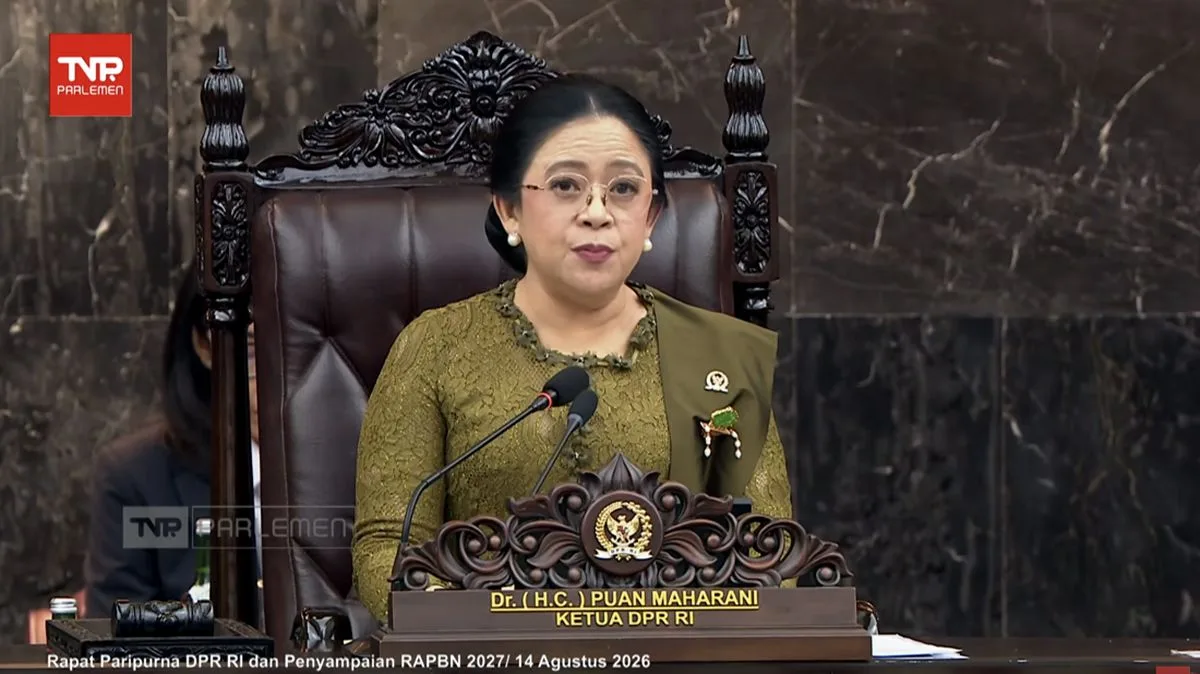
Speaker of the Indonesian House of Representatives (DPR) Puan Maharani is demanding that police move quickly to arrest those behind the attack on Hafidz Hernanda, Social and Political Coordinator of the University of Indonesia Student Executive Board (BEM UI). The incident, which took place in the Tebet area of South Jakarta on Sunday night (4/10), should not be allowed to pass without consequence, she said.
In a statement at the parliamentary complex on Tuesday (6/10), Puan stressed that violence in any form cannot be justified. She asked investigators to work thoroughly to uncover who was behind the attack. "We will ask the police to investigate this matter as well as possible and then quickly find the perpetrators," said the PDIP politician.
Puan also said she would assign DPR Commission III to monitor the case. According to her, the incident involving the student activist must be taken seriously because it concerns civil liberties and public safety. "Later in Commission III we will ask why this could happen and such things must not happen again," she said.
Echoing Puan, DPR Commission III member Nasir Djamil described the physical attack on the student as a real form of terror. He urged police to uncover the motive behind the attack. "A physical attack on a student is a real form of terror and must be uncovered so the motive for the beating can be known," Nasir said. He hoped that the presence of witnesses or surveillance camera (CCTV) footage around the location could speed up the arrest of the perpetrators.
The incident began when Hafidz—known as Bapis—was heading home after a consolidation meeting in the Tebet area. According to BEM UI Deputy Chair Fathimah Azzahra, the victim was suddenly attacked by unknown people and received death threats. "On his way home after the consolidation, our friend Hafidz, whom we often call Bapis, who was riding a motorcycle, became the victim of violence, assault, theft, and death threats by unknown people," Fathimah said at Metro Jaya Police Headquarters on Tuesday.
What stands out is the unusual modus operandi. BEM UI Legal Consultant Adiluhung noted that the perpetrators did not immediately make off with the victim's motorcycle. "After kicking Bapis's motorcycle, the perpetrators instead chose to beat up our brother Bapis. There was no attempt by the perpetrators to take the motorcycle or other valuables, at first," he explained. Valuables in the form of a new mobile phone were only taken after the altercation ended. That fact, according to Adiluhung, is odd if the motive was purely robbery.
Metro Jaya Police said they would look deeply into the case. Metro Jaya Police Head of Public Relations Kombes Budi Hermanto hoped the victim or related parties would immediately report the alleged assault so the investigation could proceed. "Of course we at Metro Jaya Police will look deeply into this incident in Tebet, the beating or alleged assault on one member of a student organization," Budi told journalists.
The case has emerged amid growing public attention to the safety of student activists and freedom of expression. The pattern of attack, which is not entirely ordinary crime—with indications of terror and intimidation—raises questions about whether any party wants to silence the student movement. The DPR, through Commission III, is expected not only to monitor the arrest of the perpetrators but also to push for reform of security in public spaces.
Going forward, the public will wait to see whether the police investigation can uncover the mastermind behind the attack. If there is indeed an element of terror, the case could set a bad precedent for the democratic climate. Conversely, transparency and firmness by the authorities will be a test of public trust in law enforcement.