TNI Defense Equipment Modernization at 81: Between Procurement and System Integration
Baca dalam 60 detik
- TNI memasuki usia ke-81 dengan gelombang pengadaan alutsista baru, namun tantangan utama bukan sekadar jumlah, melainkan integrasi sistem pertahanan.
- Pengamat menilai transisi dari Minimum Essential Force (MEF) ke postur jangka panjang masih menyisakan pekerjaan rumah, dengan capaian MEF baru sekitar 65 persen hingga 2024.
- Keberhasilan modernisasi akan ditentukan oleh kemampuan menyatukan platform dari berbagai negara ke dalam satu ekosistem komando dan kendali yang efektif.
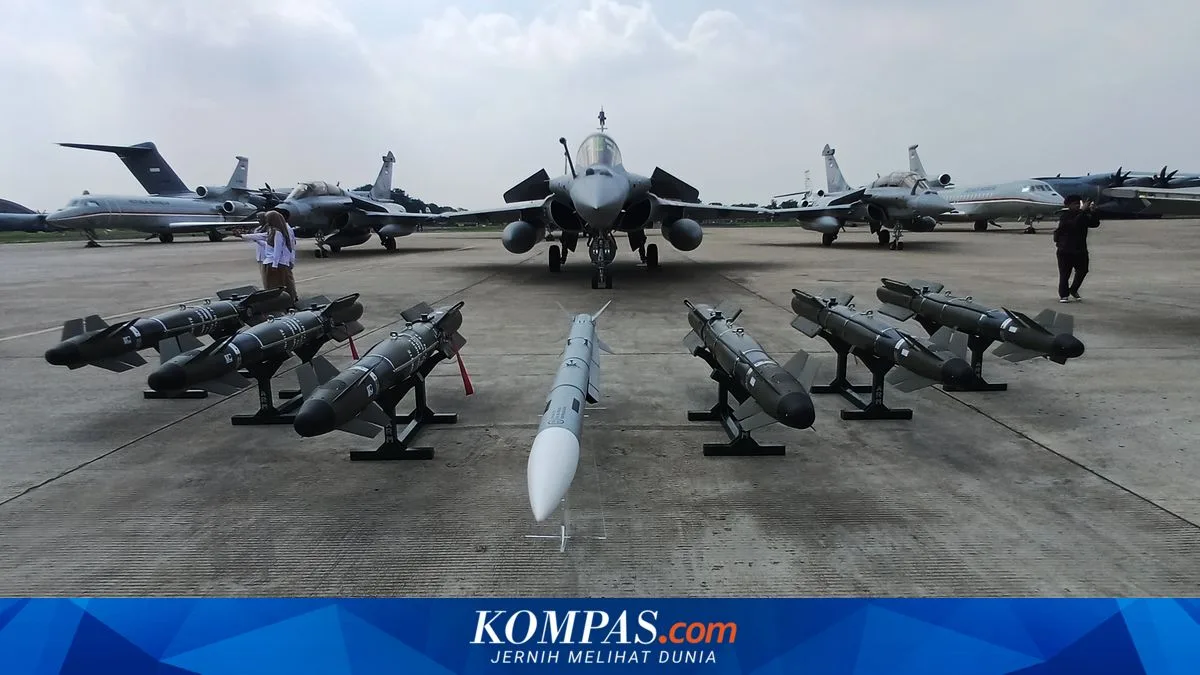
Entering its 81st year, the TNI stands at a crossroads between the urgent need to renew its arsenal and the challenge of unifying a diverse array of weapon systems sourced from around the world. A number of new defense equipment items—from Rafale fighter jets, GCI radars, to Meteor missiles—have strengthened the three service branches. However, military observers warn that adding platforms does not automatically increase deterrence, especially if the defense ecosystem is not yet integrated.
Political and military observer from Universitas Nasional, Selamat Ginting, assesses that defense equipment modernization is an unavoidable necessity. A heating geopolitical situation and an uncertain strategic environment mean Indonesia must accelerate renewal. "The modernization of TNI defense equipment in recent years is a step that indeed can no longer be postponed because Indonesia faces an increasingly uncertain strategic environment due to global geopolitics that is also heating up," Selamat told Kompas.com, Sunday (4/10/2026).
Most of the TNI's defense equipment is indeed more than 20 to 30 years old. The procurement of new platforms, according to Selamat, is part of efforts to build defense capabilities in line with developments in military technology. This process began when Prabowo Subianto served as Minister of Defense in 2019, which was then followed by the arrival of a number of fighter jets, radars, and advanced weaponry.
However, Selamat underlines that modernization must not stop at purchasing platforms from many countries. The more diverse the types of defense equipment without being built within a single ecosystem, the more likely it is to create new problems. "We must not end up with many modern platforms from many countries because it is not certain that we will then fit with a modern defense ecosystem," he said.
The measure of modernization's success, Selamat stresses, does not lie in how many weapons are owned. What is far more important is whether all of that defense equipment can be connected and used effectively within a single defense system. Communication systems, satellites, radars, surveillance devices, and command and control systems must be able to work in an integrated manner. "The success of modernization is not about how much defense equipment is bought, but how much our combat capability truly increases effectively," he said.
The character of modern warfare has also changed. Combat is no longer determined solely by the number of soldiers or the quantity of conventional weapons. Indonesia must take into account real-time capabilities in detecting threats, making decisions, and deploying forces. "Modern warfare that does not rely solely on the number of soldiers, but also on real-time situations, must be followed because the command and control system must be strong," Selamat said.
Therefore, building defense capabilities must include fighter jets, warships, missiles, drones, radars, satellites, and integrated communication networks. These capabilities must also support joint operations across the three service branches. "The satellites must be connected within the command system, especially also with computers, with adequate surveillance tools," Selamat said.
The problem is that the defense equipment modernization currently underway does not yet fully answer all the needs of Indonesia's defense posture. Selamat said the TNI's force development is still in a transition period from the Minimum Essential Force (MEF) concept toward long-term defense posture development. "The procurement of defense equipment is not yet fully in line with our geostrategic needs and MEF, because of the process and transition from the MEF paradigm toward long-term defense posture development," he said.
According to him, MEF from the outset was not merely a measure of the number of weapons owned by the TNI. MEF also concerns strength, capability, and how that strength is deployed to face threats. Selamat noted that up to 2024 the MEF achievement is still around 65 percent.
Thus, the challenge ahead is not only about budget and procurement, but also political will to build a domestic defense industry and ensure interoperability between platforms. Without that, defense equipment modernization risks becoming merely a shopping list that does not solve fundamental problems. The question is, can Indonesia turn this wave of procurement into a genuine leap in defense capability?