Mars Images Reveal Coral-Like Rock Layers, Traces of Ancient Climate?
Baca dalam 60 detik
- Mars Reconnaissance Orbiter menangkap formasi batuan berlapis di Arabia Terra yang menyerupai terumbu karang.
- Pola siklikal pada sedimen menunjukkan kemungkinan keterlibatan air dan badai debu periodik di masa lalu.
- Ilmuwan masih menganalisis komposisi batuan; misi penjelajah ke wilayah itu diperlukan untuk verifikasi.
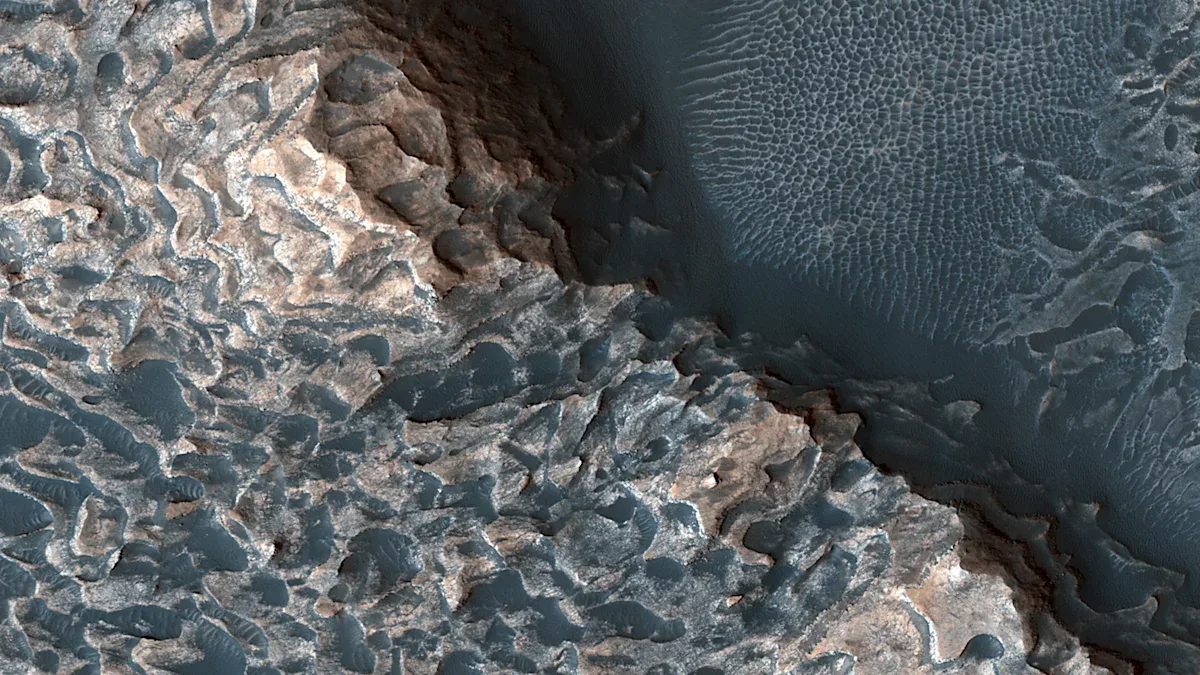
The latest images from the Mars Reconnaissance Orbiter (MRO) show an expanse of layered rock in Arabia Terra whose surface patterns resemble coral reefs. This formation is an important clue to how Mars' climate evolved billions of years ago, including the possible role of water that has since disappeared.
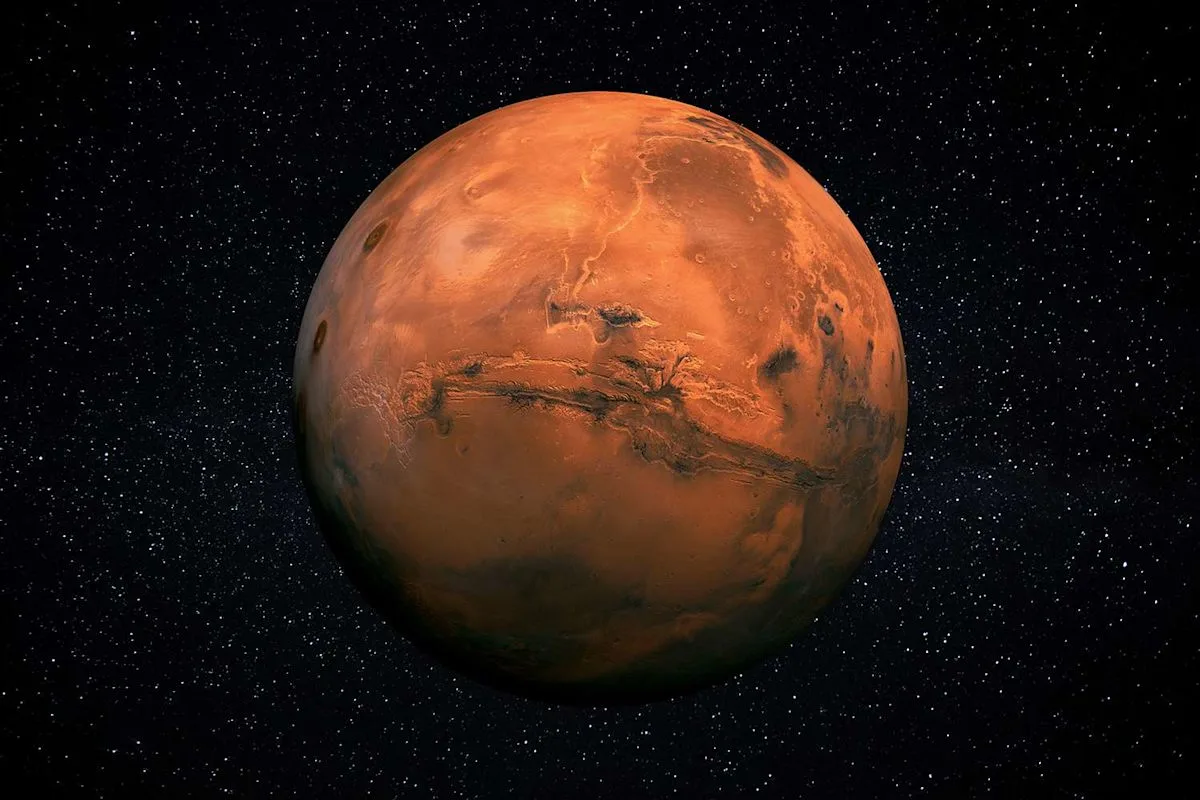
Arabia Terra stretches about 2,800 miles—equivalent to the breadth of the United States from coast to coast—and is filled with heavily eroded craters and canyons. The sediment layers that have now turned to stone indicate periodic changes in the surface and atmosphere. Researchers suspect the regular patterns were formed by cycles of dust storms mixing with groundwater before the planet dried out as it is today.
The striking colors in the photo are the result of processing by the HiRISE camera (High Resolution Imaging Science Experiment). The instrument works like a telescope pointed downward, recording three spectral bands that are then shifted and contrast-enhanced so that each band is clearly visible. Seen directly from orbit, the Martian landscape would appear more brownish. However, the rock and sand there are indeed darker and more bluish because they are volcanic basalt rich in iron and magnesium. Meanwhile, the brighter patches are made up of fine grains, including salts and clays. Wind and debris blowing across the surface form the uneven, sharp edges of the rock.
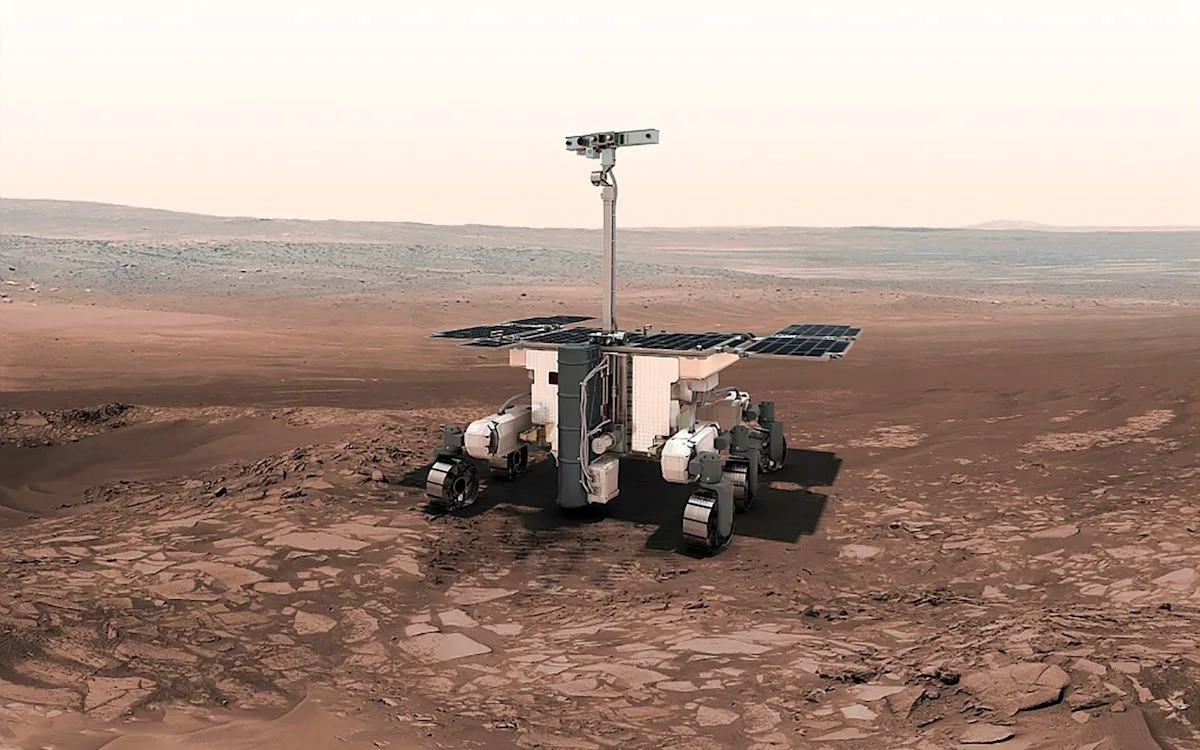
Analysis of these hardened sediment deposits reveals that the surface and atmosphere of Mars underwent changes in a regular pattern, and water was most likely involved in the process. However, because observations can only be made from space, scientists cannot yet confirm the composition and the mechanism that formed them. A rover landing in Arabia Terra is needed to obtain more detailed data.
“The cyclical patterns in these rock layers indicate that there was a recurring process involving water and dust in the past,” said a researcher involved in the analysis of the MRO images, as quoted from a Nautilus report.
For Indonesia, this finding is not merely space discourse. Understanding the ancient climate cycles on Mars can enrich paleoclimatology and astrobiology research that is also being developed domestically, for example through satellite observation and geological data analysis. In addition, multispectral camera technology such as HiRISE serves as a reference for the development of remote sensing sensors for natural resource mapping and disaster mitigation on Earth.
Going forward, a rover mission to Arabia Terra will be key to testing the hypothesis about the role of water in shaping the Martian landscape. If proven, this finding would not only reveal the climate history of the red planet but also broaden understanding of the potential for life beyond Earth. Will the next generation of rovers be able to unlock the mystery of those layered rocks?