Robert P Jones: "This Is Our 1933" — When White American Christians Traded Faith for Power
Baca dalam 60 detik
- Robert P Jones, pendiri PRRI, merilis buku Backslide yang membandingkan Amerika Serikat 2025 dengan Jerman 1933.
- Data PRRI menunjukkan penurunan drastis populasi Kristen kulit putih dari 54% (2008) menjadi 41% (kini), memicu aliansi transaksional dengan Trump.
- Jones memperingatkan bahwa backsliding demokrasi bisa dibalik jika umat Kristen arus utama bersuara, tetapi jendela waktunya menyempit.
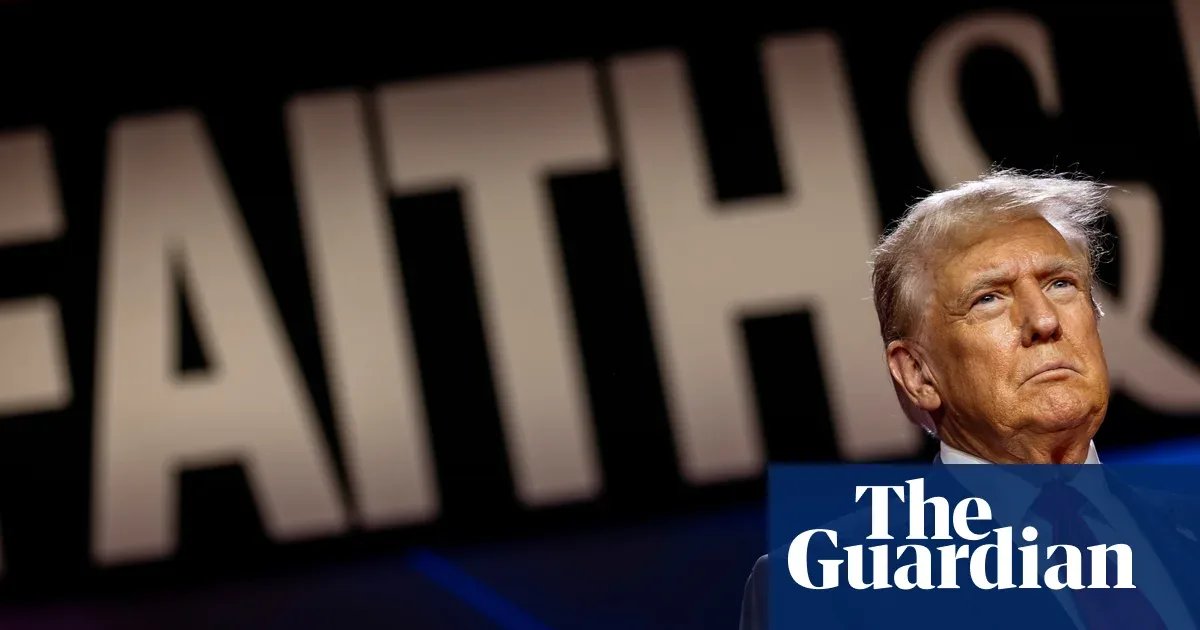
Robert P Jones, founder of the Public Religion Research Institute (PRRI), writes in his latest book that the United States is undergoing a democratic "backslide" driven by a transactional alliance between a shrinking white Christian population and Donald Trump. In an interview with The Guardian, Jones said he hesitated to draw parallels with Nazi Germany, but demographic data and Trump's campaign rhetoric led him to conclude: "This is our 1933."
The book, titled Backslide: Reclaiming a Faith and a Nation After the Christian Turn Against Democracy, opens with the rise of the Nazi Party and the involvement of German churches. Jones cites Pastor Martin Niemöller, who initially did not fully oppose Hitler during his first four years, before eventually regretting that he had not spoken out earlier. Jones writes, "As God asked Niemöller where he was between 1933 and 1937, God will ask us where we were between 2025 and 2028."
Jones, who grew up as a Southern Baptist in Mississippi and earned a master of divinity, has long studied the relationship between religion and politics. His previous books, including The End of White Christian America (2016) and White Too Long (2020), documented the demographic shift that he now calls a trigger for existential panic among white evangelicals. According to PRRI data, in 2008 white Christians still made up 54% of the US population; now they are only 41%. White evangelicals fell from 25% to 13% over the past quarter century, and the Southern Baptist Convention has lost more than 3 million members since its peak in 2006.
Jones argues that the alliance between Trump and white evangelicals is not an ideological agreement but an exchange of interests. "Trump likes to talk about the art of the deal, and there really is a big quid pro quo between a declining white evangelical population and Trump," he said. "The main appeal is not policy, it is anti-immigrant: 'I will bring back an America that looks like you, and I will restore power to Christian churches.'"
He added that Trump explicitly offers a transaction: their votes in exchange for a promise that they will not have to vote again. "Evangelicals are willing to forgive all kinds of sins with the idea that he will bring them back to power as their numbers shrink," Jones said. This pattern, he argues, differs from the Religious Right movement of the 1980s, which wrapped political ambition in the language of morality. "What we face now is a Christian nationalism that is openly anti-democratic, with the slogan: 'This country is ours, and we will use the power available to claim it.'"
"If you don't want to live in a place where police act brutally, kidnap people in the streets wearing masks, and kill citizens in the streets, now is the time to speak up." — Robert P Jones
Jones also highlights how Trump's rhetoric about "bad blood" and "good genes" echoes the language of racial purity. "If they are polluting the blood, what is pure blood? We know where that story leads," he said. He cites Hannah Arendt's 1950 report on postwar Germany, which stated that many Germans, especially the educated, were no longer able to tell the truth even if they wanted to.
In his analysis, Jones says white churches have undergone an "apostasy" by trading their spiritual core for political dominance. He notes that racial and partisan segregation in churches means congregants rarely hear criticism of their views. "You don't have to explicitly teach Christian nationalism; you just have to make sure there is no criticism of it," he said. PRRI data show that among white evangelicals, the more often they attend church, the more extreme their anti-immigrant, anti-Black, and anti-Muslim views.
Jones also criticizes the official investigation into the January 6, 2021 Capitol attack, which he says ignored prominent Christian symbols, such as wooden crosses and "Jesus Saves" banners alongside Confederate flags. "I was surprised at how little of that appeared in the House select committee's report. That was a great loss and a distortion of public perception," he recalled. He argues that the influence of Christian nationalism has now reached national security agencies, with Defense Secretary Pete Hegseth sporting tattoos of Crusader iconography and renaming the Department of Defense the "Department of War."
Even so, Jones is not entirely pessimistic. He stresses that "backsliding is not irreversible" and that national recovery may be possible through honest confrontation with history and genuine repentance. Across the US, alternative Christian voices are emerging, such as James Talarico, a Presbyterian seminarian running for the US Senate in Texas, and Methodist pastor Adam Hamilton in Kansas. "For a long time, mainline Protestants were taught politeness and respectability, which made them reluctant to speak out," Jones said. "If we do not want the public face and future of Christianity to be only Christian nationalism, we must present a version of Christianity compatible with democracy — one that emphasizes care for orphans, widows, and immigrants."
Jones hopes his book will be a wake-up call for white Christians to realize that they face a choice similar to that of the German churches in 1933. "This is a wake-up call to see the bright lines being crossed, to be clear about how dangerous it is, and for Christian readers — especially white ones — to realize that we have a special responsibility to offer a different version of the faith. Because it is our faith that has been hijacked and used to legitimize the anti-democratic, illiberal authoritarian movement now sweeping the US," he concluded.
For Indonesia, this phenomenon serves as a mirror of how religion can be mobilized for electoral political interests. With the world's largest Muslim population, Indonesia has a diversity of religious traditions that often become a tug-of-war between political forces and spiritual authority. The question is whether Indonesia will learn from Jones's warning, or instead repeat the same pattern when religious identity is used as a tool to hold on to power?