12 AAV M-35 Amphibious Combat Vehicles from US Bolster Marines, Defense Minister Sjafrie Leads Handover
Baca dalam 60 detik
- Kementerian Pertahanan menyerahkan 12 kendaraan tempur amfibi AAV M-35 buatan Amerika Serikat kepada Korps Marinir TNI AL.
- Pengadaan ini menjadi bagian dari modernisasi alutsista matra laut untuk menjaga kedaulatan di perairan strategis Indonesia.
- Ke depan, Marinir dituntut menguasai operasi amfibi generasi baru sekaligus menghadapi tantangan logistik dan pemeliharaan.
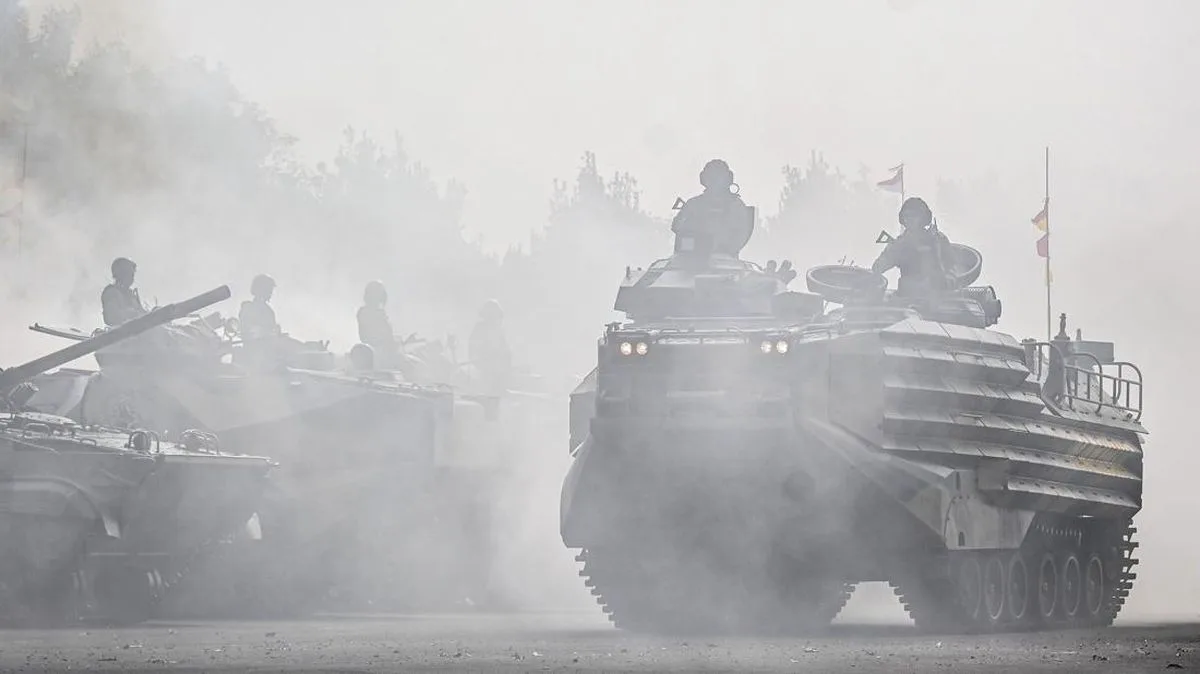
The Indonesian Navy's Marine Corps has officially received 12 AAV M-35 amphibious combat vehicles from the Ministry of Defense. The handover took place at the Marine Corps Command Headquarters in Cilandak, Jakarta, and was led directly by Defense Minister Sjafrie Sjamsoeddin together with Indonesian Military (TNI) Commander General Agus Subiyanto. The US-made vehicles are projected to strengthen Indonesia's amphibious landing operations in strategic waters.
The move marks a new chapter in the modernization of the navy's defense equipment. For years, the Marines relied on an aging fleet of older-generation amphibious vehicles. The arrival of the AAV M-35 gives the navy more agile maneuvering capability, better protection for troops, and greater carrying capacity. The procurement also underscores a defense policy direction that no longer merely guards the coastline but projects power from sea to land.
In the regional geopolitical context, the decision to buy military equipment from the United States cannot be separated from the dynamics of alliances and the balance of power in the Indo-Pacific. For Indonesia, diversifying sources of defense equipment is important so as not to depend on a single supplier country. However, procurement from the US often carries its own consequences, from maintenance schemes to interoperability readiness with existing weapons systems.
For the Indonesian public, the fiscal and strategic implications of this purchase deserve scrutiny. The defense budget allocated for new equipment must be commensurate with improved operational readiness. In addition, the presence of modern amphibious combat vehicles demands a supporting ecosystem: crew training, spare parts, and maintenance facilities. Without that, advanced equipment will only be a display at headquarters.
"This procurement is not merely an increase in numbers, but a leap in amphibious operational capability," a Navy official said in an official statement, emphasizing the importance of troops mastering the technology.
TNI Commander General Agus Subiyanto stated that modernizing defense equipment is a necessity amid regional security uncertainty. According to him, a credible defense force serves as a diplomatic instrument to prevent conflict escalation. Along similar lines, Defense Minister Sjafrie Sjamsoeddin affirmed the government's commitment to meeting basic defense needs, especially in the maritime dimension that is the backbone of an archipelagic state.
Going forward, attention will focus on how quickly the Marines integrate the AAV M-35 into operational doctrine. Will this procurement be followed by sustained spare parts purchases and advanced training? The public has the right to know the long-term plan, including combat readiness targets and maintenance budget allocations. Without transparency, defense equipment modernization risks becoming a symbolic project with no real impact on maritime sovereignty.