Argo Bromo Anggrek Driver Named Suspect, Metro Police: Emergency Brake Applied 263 Meters Too Late
Baca dalam 60 detik
- Penyidik menetapkan masinis KA Argo Bromo Anggrek berinisial AN sebagai tersangka tragedi tabrakan beruntun di Stasiun Bekasi Timur.
- Data logger menunjukkan pengereman darurat baru dilakukan saat kereta berjarak 263 meter dari titik tumbukan, dinilai terlambat oleh penyidik.
- Tersangka dijerat berlapis pasal KUHP dan UU Perkeretaapian dengan ancaman hukuman maksimal 12 tahun penjara.
Investigators from the Directorate of General Criminal Investigation of the Metro Jaya Police have officially named the driver of the Argo Bromo Anggrek train, identified by the initials AN, as a suspect in the fatal accident at East Bekasi Station. The decision on his legal status was announced directly by the Deputy Director of Criminal Investigation of the Metro Jaya Police, AKBP I Dewa Anom Danujaya, at a press conference in Jakarta on Tuesday (29/9).
AN has been charged under a series of stacked articles, from Article 323, Article 324, and Article 474 of the Criminal Code (KUHP), to Article 198 and Article 206 of Law No. 23 of 2007 on Railways. The combination of these articles carries heavy legal consequences, with a maximum prison sentence of 12 years. "With a maximum penalty of 5 to 12 years in prison," Anom said in his statement to the media.
The naming of the suspect marks an important turning point in the investigation that has been underway since the incident on Monday night (27/4). The public is waiting to see how investigators build a legal construction capable of answering the big question: was the tragedy that claimed more than a dozen lives purely the result of human negligence, or were there systemic factors in the governance of the national railway system that also contributed?
During the investigation, the forensic laboratory team analyzed the data logger—an electronic device that functions as a black box to record the train's operational parameters. The findings from this device are crucial because they provide an objective picture of the chronology of the final seconds before the collision occurred.
Based on that data, investigators concluded that the emergency braking action taken by AN was too late. "Investigators concluded that the emergency brake action should have been taken at a greater distance than the action taken at the time of the first braking," Anom said. This conclusion indicates that investigators see there was sufficient time and distance for the driver to react earlier, even though the situation on the ground at the time involved a chain of emergencies.
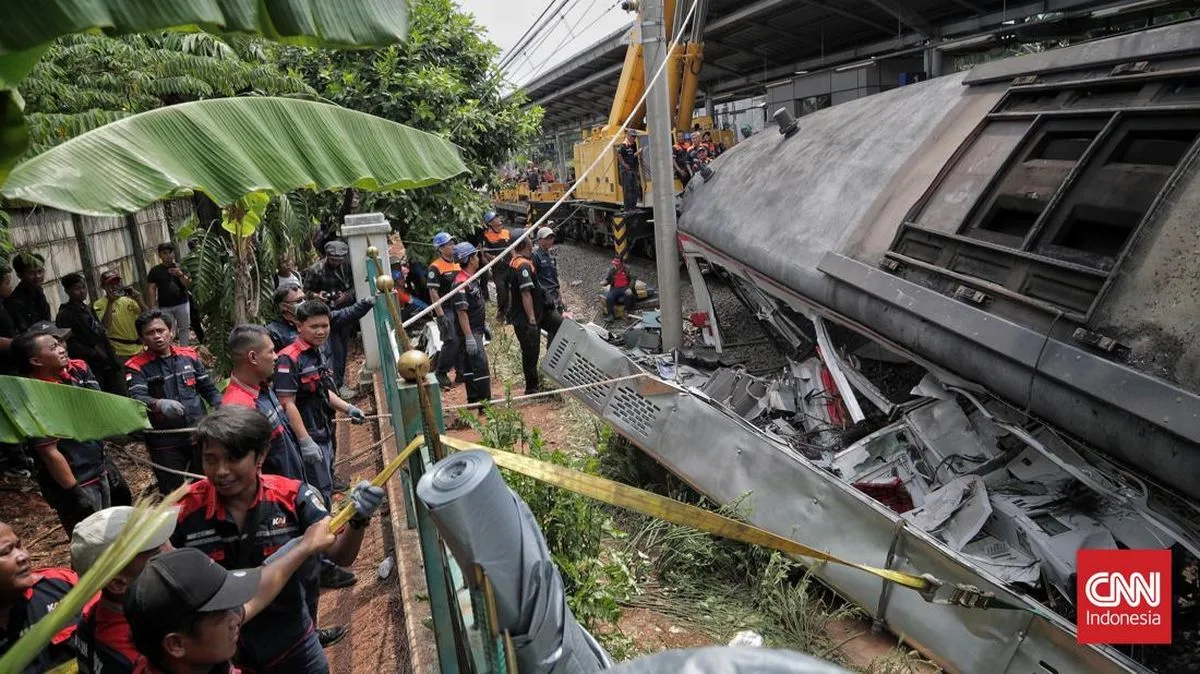
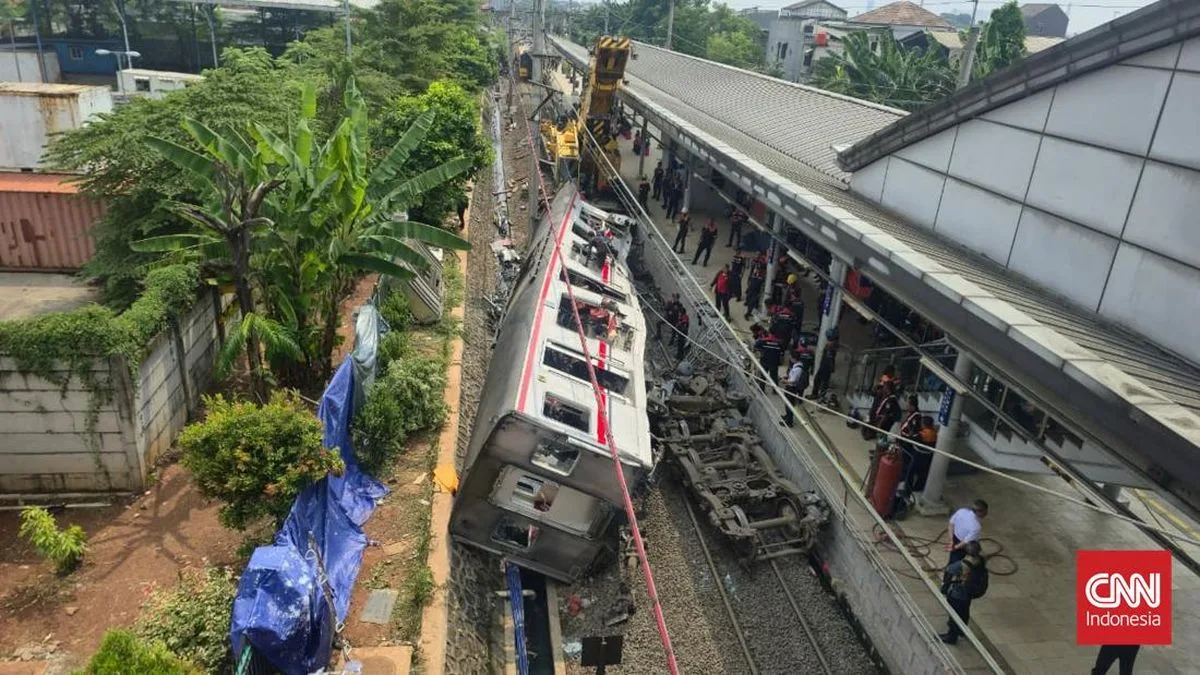
The chain of unfortunate events itself began when a Green SM taxi broke down in the middle of a level crossing due to an electrical system failure. The car was then struck by a passing KRL Commuter Line train. As a result of the first accident, a KRL trainset bound for Cikarang was forced to make an emergency stop at East Bekasi Station. While stopped there, the KRL trainset was struck from behind by the Argo Bromo Anggrek train, crushing the rear women-only carriage and claiming more than a dozen lives.
"It is known that the emergency brake action taken by the driver of the Argo Bromo Anggrek train occurred at 21.51.54, when the train's position was 263 meters from the point of collision with KRL 5568." — AKBP I Dewa Anom Danujaya, Deputy Director of Criminal Investigation of the Metro Jaya Police
From a regulatory perspective, the articles imposed on AN reflect the authorities' effort to cover the entire spectrum of negligence, from acts that endanger public rail traffic (Article 323 of the KUHP) to the failure of train crew to comply with orders from traffic controllers, signals, or signs that caused an accident (Article 206 of the Railways Law). Interestingly, Article 198 of the Railways Law, which governs the operator's obligation to place clear prohibition signs within the railway right-of-way, was also included. This opens the possibility that investigators are not only highlighting the role of an individual but also tracing corporate responsibility in the incident.
This case highlights a fundamental issue in Indonesia's public transportation ecosystem: how reliable are the layered safety systems that are supposed to protect passengers? Level crossings that remain danger points, signal coordination between trains, and the emergency procedures that crew must take within seconds are all under scrutiny. For rail service users—who number in the millions every day—the naming of the suspect is a test of the state's credibility in enforcing safety standards, as well as in restoring public trust that had been shaken.
Going forward, the public will watch whether the legal process against AN proceeds transparently and fairly, or whether it stops at the driver as the easiest party to blame. The big question: will this investigation also reveal systemic weaknesses in the management of national railway safety, or will responsibility be borne entirely by the individual at the controls?