Uncrewed Boat Explores Antarctica for 22,000 Km, Unravels Mystery of Ocean Carbon Sink
Baca dalam 60 detik
- Saildrone, perahu otonom bertenaga surya dan angin, memulai misi keliling Antartika sejauh 22.000 km untuk mengukur karbon di laut dan atmosfer.
- Data dari misi ini akan membantu ilmuwan memahami peran laut sebagai penyerap emisi dan dampaknya terhadap perubahan iklim.
- Temuan ini dapat memengaruhi kebijakan iklim global dan memberikan pelajaran bagi Indonesia dalam memantau kesehatan lautnya.
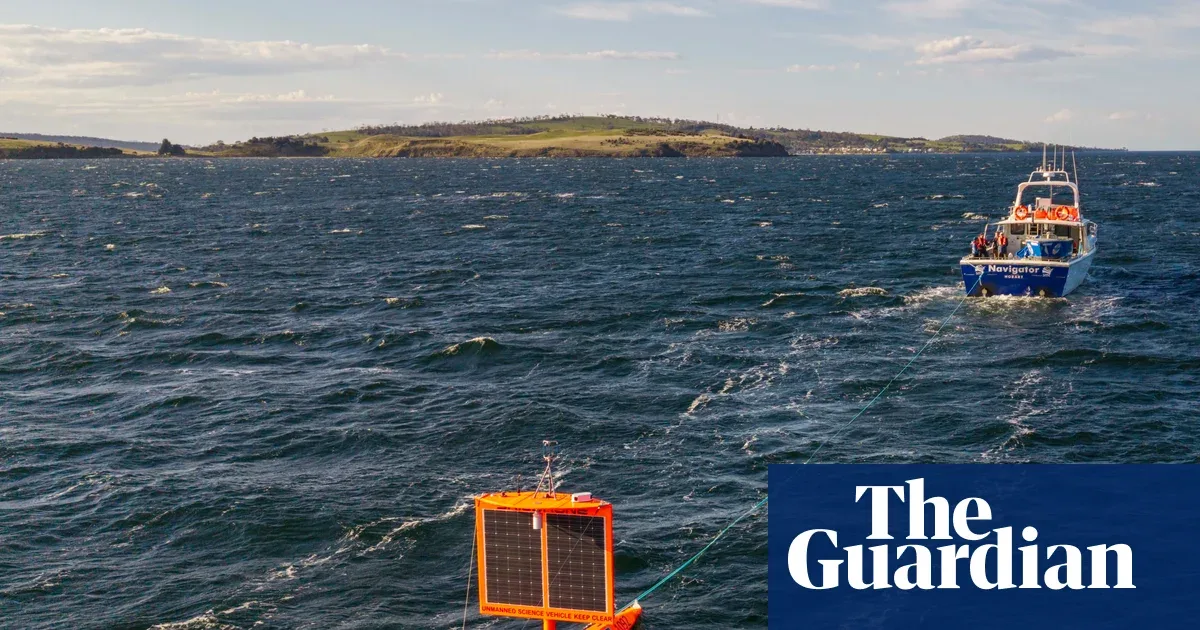
A brightly orange uncrewed boat is sailing from Hobart, Australia, toward the fierce waters of Antarctica. Its main mission: collecting carbon dioxide data in the ocean and atmosphere to unravel the ocean's role as an emissions sink. The 22,000-kilometer journey is the first of a fleet of four units to be deployed across the world's oceans.
The seven-meter boat, produced by United States maritime company Saildrone, is designed to withstand extreme conditions. With a heavy keel, rudder, and fixed solar sail, the vessel will be monitored remotely via satellite. Dr Elizabeth Shadwick, lead researcher from CSIRO, estimates the journey will take seven to nine months. "We already saw eight-meter waves and 35-knot winds a day after launch," she said, describing the harsh terrain faced.
During the voyage, the boat will record various parameters: wind speed, air pressure, solar radiation, sea temperature and salinity, chlorophyll, and carbon dioxide levels in water and air. The data is expected to reveal the dynamics of ocean carbon uptake, especially in the Southern Ocean, which plays a major role. Shadwick stressed that the ocean absorbs about a third of human emissions each year. "If we want to keep relying on this ocean service, we need to understand how it will change in the future," she added.
Dr Pep Canadell, a senior scientist at CSIRO, described carbon uptake by the ocean and forests as a "50% discount on climate change". However, this capacity could change due to water warming, westerly winds, melting ice, ocean acidification, and the ozone hole. Direct observations will enable more accurate modeling. Professor Matthew England from the University of New South Wales, who was not involved in the project, said tracking carbon uptake is crucial. "If uptake starts to decline significantly, that is a sign our emissions problem is much bigger," he said.
For Indonesia, this mission highlights the importance of sustained ocean monitoring. As an archipelagic country with the highest marine biodiversity, Indonesia has a strategic role in the global carbon cycle. Data from Antarctic waters can enrich regional climate models, especially to understand how ocean currents and temperature affect carbon uptake in tropical waters. In addition, autonomous technologies like Saildrone offer a cost-effective solution for monitoring vast, hard-to-reach ocean areas, a valuable lesson for Indonesian maritime research and policy agencies.
The next Saildrone fleet will be launched every three months and deployed in the Southern, Pacific, Atlantic, and Indian Oceans. Data will be accessed almost real-time through the mission portal, then undergo quality checks before being used for further research. With the climate crisis increasingly urgent, this innovative step could be a game-changer in understanding the limits of the ocean's capacity to absorb emissions. Will similar technologies be adopted by maritime nations like Indonesia to safeguard their climate commitments?