PAN: 2029 Election Design Must Comply with Constitutional Court Rulings, Not Just Political Deals
Baca dalam 60 detik
- PAN menegaskan setiap rancangan Pemilu 2029 wajib merujuk pada putusan Mahkamah Konstitusi, terutama soal pemisahan pemilu nasional dan lokal.
- Usulan Pileg dan Pilpres digelar terpisah dinilai sebagai opsi baru yang berpotensi menimbulkan persoalan konstitusional jika tidak dikaji cermat.
- DPR melalui Komisi II tengah membuka ruang revisi UU Pemilu, sementara partai-partai mulai bersiap mendorong skenario pemilu terpisah.
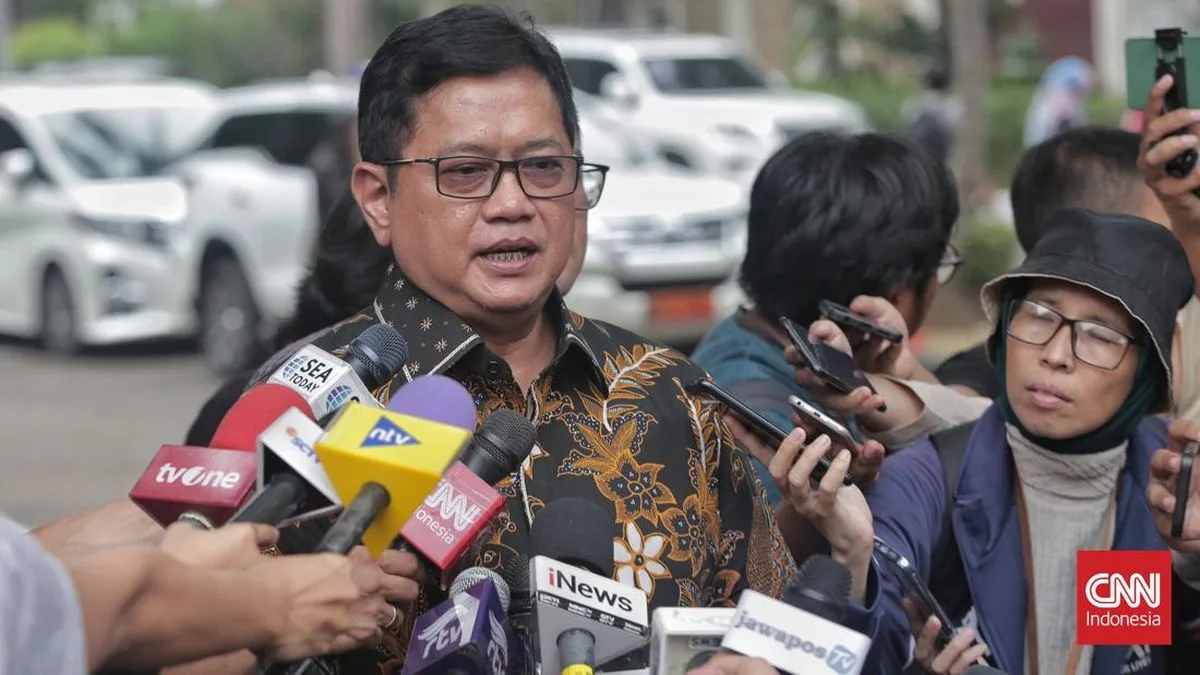
Deputy Chairperson of the National Mandate Party (PAN) Viva Yoga Mauladi stressed that the architecture of the 2029 Election must not stray from the constitutional corridor and the rulings of the Constitutional Court (MK). The statement came in response to the proposal to separate legislative elections (Pileg) and presidential elections (Pilpres), which has resurfaced in the election bill.
According to Viva, the election design must rest on the interests of voters, the burden on organizers, costs, campaign quality, the effectiveness of presidential government, and most importantly, the ease for the public to exercise their voting rights. He assessed that the proposal to separate Pileg and Pilpres is a new design choice that lawmakers need to review again.
Viva reminded that the proposal to separate Pileg and Pilpres differs from Constitutional Court Ruling No. 135/PUU-XXII/2024, which instead separates national elections and local elections. "PAN understands why Pileg is held before Pilpres. One reason is that the Pileg results will be used as a political ticket in the Pilpres," he said.
He also referred to Constitutional Court Ruling No. 62/PUU-XXII/2024, which removed the presidential threshold. In that ruling, the Court provided guidance that the nomination of candidate tickets is carried out by political parties or a coalition of political parties participating in the election, without the requirement of a percentage of DPR seats or national valid votes. "Therefore PAN is guided by the principle that we should not resolve one constitutional problem only to create a new constitutional problem," Viva said.
PAN's statement comes amid discourse revived by Member of DPR Commission II Ahmad Doli Kurnia. The Golkar politician proposed that Pileg and Pilpres be held separately again, after several recent elections were held simultaneously. "We have from the start proposed that the three types of elections we have—pileg, pilpres, and pilkada—should be held separately, none combined," Doli said in his statement on Tuesday (22/9).
The discourse has emerged alongside plans to discuss the Election Bill in DPR Commission II in the near future. If the proposal to separate Pileg and Pilpres is adopted, the consequences are not simple: election organizers must prepare two major stages, the budget will swell, and political parties will need to rearrange their coalition strategies. On the other hand, separation could give voters room to evaluate the performance of the legislature and the executive separately.
In the Indonesian context, election design is always a major gamble because it involves government legitimacy and political stability. Constitutional Court Ruling No. 135/PUU-XXII/2024, which separates national and local elections starting in 2029, has changed the landscape, and any new proposal must be ensured not to clash with that ruling. PAN stressed that its position is open to various options, including holding Pileg first, as long as the final design is constitutional, rational, simple, non-discriminatory, and capable of producing better democracy.
Going forward, the deliberation of the Election Bill will be a test for the DPR and the government in formulating rules of the game that not only meet constitutional demands but also answer the practical needs of election administration. The question is, will lawmakers be able to craft a design that complies with Constitutional Court rulings without opening new avenues for disputes ahead of 2029?