Prabowo Slams Regional Rule "Burning 2 Hectares Allowed": A Dangerous Legal Loophole
Baca dalam 60 detik
- Presiden Prabowo mengecam delapan perda kabupaten yang memberi ruang warga membakar lahan hingga dua hektare, menyebutnya sebagai celah hukum yang tidak masuk akal.
- Pemerintah mengerahkan sekitar seribu perwira TNI/Polri untuk mengedukasi warga, sekaligus menyiapkan jalur pelaporan bagi yang ingin membuka lahan.
- Korporasi menghadapi kewajiban lebih ketat seperti membangun menara dan embung, dengan penegakan hukum yang ditegaskan tanpa pandang bulu.
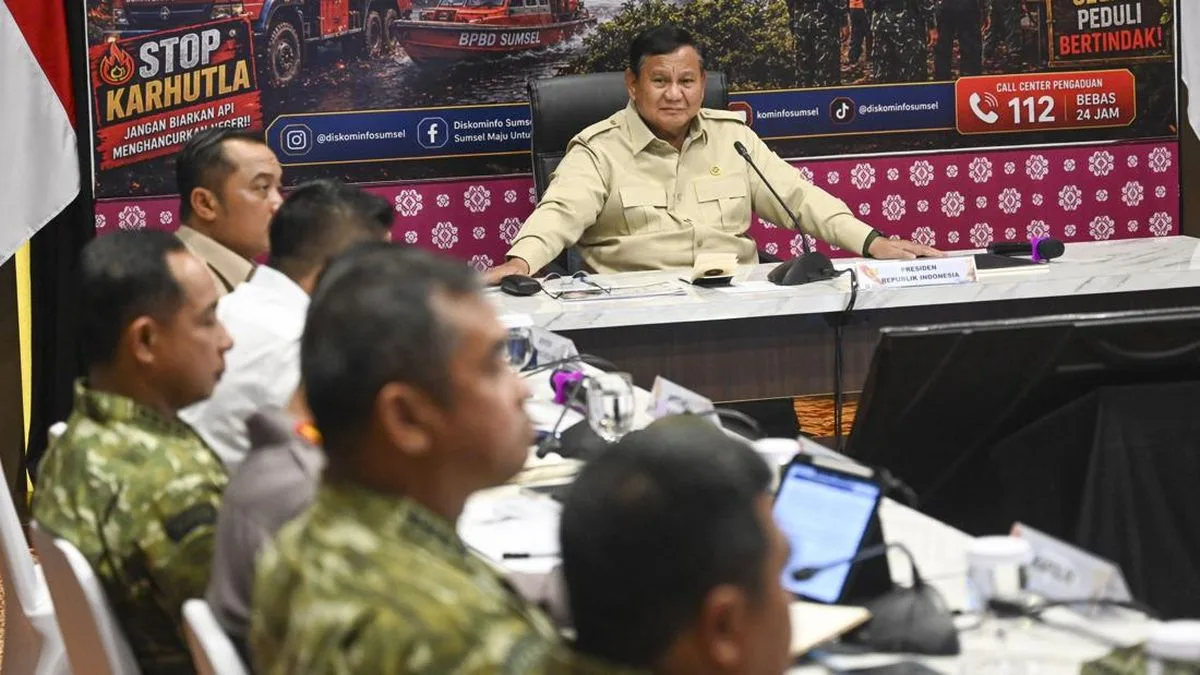
President Prabowo Subianto sharply criticized regional regulations that grant residents permission to burn up to two hectares of land. In a meeting with 22 academics at the Merdeka Palace, Jakarta, on Thursday (24/9), he described the rule as an unreasonable and misleading legal loophole.
Prabowo highlighted that eight regency-level perda still contain clauses allowing land burning of up to two hectares. According to him, the provision opens the door to abuse that is difficult to control. "This is not merely regulatory negligence, but a form of neglect that could worsen forest and land fires," he said.
He questioned the logic behind the rule. Burning two hectares of land—equivalent to nearly three football fields—is impossible for one person to stop. "If the fire has grown, who can put it out? This is clearly deceptive," he said.
To suppress this practice, the government has deployed around a thousand TNI/Polri officers to vulnerable areas. They are tasked with informing residents about the dangers of land burning and the available alternatives. Prabowo also asked people who want to clear land to report to the government so they can be facilitated. "We are ready to help, from providing land to water pumps. The goal is for the people to prosper without damaging the environment," he explained.
A different approach is applied to corporations. Prabowo stressed that companies clearing land must comply with regulations, including building monitoring towers and retention ponds. He will not hesitate to take action against violating companies. "Some comply, some do not. All must be brought into order," he said.
"We must correct the regulations. This is not just about rules, but about environmental safety and the future of the people."
Prabowo's criticism highlights weak oversight at the regional level. Perda that permit land burning actually contradict the national spirit to reduce forest and land fires. However, to date, the eight perda remain in force, creating legal uncertainty and complicating enforcement efforts.
For Indonesia, forest and land fires are not only an environmental problem but also an economic and health one. The resulting haze can disrupt flights, close schools, and increase cases of respiratory infections. Investment in the plantation and forestry sectors is also threatened. Therefore, bringing the perda into order is a crucial step to break the annual disaster cycle.
Going forward, the government needs to ensure that revisions to the perda proceed quickly and consistently. Without firm enforcement, the legal loophole will continue to be exploited. Can the central government pressure the regions to revoke these counterproductive rules? Time will tell, but public and academic pressure could be a driver of change.