Meloni Limits Foreign Students and Bans Burqa in Schools: A Political Maneuver Ahead of Italy's Election?
Baca dalam 60 detik
- Pemerintah Italia mengesahkan dekrit yang membatasi proporsi siswa asing menjadi 30% per kelas dan melarang burqa serta niqab di lingkungan sekolah.
- Kebijakan ini dinilai sebagai upaya Perdana Menteri Giorgia Meloni merebut kembali suara kanan ekstrem yang beralih ke partai baru Futuro Nazionale.
- Jika diterapkan pada tahun ajaran 2027-2028, aturan ini berpotensi memicu polarisasi dan berdampak pada komunitas migran, sementara efektivitasnya dipertanyakan.
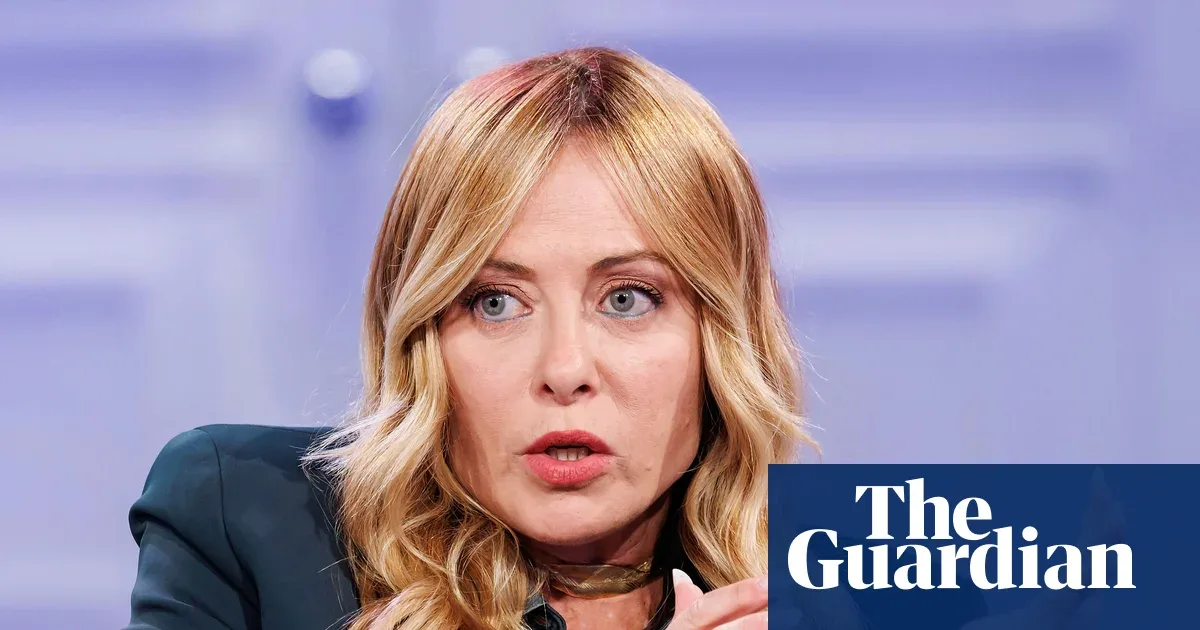
The Italian government has officially passed a controversial decree limiting the number of foreign students in each class and banning the use of burqas and niqabs in schools. The policy immediately drew condemnation from human rights groups, which view the move as a political strategy by Prime Minister Giorgia Meloni to win support from far-right voters ahead of next year's general election.
The decree approved on Thursday (25/9) sets a maximum limit of 30% of students deemed not to have a good command of Italian in a single class. In addition, parents of students who have difficulty integrating will be referred to social services and required to attend free Italian language literacy classes. If they refuse, they could face fines of up to 1,000 euros.
Meloni described the move as "a common-sense measure that does not divide, but genuinely helps integration". However, her statement contrasts with the rhetoric she delivered a few days earlier at an event for her party's youth wing, Brothers of Italy. At the time she asserted, "It must not happen in the classroom that Italian children feel sidelined because they have become a minority."
Education Minister Giuseppe Valditara claims the policy affects only a small share of schools. However, critics see it as an attempt by the government to cover up its poor record in education. Daniela Ionita of the advocacy group Italians Without Citizenship argues, "Meloni is creating an emergency that is not actually real." She highlighted that around 60% of students categorized as foreign citizens were actually born in Italy, yet still face obstacles to obtaining citizenship.
Ionita added that the heightened rhetoric is an attempt to obscure the government's scant achievements while in power. "If you remove every decree related to security or migrants, the government's political and economic program would collapse, and very little would remain of one of Italy's longest-lasting governments in recent years," she said.
Political analyst from the University of Florence, Marco Tarchi, assesses the policy is "undoubtedly" driven by concerns over a new political challenge on the right. Since February, the Futuro Nazionale (FN) party led by former general Roberto Vannacci has shaken up the far-right political landscape. Surveys show FN could win around 8% of the vote, surpassing two coalition partners of Brothers of Italy, namely the League and Forza Italia.
According to Tarchi, many FN supporters are former Meloni voters disappointed that she softened her stance on the European Union and immigration after taking power. "Vannacci is capitalizing on this disappointment with an extreme manifesto promising 'remigration' and limits on the number of foreigners," he explained. To win back those votes, Meloni may have to return to the radical position she held while in opposition.
Elisa De Pieri of Amnesty International predicts Meloni will become increasingly aggressive in her migration rhetoric. She cited how Meloni exploited the influx of tens of thousands of people into Ceuta, Spain's territory in North Africa, last summer. "Meloni immediately exploited the situation in Ceuta, which had nothing whatsoever to do with Italy, but she made it seem like a crisis for Italy," De Pieri said. She predicts a similar pattern will recur ahead of the election.
De Pieri also predicts Meloni will not discuss much the offshore detention agreement with Albania because it is considered expensive and is often struck down by courts. Instead, she will adopt a harsher tone on migration in general, which could trigger a polarizing electoral campaign and have a disproportionate impact on migrant communities.
Criticism also came from the Democratic Party. Leader Elly Schlein called the decree "shameful" and accused the government of "living on a different planet". She stressed that Italian parents instead face real problems such as crumbling school buildings, high textbook costs, and low teacher salaries. "Faced with all this, the government's response is to drive foreign children out of the classroom," Schlein said. "After four years of cuts and no serious investment, they are creating a witch hunt targeting the youngest children."
Save the Children warned that the policy will create "first-class and second-class students". Meanwhile, critics point out that burqas and niqabs are extremely rare in Italian schools, so the ban appears to be merely a repeat of an old policy that was never enforced. The 30% threshold was also proposed by the Education Ministry in 2010.
With elections expected to take place as early as spring 2027, Meloni's move signals that she will lean further right to retain her support base. The question is whether this strategy will succeed in winning back lost voters, or instead deepen polarization and strengthen the position of extreme parties in Italy?