US Study: AI Finds 55 Brain Aneurysms Missed by Radiologists
Baca dalam 60 detik
- Algoritma AI yang telah mendapat izin FDA mendeteksi 55 aneurisma otak yang tidak teridentifikasi oleh radiolog dalam 3.856 pemeriksaan CTA.
- Meski AI lebih sensitif (84,6% vs 71,8%), radiolog tetap unggul dalam akurasi prediksi positif (92,7% vs 78,2%).
- Temuan ini menegaskan potensi kolaborasi manusia-mesin, tetapi belum membuktikan perbaikan luaran pasien secara langsung.
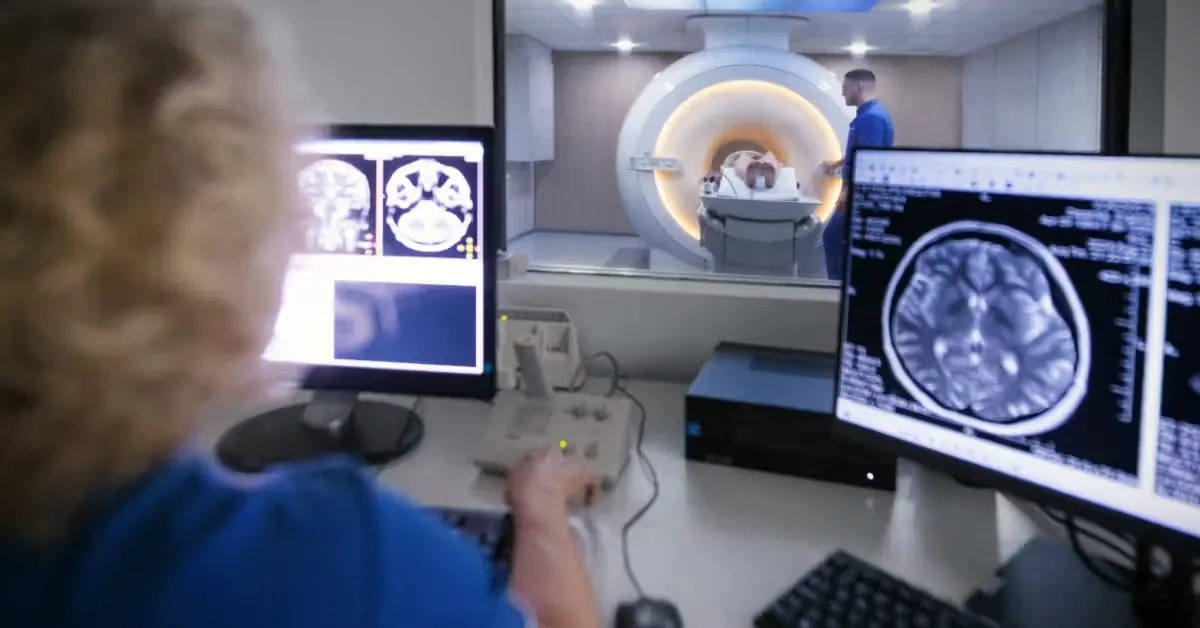
A large prospective study in the United States found that an FDA-approved artificial intelligence (AI) algorithm identified 55 brain aneurysms that radiologists missed when reading CT angiography (CTA) results. The research, published in the Journal of the American College of Radiology, involved 3,856 examinations across the Northwell Health network and highlights AI's potential as an additional screening layer, not a replacement for physicians.
Brain aneurysms—weakenings in blood vessel walls that form pouches—often cause no symptoms until they rupture and cause life-threatening subarachnoid hemorrhage. Early detection on CTA imaging is crucial because it opens the possibility of monitoring or intervention before fatal complications occur. However, the limits of the human eye and the complexity of the images mean some small lesions are missed.
In the study, AI made by Aidoc (aiOS) analyzed images in parallel with the routine clinical workflow, but radiologists did not see the results during the initial read. As a result, the AI achieved 84.6% sensitivity, higher than the radiologists' 71.8%. The AI found 55 aneurysms that went undetected, while radiologists found 30 aneurysms that the AI did not detect. The agreement rate between the two exceeded 96%.
According to the study's lead author, Shlomit Stein, MD, FACR, of the Zucker School of Medicine at Hofstra/Northwell, validation before clinical deployment is essential to understand not only the tool's accuracy but also its operational utility. "We found the AI identified 55 aneurysms that the initial radiologist did not detect, and the overall operational metrics of the AI tool were favorable," she said. She added that the relative additional detection rate of 39% indicates that radiologists using AI would outperform those who do not.
Although the AI was more sensitive, radiologists were more accurate when stating that an aneurysm was present, with a positive predictive value of 92.7% versus 78.2% for the AI. Both had similar ability to rule out aneurysms when no lesion was present. These findings confirm that AI and radiologists have complementary strengths: the AI excels at catching small lesions, while radiologists are better at confirmation and avoiding false alarms.
"Aneurysms carry the risk of rupture and catastrophic brain hemorrhage. Some of the aneurysms detected will require surveillance or preventive intervention. The first step is detecting the aneurysm, which we have shown can be aided by the use of AI," Stein said.
The benefits of AI turned out to vary by care setting. The best performance was seen in inpatients, with 18 additional aneurysms and seven false-positive alerts. In the emergency department, the results were also positive. However, in outpatient services, the AI found only four additional aneurysms but produced more false positives than true findings. This difference is thought to be due to the differing complexity of cases and patient populations.
The study also emphasizes the importance of ongoing monitoring after AI is adopted in clinical practice. Algorithms that perform well in controlled validation tests can behave differently in the real world, which is full of variation in patients, equipment, and workflows. Therefore, AI assessment must examine whether the technology truly improves physician performance and patient care.
For Indonesia, these findings are relevant given the limited number of radiologists and limited imaging access in the regions. AI can be a solution to expand the reach of early detection, especially in type C and D hospitals. However, its implementation requires clear regulation, training for health workers, and integration with electronic medical record systems. The Ministry of Health needs to prepare a framework for clinical trials and quality oversight before such technology is widely adopted.
Going forward, the big question is no longer whether AI can help, but how quickly health systems—including Indonesia's—can adapt this technology without sacrificing clinical control and patient safety. Further trials that measure patient outcomes, not just detection, will determine the direction of AI adoption in radiology.