Earth Scientist: New Land Around Anak Krakatau Is Not a New Volcano
Baca dalam 60 detik
- Dua gumuk daratan terdeteksi di barat laut dan tenggara Anak Krakatau, diduga hasil akumulasi material erupsi.
- Pakar IABI menegaskan butuh verifikasi lapangan, batimetri, dan data vulkanologi sebelum disebut gunung api baru.
- Masyarakat diimbau tidak terprovokasi isu spekulatif di media sosial soal 'cucu Krakatau'.
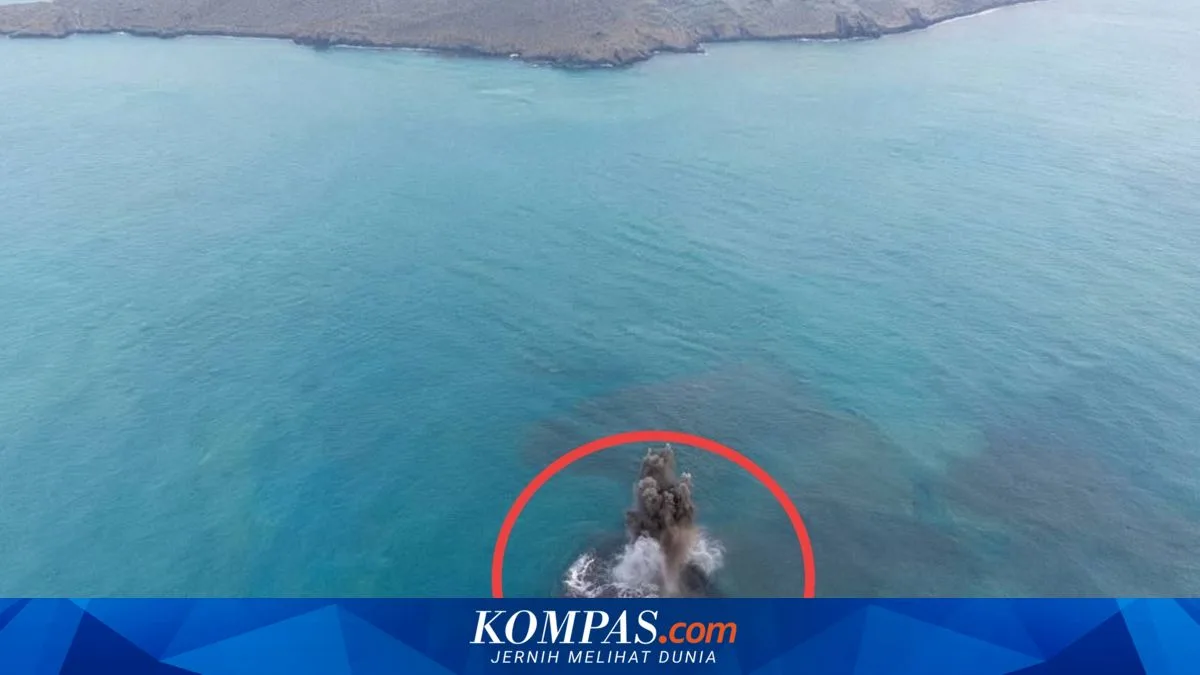
The appearance of two new landmasses around Mount Anak Krakatau after eruptions some time ago has sparked speculation on social media. A member of the Indonesian Disaster Experts Association (IABI), Daryono, confirmed that two mounds of land had been detected in the northwest and southeast sectors. However, he stressed that the phenomenon could not yet be concluded to be a new volcano, let alone dubbed a 'grandchild of Krakatau'.
According to Daryono, the land is most likely an accumulation of eruption material that reached shallow waters and then emerged above sea level. "Scientifically, we should not rush to call them two new islands," he said in a written statement on Friday (25/9/2026). He added that field verification, bathymetric mapping, repeated satellite imagery, and volcanological data were needed to determine whether the land was merely volcanic deposit or linked to a specific eruption center.
Daryono laid out three main conditions for a landmass to be categorized as a new volcano. First, there must be an independent magma conduit connected directly to the magma chamber through a new fracture, separate from the parent crater. Second, the land must produce its own magmatic eruption activity, not merely collect material spewed from a neighboring volcano. Third, there must be its own geological structure and deformation, such as local volcanic earthquakes or ground swelling centered beneath the new land.
The former Director of Earthquakes and Tsunamis at BMKG urged the public not to be easily provoked by speculative issues. "The emergence of this new land is a volcanic sedimentation process that is common in active volcanic areas," he said. He considered the phenomenon scientifically interesting, but said it should not be interpreted as the birth of two new volcanoes.
For Indonesia, the Anak Krakatau area lies on an active volcanic path directly facing the Sunda Strait, a strategic shipping lane and the economic gateway between Lampung and Java. Volcanic activity there affects not only the safety of coastal residents but also maritime logistics, aviation, and the tourism sector. The emergence of new land can trigger changes to navigation maps, danger zones, and coastal spatial planning policy. The government and stakeholders need to monitor these developments periodically so as not to cause panic among markets or tourists.
Daryono stressed the importance of a scientific approach in responding to this natural phenomenon. He reminded that volcanic sedimentation at active volcanoes is ordinary and does not automatically mean a new volcano exists. The statement also serves as a reminder for media and netizens not to reinforce speculative narratives that could harm the public.
Going forward, the Geological Agency and BMKG are expected to step up monitoring around Anak Krakatau, including bathymetric mapping and deformation analysis. If it proves to be only volcanic deposit, the land could disappear or change shape due to waves and sea currents. But if indications of an independent magma conduit are found, the area's status could change and require stricter mitigation. The public is asked to wait for official study results before drawing conclusions.