Elon Musk Challenges Scientist's Forecast: AI Will Dominate Every Field by 2028, Not 10-20 Years
Baca dalam 60 detik
- Musk menilai prediksi Chollet soal dominasi AI di sains terlalu konservatif, dan mematok 2028 sebagai batas akhir.
- Studi klinis menunjukkan model AI masih lemah pada penalaran multimodal, meski unggul di soal pilihan ganda.
- Anthropic dan Google DeepMind mempercepat penemuan ilmiah berbasis AI, sementara Grok 5 disiapkan untuk rekayasa.
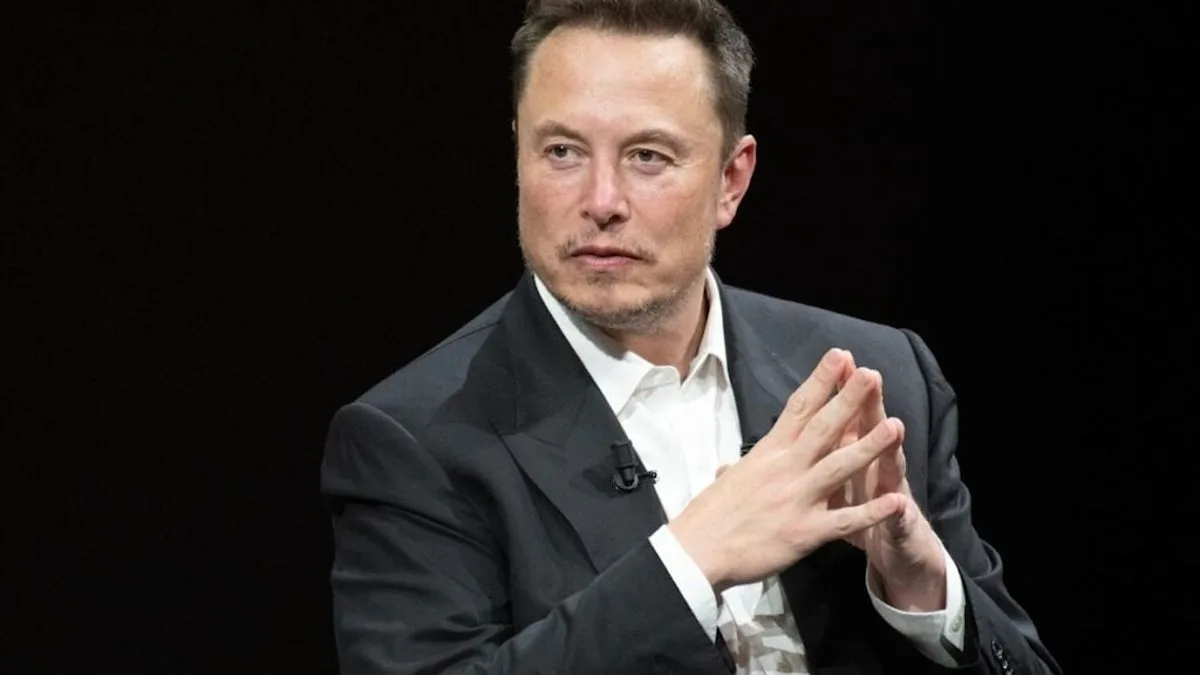
Elon Musk is once again challenging the consensus in the artificial intelligence research world. Responding to AI scientist François Chollet's forecast that science will become increasingly computational over the next 10–20 years, Musk called the projection too conservative. According to him, AI will beat every field by 2028 at the latest — possibly even late 2027.
Chollet, who first made the prediction in May 2021, reposted his statement on Tuesday and claimed the forecast now "looks obvious every day". He expects nearly all scientific disciplines to become branches of computer science, driven by simulation, big data analysis, and machine learning. Musk responded briefly: "Your prediction is conservative. AI will beat all fields by the end of next year or maybe 2028, at the latest."
The statement extends a series of Musk's earlier claims that AI will become "superhuman" at nearly all digital tasks by the end of 2027. However, that ambition runs up against messier field findings. A peer-reviewed study published on 3 September in npj Digital Medicine tested 20 AI models on 1,245 questions from orthopedics and sports medicine cases. The result: leading models exceeded 90% accuracy on structured multiple-choice questions, but only around 60% on open-ended tasks requiring multimodal reasoning — combining text and images. The researchers concluded that current models still face hurdles for standalone clinical competence.
On the other side, AI is starting to move beyond merely answering questions. Anthropic announced last week that Claude had optimized more than 30 open-source biomolecular models in less than four weeks, with a speedup of roughly four times. Reuters also reported that Anthropic set up a physical biology lab to expand drug discovery research and combine AI with real-world experiments. Meanwhile, Google DeepMind's Co-Scientist system uses many AI agents to generate, debate, and refine scientific hypotheses — a sign that developers are starting to target the core of the discovery process.
Musk himself is betting on his companies. SpaceXAI released Grok 4.7 for coding and knowledge work, while Grok 5 is being trained using engineering data from Space Exploration Technologies Corp. Deepwater Asset Management analyst Gene Munster estimates the model could become "the most useful engineering tool in history".
"Your prediction is conservative. AI will beat all fields by the end of next year or maybe 2028, at the latest." — Elon Musk
For Indonesia, Musk's claim is not merely an academic debate. If AI truly dominates research and industry by 2028, countries without ready computing infrastructure, talent, and regulation risk becoming technology consumers rather than creators. The health sector, for example, could use AI for early diagnosis, but without strong clinical validation and data governance, adoption could instead lead to medical errors. The government needs to accelerate the development of data centers, STEM education, and an AI ethics framework so as not to fall behind.
The question is no longer whether AI will change science, but how fast and who controls it. If the 2028 deadline is right, Indonesia has less than three years to prepare an ecosystem capable of competing — or at least not merely becoming a market for innovation born elsewhere.