Nadiem Rejects Appeal Verdict, Prepares Cassation to Supreme Court: "I Will Not Give Up"
Baca dalam 60 detik
- Pengadilan Tinggi DKI Jakarta memangkas hukuman Nadiem Makarim dari 10 tahun menjadi 9 tahun penjara dan menurunkan uang pengganti dari Rp809 miliar ke Rp548 miliar.
- Mantan Mendikbudristek itu bersikeras tidak ada kerugian negara, aliran dana, maupun konflik kepentingan dalam pengadaan Chromebook, dan menilai vonis banding tetap cacat.
- Langkah kasasi ke Mahkamah Agung akan segera diajukan, membuka babak akhir yang menentukan arah penegakan hukum kasus korupsi teknologi pendidikan.
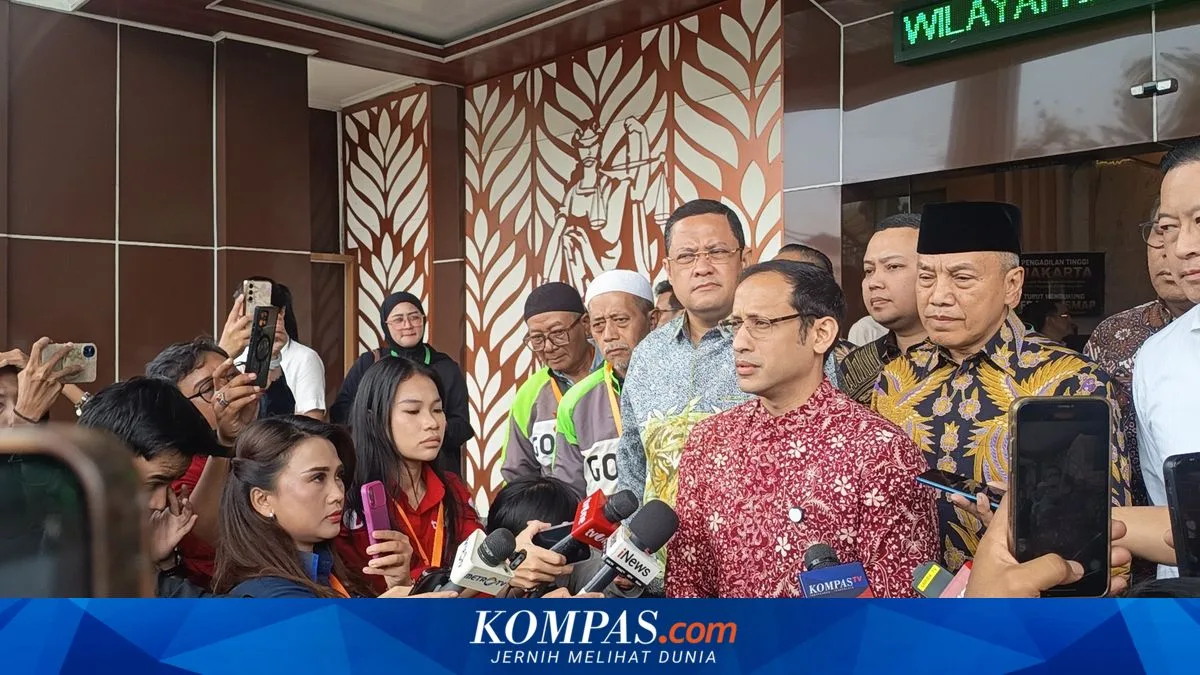
Nadiem Anwar Makarim has insisted he will accept no verdict other than a full acquittal. The statement from the former Minister of Education, Culture, Research, and Technology (Mendikbudristek) came shortly after the panel of judges at the DKI Jakarta High Court read out an appeal verdict that again found him guilty in the corruption case over the procurement of Chromebooks, Thursday (24/9/2026).
The appeal ruling was indeed lighter than the first instance. Nadiem's prison sentence was cut from 10 years to 9 years, while the restitution obligation fell from Rp809 billion to Rp548 billion. The Rp1 billion fine was upheld. If the fine is not paid, the convict's assets and income will be seized and auctioned; if the proceeds are insufficient, the fine is converted into 140 days in prison.
Although quantitatively lighter, the reduction did not soften Nadiem's stance. He argued the appeal panel ignored trial facts that he said proved there was no state loss, no flow of funds, and no conflict of interest. "The victim is not only me, but also the credibility of Indonesia's law enforcement system," he said at the Jakarta High Court.
"I am still here, I will not despair, I will not give up, and I will not accept any outcome other than acquittal." — Nadiem Makarim
The Gojek founder said a cassation bid to the Supreme Court would be filed as soon as possible. He also touched on his health, which is still under treatment, and the heavy mental burden during the legal process. The statement signals that the case will not fade from the public stage any time soon.
For the Indonesian public, this case is not merely the courtroom drama of a former minister. It directly touches on the governance of government procurement of goods and services, especially education technology projects that absorb large budgets. The Chromebook procurement in the school digitalization program has become a precedent for how government contracts with enormous values are supervised—or instead escape oversight.
From the perspective of investors and businesses, legal uncertainty in government projects is a signal that cannot be ignored. When an official who signed a contract ends up in court, questions arise about the clarity of procedures, documentation, and accountability. The business world usually responds with extra caution, especially for tenders involving technology and education.
Also worth noting is the long journey of this case. From investigation to appeal, Nadiem has consistently declared his innocence. His claim that there was no state loss is the core of the defense that will again be tested at the cassation level. The Supreme Court will not examine new facts, but rather assess the application of law and procedure—a stage that often proves decisive.
If the cassation is rejected, Nadiem must serve a sentence that has become legally binding. Conversely, if granted, the ruling would shake public assumptions about the strength of prosecutors' evidence in major corruption cases. Whatever the outcome, the public is waiting to see whether this legal process can answer doubts about judicial independence while also providing certainty for the government procurement ecosystem.