Bitcoin Breaks Below US$84,000, Dogecoin Plunges 8% on Highest Treasury Yield Since 2007
Baca dalam 60 detik
- Bitcoin merosot lebih dari 2% ke kisaran US$83.900, tertekan lonjakan yield obligasi AS tenor 10 tahun ke 5,11%.
- Dogecoin memimpin koreksi dengan penurunan 7%, sementara ZEC, XRP, dan HYPE masing-masing kehilangan 5–6%.
- Lelang obligasi lima tahun senilai US$70 miliar berakhir lemah, memicu kekhawatiran biaya modal global dan tekanan lanjutan pada aset kripto.
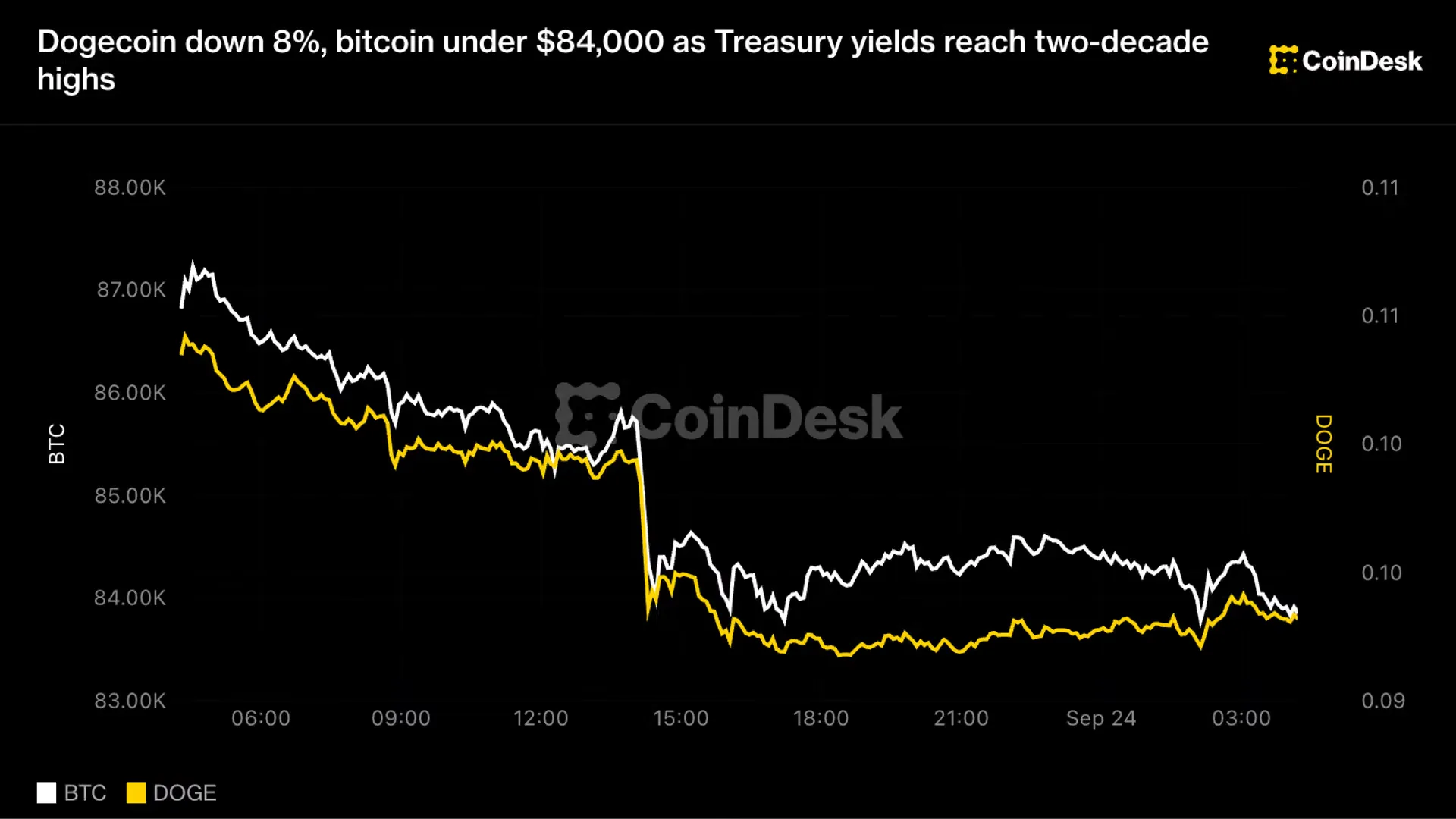
Bitcoin's price slipped below US$84,000 in Thursday morning Asian trading, falling more than 2% in 24 hours after briefly touching nearly US$87,300. Selling pressure was triggered by a surge in the yield on 10-year US government bonds, which closed at 5.11% on Wednesday—up 15 basis points in a day and the highest level since 2007.
The rise in yields immediately changed investors' calculations. Government bonds offering yields above 5% make yield-free assets such as Bitcoin and other cryptocurrencies increasingly unattractive. Not only that, borrowing costs for leveraged positions also soared, forcing some traders to reduce exposure. Dogecoin (DOGE) was the worst hit, falling 7% to just above 9 cents. ZEC, XRP, and HYPE were each cut by 5–6%, while ether, SOL, and BNB weakened 2–3%. Only TRX held flat.
The main trigger came from US economic data. A flash S&P Global survey showed US business activity growing at its fastest pace in more than five years, with the composite index reaching 58.4—the highest since July 2021. The data reinforced expectations that the Federal Reserve will keep interest rates high for longer. The sentiment was worsened by a US$70 billion five-year bond auction that was only weakly absorbed. The auction produced a yield of 5.033%, the highest since 2006, and about 3 basis points above the pre-auction market price—indicating investors are demanding an extra premium to absorb government debt.
In energy markets, Brent crude rebounded more than 4% to nearly US$104 per barrel, ending a six-day decline that had previously eased inflation concerns. The rise in oil prices adds to inflation pressure, which in turn reinforces the higher-for-longer interest rate narrative. Bitcoin itself recorded its deepest decline on Wednesday shortly after the business survey was released, indicating a direct correlation between macro data and selling in the crypto market.
"The market is adjusting to the reality of higher interest rates for a longer period. Risk assets, including crypto, will face a liquidity test," said a crypto market analyst in Jakarta, though he did not name his institution.
For Indonesian investors, this dynamic has layered implications. First, a global crypto slump is usually followed by a correction on domestic crypto exchanges such as Indodax and Pintu, where Bitcoin and Dogecoin are favorite instruments. Second, high US bond yields tend to pull foreign capital out of emerging markets, including Indonesia, which could pressure the rupiah exchange rate and widen the current account deficit. Third, for businesses with US dollar debt, interest costs will rise along with Treasury yields.
Technically, Bitcoin is now below the US$85,000 level—the strike price at which Mauricio Di Bartolomeo, co-founder of crypto lending platform Ledn, flagged a large block of call options ahead of the expiry of about US$14 billion on derivatives exchange Deribit on Friday. If the price stays below that level, selling pressure from failed option positions could deepen the correction.
The question is whether this is the start of a deeper correction or merely a healthy pullback in the middle of a bull cycle. The answer will depend heavily on the next US inflation data and signals from the Federal Reserve. Meanwhile, crypto investors in Indonesia should watch Treasury yield movements and the rupiah exchange rate as early indicators of global liquidity pressure.