Meta Ray-Ban Glasses: New Firmware Closes Recording Loophole, but German Regulator Says Indicator Light Is Not Enough
Baca dalam 60 detik
- Meta merilis pembaruan firmware untuk kacamata pintar Ray-Ban yang mencegah perekaman saat lampu indikator ditutup.
- Otoritas perlindungan data Hamburg menemukan lampu indikator tetap sulit terlihat di luar ruangan atau saat cahaya terang.
- Uni Eropa menekankan perlunya persetujuan eksplisit dari individu yang direkam, sementara hukum AS lebih longgar.
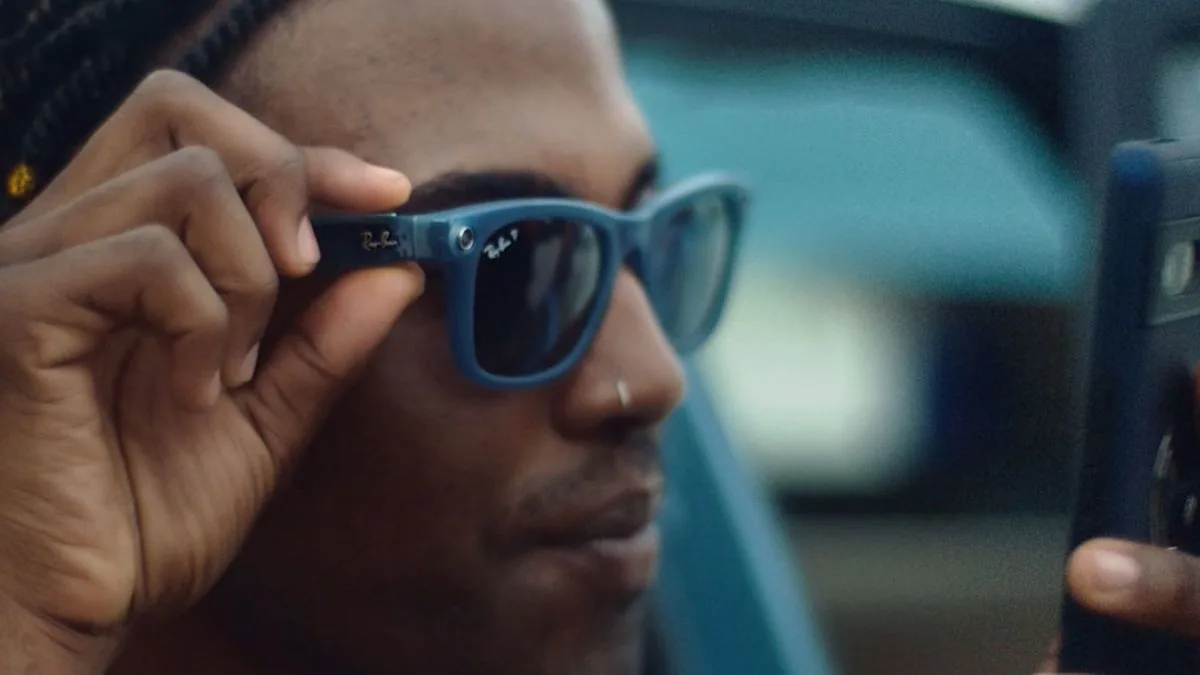
Meta has officially rolled out a firmware update for its Ray-Ban smart glasses designed to close a privacy loophole: recording is no longer possible if the indicator light is covered. The move responds to a previously viral exploit in which users could start recording, cover the light, and keep recording undetected. However, German data protection authorities say the technical fix does not address the root of the problem: the indicator light itself is deemed insufficiently visible.
Previously, the glasses' safety feature only checked for the light's presence at the start of recording. The loophole was found by users and later sparked the nickname "pervert glasses". The firmware update now rechecks every few seconds, so recording with the light covered can be stopped. Nevertheless, the Hamburg Commissioner for Data Protection and Freedom of Information revealed in its latest report that the LED on the Ray-Ban Meta model "is not easily visible in many environments, especially outdoors and in direct sunlight".
The report also highlights that the light's beam angle is very narrow, so a person must be close and looking almost directly at the wearer to see whether the light is on. Behavioral differences between generations were also noted: on the first generation, the LED "glows very dimly" when the user asks a question about someone nearby, while on the second generation it does not light up at all.
"The indicator light is not easily visible in many environments, especially outdoors and in direct sunlight," the Hamburg Data Protection Commissioner's findings state.
The legal implications are significant. According to the report, in many cases, if recording is not limited to family or close friends, valid consent cannot be assumed. The Commissioner recommends additional measures such as text notifications, signage, or active communication with the person about to be recorded. This aligns with a report by the French association e-Enfance, which stresses that seeing the light alone is not enough; individuals must understand what the light means and have the ability to refuse. For minors, parental permission is mandatory.
France is known for its strict privacy laws, with the threat of prison sentences and fines of up to tens of thousands of euros for those who deliberately intrude on others' private lives. By contrast, US law is looser and more technology-friendly, without protections equivalent to the European Union's. This difference creates a complicated compliance landscape for smart glasses makers and users.
For Indonesia, this development is an important mirror. Although there is no specific regulation governing smart glasses yet, the Personal Data Protection Law (UU PDP), which took effect in 2024, requires explicit consent for the collection of personal data, including a person's image. Smart glasses users in Indonesia need to be cautious: recording others without permission can have legal implications, especially if the content is shared without consent. In addition, with the growing adoption of wearable devices, the potential for privacy disputes in public spaces such as cafes, malls, or public transport could rise.
Going forward, the question is not only how sophisticated Meta's firmware is, but whether indicator light visibility standards will be regulated globally. Regulators in various countries may demand minimum technical specifications, such as brightness levels or a wider viewing angle. Without that, smart glasses risk continuing to draw controversy and facing restrictions in many jurisdictions.