Canon EOS R8 II vs Nikon Z5II: A Full-Frame Camera Duel Under $2,000, Which One Deserves to Go Home With You?
Baca dalam 60 detik
- Canon EOS R8 II kini dibekali joystick autofokus dan stabilisasi sensor, menempatkannya bersaing langsung dengan Nikon Z5II di segmen full-frame kelas bawah.
- Nikon Z5II unggul dalam daya tahan baterai, viewfinder, dan slot ganda, sementara Canon menawarkan video 4K/60 full-width serta bobot lebih ringan.
- Perbedaan ekosistem lensa dan harga jual di Indonesia akan menjadi penentu utama pilihan konsumen di antara kedua kamera ini.
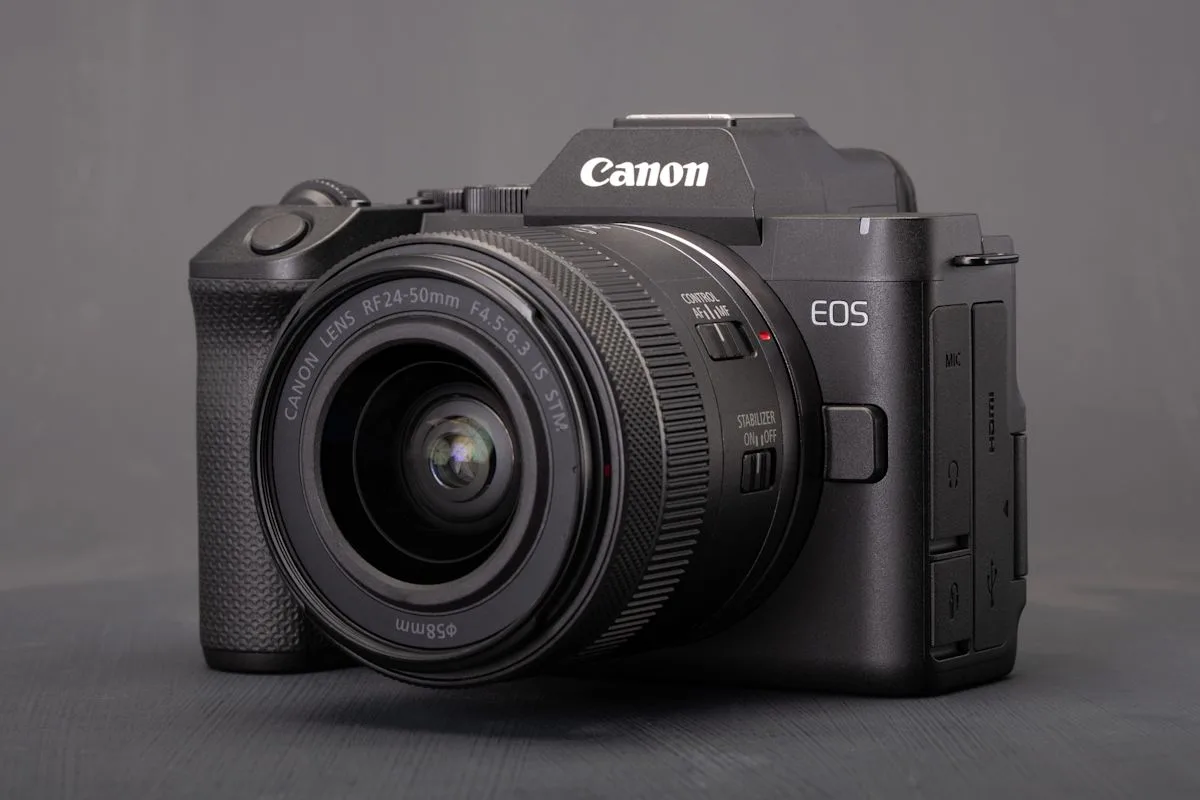
Canon has officially strengthened its entry-level full-frame camera line with the launch of the EOS R8 II, which brings two significant upgrades: an autofocus joystick and in-body image stabilization. This move immediately puts it up against the Nikon Z5II, which had previously been the top choice in the under-US$2,000 class. The question now is, which one is more worth buying for photographers looking to move up to a full-frame system?
In terms of core specifications, the two cameras do appear to be twins. Both carry the same-sized sensor with not-too-different resolutions, are already equipped with image stabilization, and have an AF joystick. However, once you get into the details, the differences start to show. Canon offers advantages in lighter weight, maximum burst speed, and the ability to record Raw in the fastest burst mode and pre-capture. Meanwhile, the Nikon Z5II actually excels in more other aspects.
The most striking difference lies in battery endurance. The Nikon Z5II uses the same 16Wh unit as the Z6 series, giving a rating of 350 shots per charge when using the rear screen, or 330 shots through the viewfinder. The Canon EOS R8 II is only equipped with a 7.5Wh battery with a rating of 270 shots (screen) and 150 shots (viewfinder). This means that in real-world use, the Nikon can last almost twice as long. For travel photographers or field coverage, this difference is very noticeable.
In terms of display, Nikon is also superior. Its rear screen measures 3.2 inches with a resolution of 1024x680 pixels, slightly larger than Canon's 3.0-inch screen (900x600 pixels). Its viewfinder is also roomier and sharper: 3.69 million dots versus 2.36 million dots on the Canon. This roughly 25% increase in linear resolution makes the image in Nikon's viewfinder look smoother and less prone to pixelation, even at high magnification. Nikon also has a full mechanical shutter capable of reaching 1/8000 second, while Canon is limited one stop lower. Canon's electronic shutter mode can indeed be faster, but its readout speed is around 1/70 second, making it prone to rolling shutter distortion and unusable with flash.
On storage, the Nikon Z5II provides two SD card slots, while Canon has only one. For casual shooting, this difference may not be too crucial. However, for professional photographers who rely on data reliability, dual slots are a significant added value. On the other hand, Canon offers an advantage in video recording: 4K/60 full-width capability derived from a 6K sensor, whereas Nikon must crop to the APS-C area to achieve 4K/60. This crop narrows the angle of view and reduces image quality. Both support 10-bit log, with Canon's C-Log3 being widely favored by editors.
"Both offer image quality and performance that have never existed at this price, even though inflation means they are no longer an obvious bargain."
Weight is also a consideration. The Nikon Z5II weighs 700 grams, about 154 grams heavier than the Canon EOS R8 II. For those who often carry a camera all day, this weight can be a consideration. However, for those who prioritize battery endurance and viewfinder, the extra weight is worth it.
Lens choice is the final determinant. Canon and Nikon both have complete lens lineups, but both restrict mount access to third-party lenses. The difference is that the Nikon Z-mount is now increasingly accepting lenses from unlicensed third-party manufacturers, while Canon more strictly controls the RF ecosystem. For consumers in Indonesia, the availability of cheaper third-party lenses can be an attraction in itself, especially for users who want to keep long-term ownership costs down.
In the Indonesian market, these two cameras will compete fiercely in the entry-level full-frame segment. Official prices and stock availability will heavily influence the choice. The Canon EOS R8 II, with its light weight and 4K/60 full-width video, suits content creators who record a lot of video. Meanwhile, the Nikon Z5II is better suited to photographers who prioritize battery endurance, a large viewfinder, and dual-slot reliability. Going forward, competition in this class is predicted to heat up further with the emergence of new players from Sony and Panasonic. The question is, will Canon and Nikon once again push prices down to win the hearts of Indonesian consumers?