360 Drone in an Empty Baseball Field: An Aerial Cinematography Experiment That Changes Perspective
Baca dalam 60 detik
- Seorang kreator menerbangkan drone 360 kustom di lapangan baseball bersalju untuk menguji kemampuan manuver di antara rintangan fisik.
- Pendekatan terbang rendah dan dekat objek padat menghasilkan efek visual imersif yang tidak bisa dicapai dengan penerbangan altitude tinggi.
- Tren sinematografi drone 360 berpotensi memperluas peluang komersial di industri konten visual Indonesia, terutama untuk pariwisata dan periklanan.
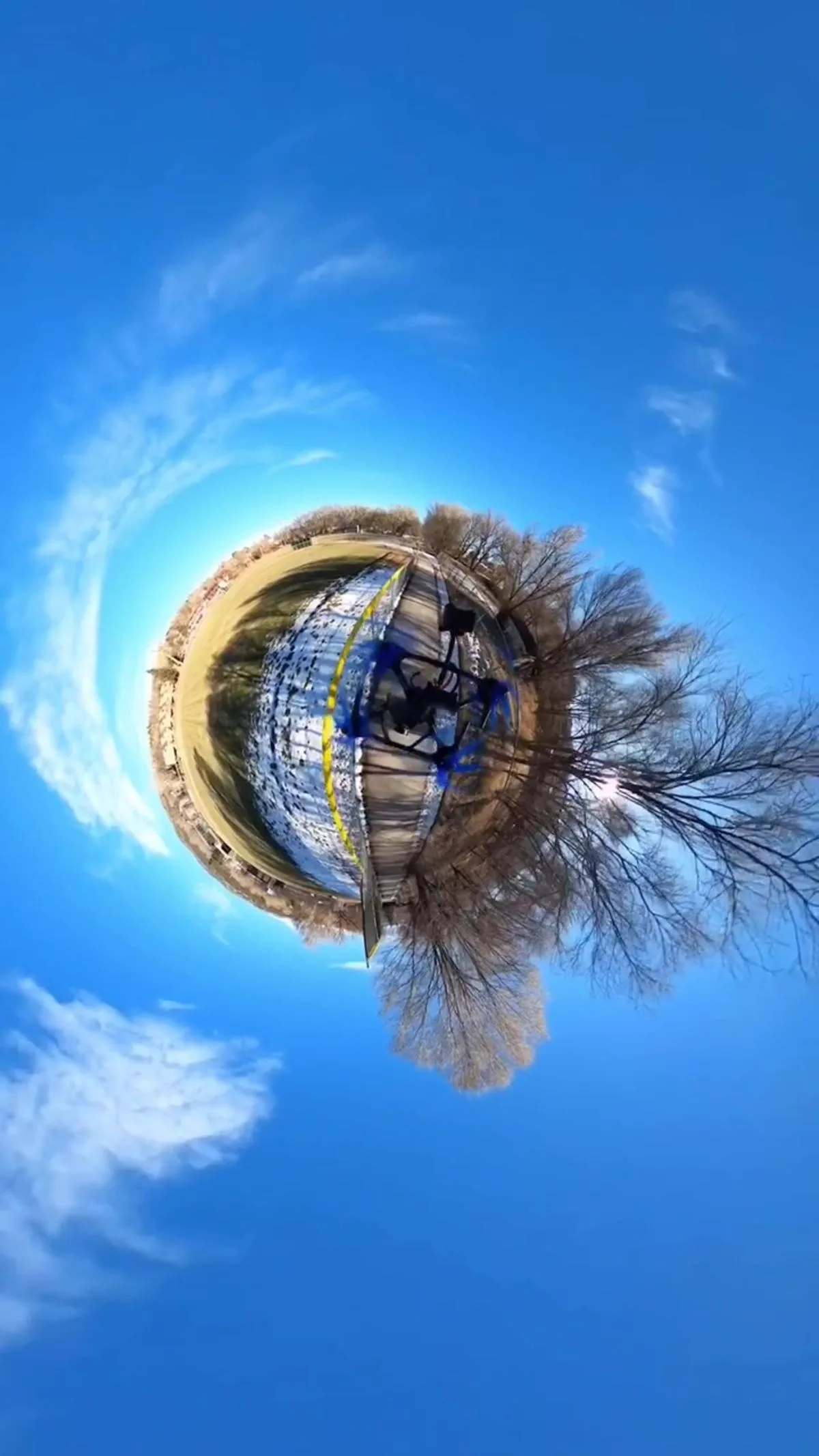
In the middle of a baseball field covered in a thin layer of snow, a custom 360 drone shot low, dancing among steel posts and a wire fence. The flight was not merely a hobby—it became a technical trial to see how far a panoramic camera could capture fast motion from an unusual angle. The result? A "tiny planet" perspective that combined blue sky, a blanket of snow, and the drone frame at its center.
This experiment highlights a shift in aerial cinematography: flying high in open space is starting to be abandoned. Creators are now instead diving toward the surface, using proximity to solid objects to create an illusion of speed and scale. "Flying low near objects gives a warp sensation that cannot be replicated from altitude," said the creator, as quoted from their experience.
However, this technique demands extreme precision. A 360 lens records in all directions at once, so even the smallest mistake—a tilted horizon, unstable throttle—will be immediately visible. Post-production also becomes a challenge in itself, especially when joining the stitch line from multiple lenses. "You cannot hide poor flying technique," the creator stressed.
For Indonesia's creative industry, this trend opens up new opportunities. With diverse terrain—from terraced rice fields to dense cities—local creators can use 360 drones to produce more stunning tourism or advertising content. However, there are regulatory hurdles: drone flights in certain airspace are still restricted, and the price of capable 360 equipment is not yet affordable for everyone.
"If you want to improve aerial cinematography, stop flying high in the open sky. Descend low near solid objects," the creator advised.
This approach also demands skilled pilots. In Indonesia, the drone community continues to grow, but training for proximity techniques is still rare. Some operators rely on simulation and self-training. Going forward, demand for skilled 360 drone pilots is predicted to increase along with the need for immersive content for social media and metaverse platforms.
Will this technology become a new standard in professional video production, or just a niche for technical enthusiasts? What is clear is that the experiment at the baseball field proves that the boundary between reality and visual effects is growing thinner—and Indonesia has a stage to play on.