F-22 Raptor Is Not the Fastest Fighter Jet: Five Older Aircraft Are Actually Faster
Baca dalam 60 detik
- F-22 Raptor, jet tempur generasi keenam, memiliki kecepatan maksimum Mach 1,95, namun beberapa pesawat tempur generasi lawas dari Soviet dan Israel mampu melampauinya.
- MiG-25 Foxbat menjadi yang tercepat dengan Mach 2,8, diikuti Su-27 Flanker (Mach 2,025), MiG-23 Flogger (Mach 2,02), Kfir (Mach 2), dan MiG-29 Fulcrum (Mach 1,98).
- Meski kalah dalam hal kecepatan puncak, F-22 tetap unggul berkat teknologi siluman, avionik canggih, dan kemampuan supercruise yang tidak dimiliki para pesaingnya.
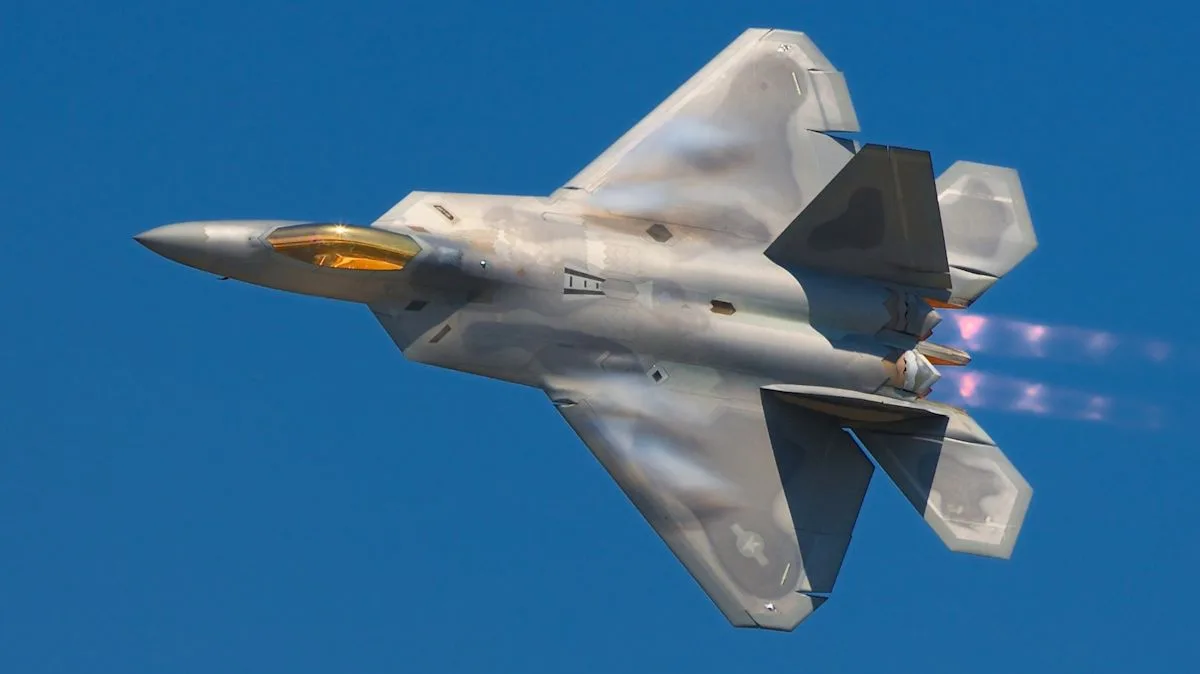
The Lockheed Martin F-22 Raptor’s dominance as the world’s most advanced fighter jet does not automatically make it the fastest. A number of older-generation fighter aircraft from the Soviet Union and Israel actually have maximum speeds above the Raptor’s Mach 1.95, revealing another side of global aerospace technology competition.
The F-22, regarded as a benchmark for the sixth generation, relies on two Pratt & Whitney F119-PW-100 engines with a combined thrust of 70,000 pounds. Its supercruise capability—flying beyond the speed of sound without afterburner—makes it efficient in cruising at Mach 1.5. However, budget constraints mean the U.S. Air Force operates fewer than 200 units, making each one a costly strategic asset.
On the other hand, the Soviet Union during the Cold War took a different approach: prioritizing top speed and acceleration. The MiG-25 Foxbat, which entered service in 1970, is an extreme example. Powered by two Tumansky R-15B-300 engines, the jet can reach Mach 2.8 (1,850 mph) and was even reported to have touched Mach 3.2 in emergency conditions, though its engines risk overheating. To this day, the MiG-25 is still operated by a number of countries such as Libya and Syria.
Besides the MiG-25, there is the MiG-29 Fulcrum, introduced in 1983 as a challenger to the F-15 and F-16. With two Isotov RD-33 engines, the jet reaches Mach 1.98 (1,520 mph) and is still used by dozens of countries—788 active units according to World Air Forces 2025. The older MiG-23 Flogger (1970) is actually faster at Mach 2.02 (1,550 mph), thanks to Tumansky engines producing up to 25,350 pounds of thrust with afterburner. Although no longer operated by major air forces, several African and Asian countries still fly it.
From Israel, the IAI Kfir—meaning "young lion"—was born as a result of a French embargo. Based on the Mirage 5, the Kfir adopted avionics and a license-built General Electric J79 engine, producing 15,000 pounds of thrust and a speed of Mach 2 (1,516 mph). Introduced in 1975, about 220 units were produced and it remains in service in Colombia. Meanwhile, the Sukhoi Su-27 Flanker (1986) was designed to rival the F-14 and F-15. With two Lyulka AL-31F engines, the jet reaches Mach 2.025 (1,553 mph) and is famous for the Cobra maneuver. Although only about 400 units were produced, the Su-27 remains active in Russia and Ukraine.
"High speed does provide a tactical advantage, but in modern combat, stealth and electronic warfare are far more decisive," said a defense analyst who did not wish to be named.
This comparison highlights different design philosophies: the Soviets sacrificed stealth and avionics for speed and maneuverability, while the U.S. chose a balance with stealth technology. However, in a dogfight scenario, the F-22 still has the upper hand because older-generation enemy radars struggle to detect it. Nevertheless, the MiG-25’s extreme speed shows that even old aircraft can be a threat if used with the right tactics.
For Indonesia, this lesson is relevant in the modernization of Indonesian Air Force defense equipment. Fighter jet procurement programs such as the Rafale and KF-21 Boramae show that speed is not the only parameter. Networking capabilities, sensors, and integration with the national defense system are key considerations. Going forward, Indonesia needs to ensure that every platform it buys is not only fast, but also capable of operating in a multi-domain warfare ecosystem.
The question is, will developing countries like Indonesia prefer fast but vulnerable secondhand fighter jets, or invest in newer-generation technology that is more expensive but relevant for the coming decades?