Demystifying EFCS: The Camera Shutter Innovation That Enables Smaller Bodies, But Has Its Limits
Baca dalam 60 detik
- Canon EOS R8 II dan Sony a7C mengadopsi electronic first curtain shutter (EFCS) untuk memangkas ukuran dan biaya produksi.
- EFCS menghilangkan risiko getaran rana mekanis dan artefak rolling shutter, namun tetap memakai komponen mekanis untuk menutup eksposur.
- Pada kecepatan rana ekstrem, EFCS dapat memotong pola bokeh, sehingga fotografer profesional perlu memahami komprominya.
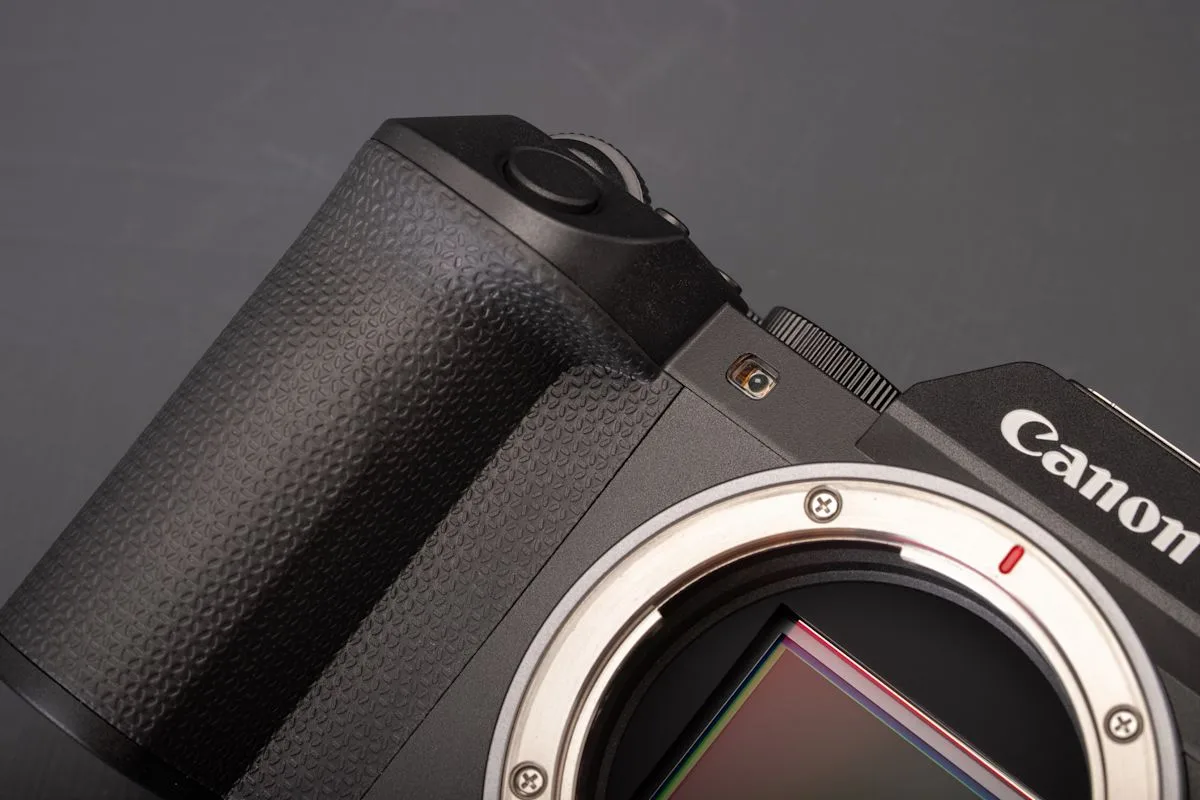
The Canon EOS R8 II is the latest camera to adopt the electronic first curtain shutter (EFCS) design to reduce body size. This technology differs from a full electronic shutter and offers more advantages than disadvantages, though it still retains one limitation that only appears in extreme conditions.
EFCS is often referred to as a mechanical second curtain shutter. Its operation involves starting the exposure electronically by activating sensor rows progressively, then a mechanical shutter descends to end the exposure. This approach allows for much faster exposure termination compared to relying on the sensor's read speed in a full electronic shutter. As a result, rolling shutter artifacts—such as banding under flickering lights or distortion of moving subjects—can be avoided without the need for an ultra-fast sensor.
The speed of exposure termination also enables EFCS to synchronize flash at speeds equivalent to a full mechanical focal-plane shutter. Furthermore, EFCS excels in one aspect: since no physical shutter opens at the start of the exposure, the primary source of vibration causing shutter shock is eliminated. Some cameras with full mechanical shutters switch to EFCS mode at certain speed ranges for this very reason.
The adoption of EFCS is becoming widespread, especially in models prioritizing portability and cost efficiency. With a simpler mechanism, manufacturers can design more compact bodies without significantly sacrificing performance. Sony, for instance, eliminated the mechanical first curtain shutter in its a7C series to keep size and price competitive compared to its main a7 lineup.
However, there is one drawback to note: bokeh truncation. At very high shutter speeds, the shutter closing period becomes a significant proportion of the total exposure. A physical shutter located in front of the sensor allows light to bleed around the blades as it closes, whereas an electronic curtain lacks such gaps. Consequently, one side of the bokeh pattern can be sharply cut off, resulting in a less smooth out-of-focus area.
Nevertheless, this effect is only visible with a combination of extreme shutter speeds and very large aperture lenses capable of producing significant background blur. In everyday use, including flash synchronization, EFCS performance is equivalent to a full mechanical shutter. Photographers who rarely shoot in extreme conditions will not notice a significant difference.
“EFCS offers a balance between size, cost, and image quality, but users need to understand its limitations at high shutter speeds,” said Richard, a DPReview contributor, in his analysis.
For the Indonesian market, this trend is relevant given the increasing interest in compact mirrorless cameras for vlogging, journalism, and wedding photography. EFCS allows manufacturers to offer more affordable cameras without drastically sacrificing quality. However, professional photographers who frequently work in studios with large aperture lenses need to be aware of the potential for reduced bokeh quality at shutter speeds above 1/2000 second.
Looking ahead, the question is: will manufacturers develop software solutions to correct bokeh truncation, or will they shift to ultra-high read speed sensors that enable full electronic shutters without compromise? Meanwhile, EFCS remains a rational choice for the majority of users seeking a compact and versatile camera.