Second-Generation Battery Induction Cooktop: A Shortcut for Households to Break Free from Natural Gas
Baca dalam 60 detik
- Copper merilis Charlie 2.0, kompor induksi dengan baterai tanam yang bisa dicolok ke stopkontak 120V maupun 240V, menghilangkan kebutuhan instalasi listrik mahal.
- Kemitraan produksi dengan Miele di pabrik Alabama menandai pertama kalinya merek Jerman itu memproduksi peralatan rumah tangga merek lain.
- Langkah ini berpotensi mempercepat transisi energi di dapur, tetapi harga tinggi dan dominasi gas di Indonesia menjadi ujian adopsi.
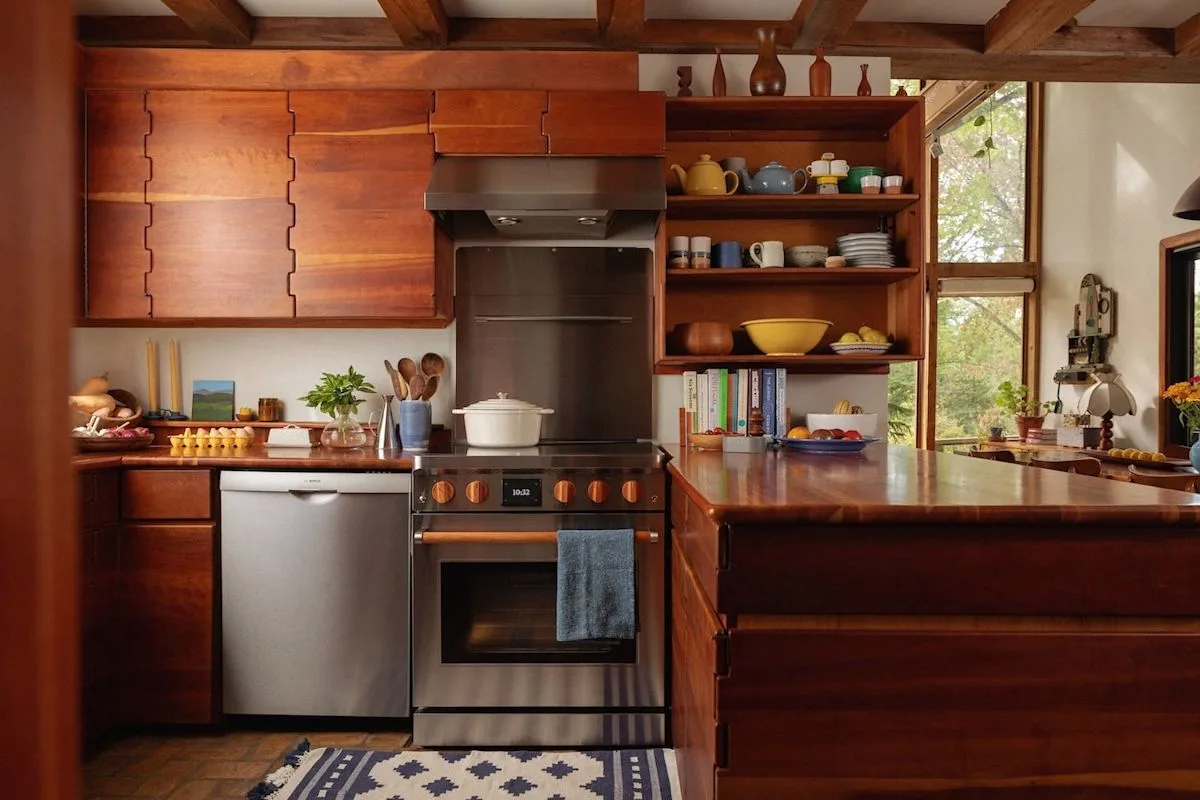
Startup Copper has officially launched Charlie 2.0, a second-generation induction cooktop with an integrated battery that it claims can cut the biggest barrier to switching away from gas stoves: the cost of electrical installation. The launch signals that the race toward emissions-free kitchens is getting more serious, especially in the United States market, which is still dominated by natural gas.
Charlie 2.0 offers a significant power boost. Each of its four burners can draw 3,000 watts, up about 7% from the previous version. Its oven is claimed to reach 350 degrees Fahrenheit in just four minutes, far faster than a conventional gas oven. Most notably, the device can be plugged into either a 120-volt or 240-volt outlet, removing the 120-volt limitation of its predecessor. According to Copper CEO and co-founder Sam Calisch, this flexibility makes the product suitable for more types of homes.
Beyond the technical side, Copper announced a strategic partnership with German home appliance giant Miele. Charlie 2.0 will be manufactured at Miele's first U.S. factory, in Opelika, Alabama. This marks the first time Miele, founded in 1899, has produced appliances for another brand. Copper Vice President of Product Mitchell Heinrich called the collaboration a chance to learn from the best. Meanwhile, Uwe Brunkhorst of Miele stressed that the U.S. is a strategic growth market and that the partnership opens up new technological capabilities.
The push to move away from gas is not without reason. Gas stoves release carbon monoxide, nitrogen oxides, and carcinogens that are harmful to health, especially for children. Induction heats the pan directly through electromagnetism, with no flame, making it faster, safer, and easier to clean. Several well-known chefs such as Samin Nosrat and Christopher Kimball have begun to switch. However, cost remains a high wall: ordinary electric stoves require a 240-volt outlet, which means calling an electrician and possibly upgrading the home's electrical capacity at a cost of thousands of dollars.
This is where the battery becomes key. Copper, along with Impulse Labs and Electra Research, is developing battery-powered induction cooktops that can draw power from a 120-volt outlet and store energy for cooking surges. Although the Charlie 2.0 is more expensive, savings from simpler installation could make it more economical in the long run. The battery is also useful during power outages.
“We keep installing Charlies in homes and apartment buildings across the country. The new Charlie is specifically designed to meet growing demand with more power, performance, and flexibility,” Calisch said.
For Indonesia, this development offers a new perspective. Most households in the country still rely on subsidized LPG, while the power grid in major cities is already adequate. A battery-powered induction cooktop could be a transition option without the need for major electrical renovations. However, the US$6,799 price tag is equivalent to around Rp100 million—far beyond the reach of the average consumer. Fiscal incentives, leasing schemes, or local production are needed to lower costs. Renewable energy regulations and the 2060 net-zero emissions target could also be drivers, provided that clean electricity supply becomes more abundant.
Going forward, the question is no longer whether this technology works, but how quickly its price falls and how ready the supporting ecosystem is. If Copper and its competitors can lower production costs through partnerships such as the one with Miele, kitchens in developing countries also have a chance to leave gas behind. Will Indonesia become the next market, or merely a spectator to the kitchen energy transition?