Badenoch Requires Tory Candidates to Sign Anti-ECHR and Net-Zero Pact, Senior Party Figures React
Baca dalam 60 detik
- Kemi Badenoch mewajibkan seluruh kandidat Partai Konservatif menandatangani pakta dukungan keluar dari ECHR dan pembatalan target emisi nol bersih.
- Kebijakan ini memicu kritik internal, termasuk dari mantan menteri yang menilai langkah tersebut sebagai 'kebijakan buruk' dan 'politik buruk'.
- Langkah tersebut menandai pergeseran tajam dari posisi partai sebelumnya dan berpotensi mengubah lanskap politik Inggris menjelang pemilu berikutnya.
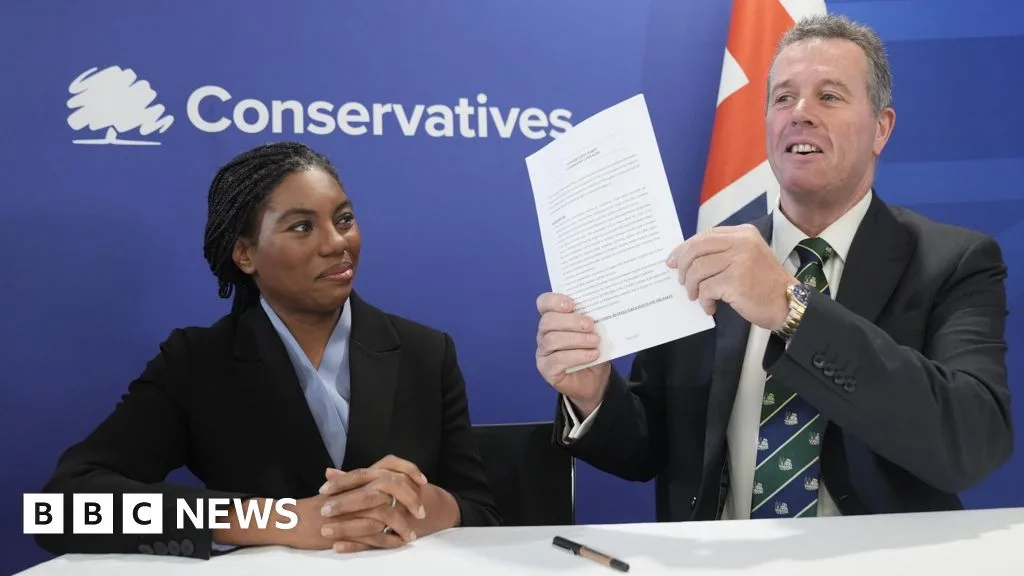
UK Conservative Party leader Kemi Badenoch has taken a controversial step by requiring every parliamentary candidate from her party to sign a statement of commitment to withdraw the UK from the European Convention on Human Rights (ECHR) and scrap the net-zero emissions target. The policy, announced at an event in the East Midlands, immediately triggered fierce debate within the party, with several senior figures describing the move as a departure from the Conservatives' more moderate political tradition.
In a speech to party activists in Newark, Badenoch insisted that both policies were necessary to build a stronger economy and a more resilient country. She also said the next government must take difficult decisions and was not suited to those who hesitate. "I want everyone standing as a Conservative candidate to know what they are fighting for. I don't want to hear complaints from MPs that they didn't know what we were going to do," she said, as quoted by the BBC.
The pact, called the "candidates covenant", also requires support for staying outside the European Union, shrinking the size of the state, and changing the welfare system. Sir Mark Spencer, a former chief whip in the previous Conservative government, became the first signatory. Spencer, who lost his seat in the 2024 election, is now running in Newark to challenge Robert Jenrick, the MP who defected to Reform UK.
The policy has drawn opposition from within the party itself. Lord Barwell, a former Conservative minister and Downing Street Chief of Staff, described the move as bad policy, especially after a summer of increasingly visible climate change impacts. He also called it bad politics given the seats the party is targeting. Meanwhile, Tobias Ellwood, a former defence minister, said he had applied as a candidate but failed what he called a "purity test". He criticised the pact with a historical analogy, comparing it to a situation that would have prevented Winston Churchill from standing.
"Imagine if before the war, you had to sign up to Neville Chamberlain's 'peace for our time' speech, then Churchill would not have been allowed to stand," Ellwood told BBC Radio 5Live.
Opposition parties also reacted sharply. A Labour Party spokesperson said Badenoch was living in an alternative reality and insisted the Conservative Party remained the same as before. Reform UK leader Nigel Farage questioned Badenoch's claim that her party had changed, highlighting the number of former Conservative MPs who failed to be re-elected but are now being fielded as candidates. Meanwhile, Liberal Democrat leader Sir Ed Davey accused the Conservatives of creating a "Farage pact" and of treating voters as fools.
Badenoch's move marks a significant shift from the position of the previous Conservative government. The net-zero target enshrined in law in 2019 under Theresa May, and still in the 2024 manifesto, would now be scrapped if the party returns to power. Likewise, the commitment to leave the ECHR conflicts with Rishi Sunak's stance in rejecting internal pressure to leave the convention. Badenoch argues that the ECHR prevents the UK from securing its borders and deporting foreign criminals, an issue also of concern to the Labour government and other European countries currently negotiating a new approach to the convention.
The policy also raises questions about the party's future direction. By requiring candidates to sign such a specific pact, Badenoch is seeking to consolidate support from the party's right wing and rival the appeal of Reform UK. However, the move risks dividing the party and alienating moderate voters who have long formed the Conservatives' base. Some analysts believe the strategy may be effective in distinguishing the party from Labour, but could be damaging in the long term if not balanced with broader and more inclusive policies. The question now is whether this pact will unite or instead divide the Conservative Party ahead of the next election.