Trump's Final Speech Before the Election: 23 Minutes on a Pool, Only Then the Election
Baca dalam 60 detik
- Donald Trump memulai pidato penutup kampanye dengan membahas renovasi Lincoln Memorial Reflecting Pool selama lebih dari 20 menit sebelum menyinggung pemilu.
- Pernyataan pertama tentang pemilu baru muncul di menit ke-23, menyebutnya sebagai pemilu paruh waktu terpenting dalam hidup.
- Pendekatan ini dinilai mencerminkan strategi yang tidak lazim dan berpotensi mempengaruhi persepsi pemilih menjelang hari pencoblosan.
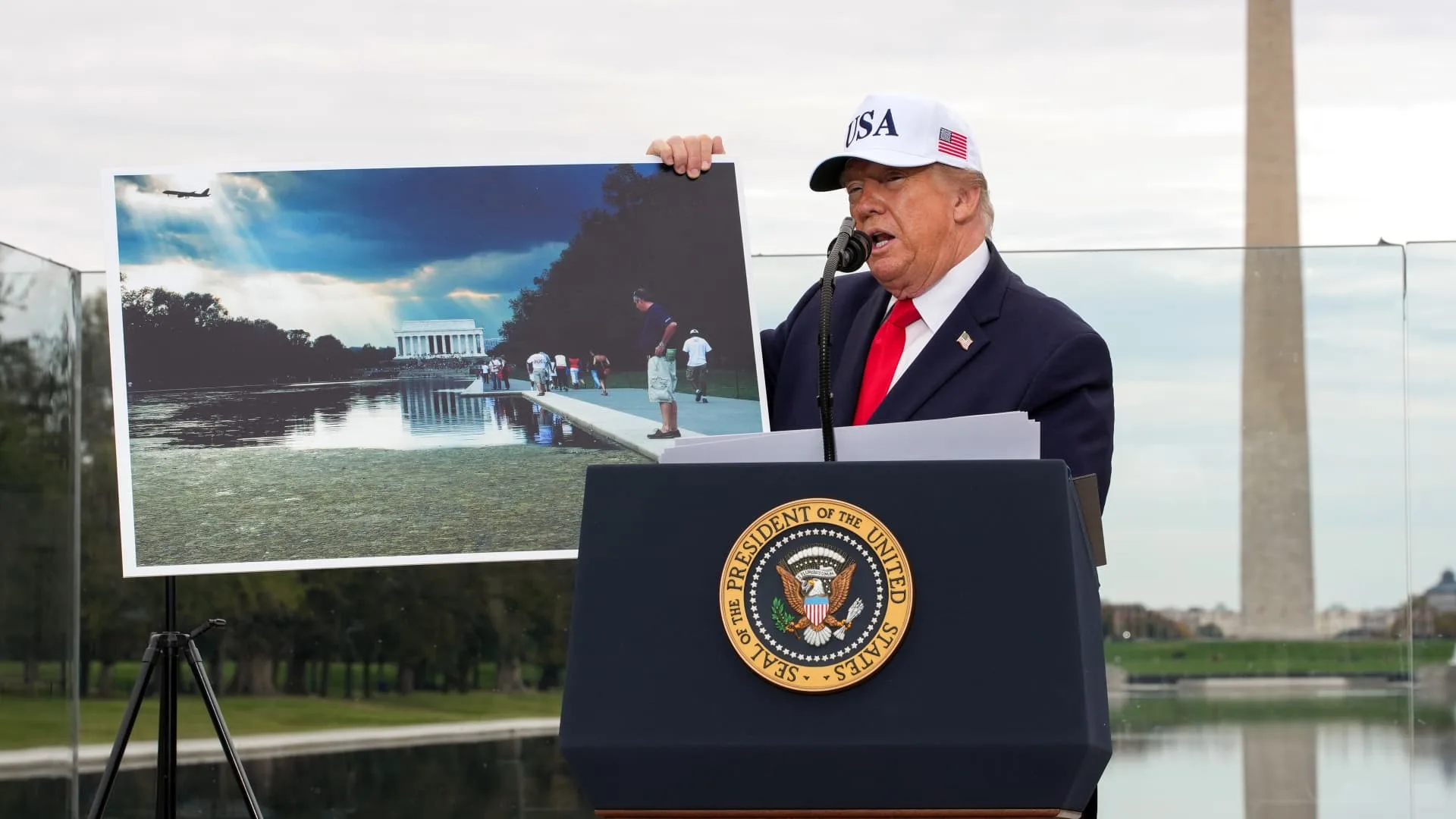
United States President Donald Trump delivered his final public speech before election day on Monday (2/11/2026) local time. But instead of immediately addressing the midterm election that will determine control of Congress, he opened with a lengthy presentation on the renovation of the Lincoln Memorial Reflecting Pool in Washington, D.C. Only at the 23rd minute did he explicitly mention the election.
The speech, which lasted nearly an hour, was originally scheduled to be Trump's closing argument for the Republican Party. He appeared in front of the pool, which had been closed for months due to a troubled renovation project. "Today I am pleased to announce the official reopening of the Lincoln Memorial Reflecting Pool," he said, as quoted by CNBC. He claimed the pool is now more beautiful than before, but also repeated the baseless allegation that vandals were responsible for the damage that slowed repairs.
US Attorney for the District of Columbia Jeanine Pirro stated at a hearing on 31 July that the damage was caused by a contractor's failed installation. Trump was reportedly angered by that admission and continued to insist there was an element of vandalism. This divergence in narrative formed an unusual backdrop for a political speech ahead of an election.
After mentioning the election, Trump immediately attacked his political opponents. He said the Democratic Party had nominated the most extreme and dangerous candidates in American history. He also mentioned the name of the Michigan Senate candidate Abdul El-Sayed and repeated the controversial claim that if Republicans win, "everybody gets $5,000." The statement came without details on the mechanism or the source of funding.
"For some reason, the sitting president never wins the midterm election. But we have tried very hard," Trump said, acknowledging a historical trend that works against his party.
That admission shows Trump is aware of his disadvantaged position. US political history shows the president's party usually loses seats in Congress in midterm elections. Yet instead of focusing the speech on economic issues or policy, he spent a large portion of the time on physical projects in Washington. Analysts see this approach as an effort to divert attention from harder issues while reinforcing the image of a leader who builds.
In terms of substance, the speech offered little explanation of the legislative agenda if Republicans retain Congress. There were no details on the budget, taxes, or foreign policy. Instead, Trump talked more about plans to build monuments and parks. This focus on symbolic infrastructure can be seen as a strategy to unite the support base through national pride, but it also risks being seen as irrelevant by voters facing everyday economic problems.
For Indonesia, a speech like this remains relevant because the United States is a major trade and investment partner. Political uncertainty in Washington can influence the direction of trade policy, including tariffs and investment agreements. If Republicans lose Congress, Trump's position in international negotiations could weaken, while if they win, he may continue protectionist policies that affect Indonesian exports. Market participants in Jakarta need to watch the election results and the composition of Congress to anticipate changes in the business climate.
The most striking thing about this speech is the mismatch between the moment and the content. A campaign closing speech is usually an opportunity to present a grand vision and sum up the differences with opponents. Trump instead chose to celebrate a pool renovation. Is this a deliberate strategy to reach voters tired of political rhetoric, or a sign that he himself is unsure of his party's chances? The answer will be visible in the vote count this Tuesday.