1,000-Year-Old Silver Coin Bearing King Ethelred Found in Shetland, Reveals Viking Trade Network
Baca dalam 60 detik
- Arkeolog menemukan koin perak Anglo-Saxon bergambar Raja Ethelred II di pesisir Nesting, Shetland, saat penggalian penyelamatan struktur prasejarah dari erosi.
- Penemuan ini menjadi temuan koin Anglo-Saxon paling utara di Skotlandia dan memicu diskusi tentang rute perdagangan kuno serta kemungkinan jarahan Viking.
- Koin kini diteliti Treasure Trove Unit Skotlandia untuk status kepemilikan sebelum dipajang di Shetland Museum and Archives.
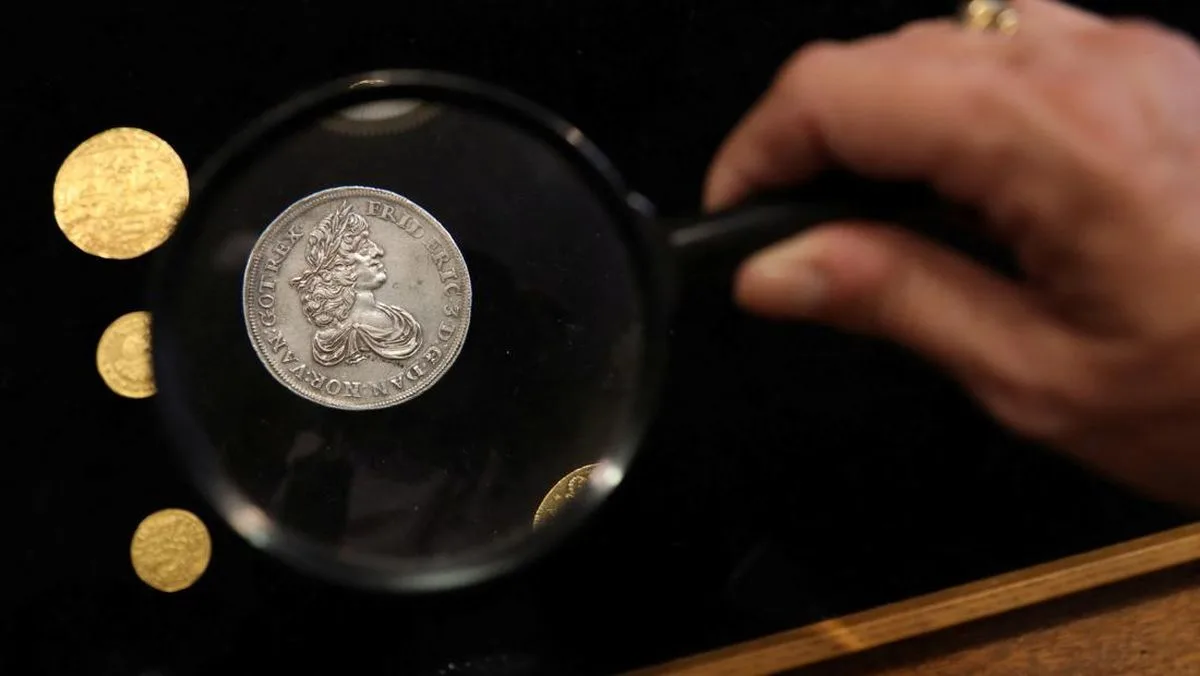
A team of archaeologists in the Shetland Islands, Scotland, has announced the discovery of a rare silver coin from the Anglo-Saxon era that had been buried for more than a millennium. The coin bears the portrait of King Ethelred II, the English ruler known in history as Ethelred the Unready.
The discovery was made in Nesting, a coastal area in eastern Shetland, while researchers were conducting a rescue excavation of a prehistoric structure threatened by coastal erosion. Although the coin's surface has been coated in a greenish-brown patina, several letters and details of the king's face can still be clearly recognized.
Based on archaeological analysis, the coin is estimated to have been minted between 991 and 997 AD, referring to the reign of Ethelred II, which lasted from 978 to 1013. This king is recorded in English chronicles for a series of failures in holding back Viking incursions, including being briefly driven out by Swein Forkbeard of Denmark before reclaiming the throne until his death in 1016.
Elinor Graham, an archaeologist from the University of Aberdeen, stated that the find is extremely rare in the context of local history. According to her, the sharpness of the engraving on the coin immediately made the team realize that the artifact had unique value. "The lettering engraved on this coin is still very sharp. We immediately realized that this object is very rare and has a uniqueness of its own," Graham said, as quoted by Fox News.
More than just an artifact, this coin opens the possibility of new interpretations about the trade routes that connected Shetland with Anglo-Saxon territory in England during the period when the Vikings dominated the North Sea. However, the researchers do not rule out the possibility that the coin was plunder taken by Norse forces, given the characteristics of Viking expansion, which often brought home valuables from conquered territories.
This discovery indicates that this area was once a cosmopolitan settlement well connected through trade networks reaching as far as England.
Graham added that this find is the northernmost Anglo-Saxon coin discovery site ever recorded in Scottish archaeological history. The implication is that Shetland was not merely a remote outpost, but an active node in economic and cultural traffic in the early Middle Ages.
The ancient coin is now under the handling of Scotland's Treasure Trove Unit, the body authorized to determine ownership status over archaeological finds in Scotland. After the legal process is completed, the artifact is planned to be handed over and displayed at the Shetland Museum and Archives.
For Indonesia, a find like this serves as a reminder that underwater and coastal archaeological heritage also faces pressure from erosion and human activity. With a coastline tens of thousands of kilometers long and a rich maritime history from the Srivijaya era to the spice route, Indonesia has the potential for similar finds that demand serious attention in preservation and governance. The question is, are our legal framework and archaeological research budget ready to uncover and protect the traces of civilization still buried on the seabed?