Oupes Guardian 6000 Real-World Test: Two-Thirds of a Home Runs on Solar, but Gaps Remain
Baca dalam 60 detik
- Seorang pemilik rumah di AS menjalankan sekitar 66% kebutuhan listrik rumahnya dengan sistem Oupes Guardian 6000 dan 2.400 watt panel surya sejak Juli.
- Kendala muncul dari debu yang menumpuk di saluran udara dan koneksi nirkabel yang tidak stabil, meski pasokan listrik tetap berjalan.
- Keterbatasan utama terletak pada pendinginan dan pemanas malam hari yang cepat menguras baterai, sehingga sebagian beban harus dialihkan ke jaringan listrik.
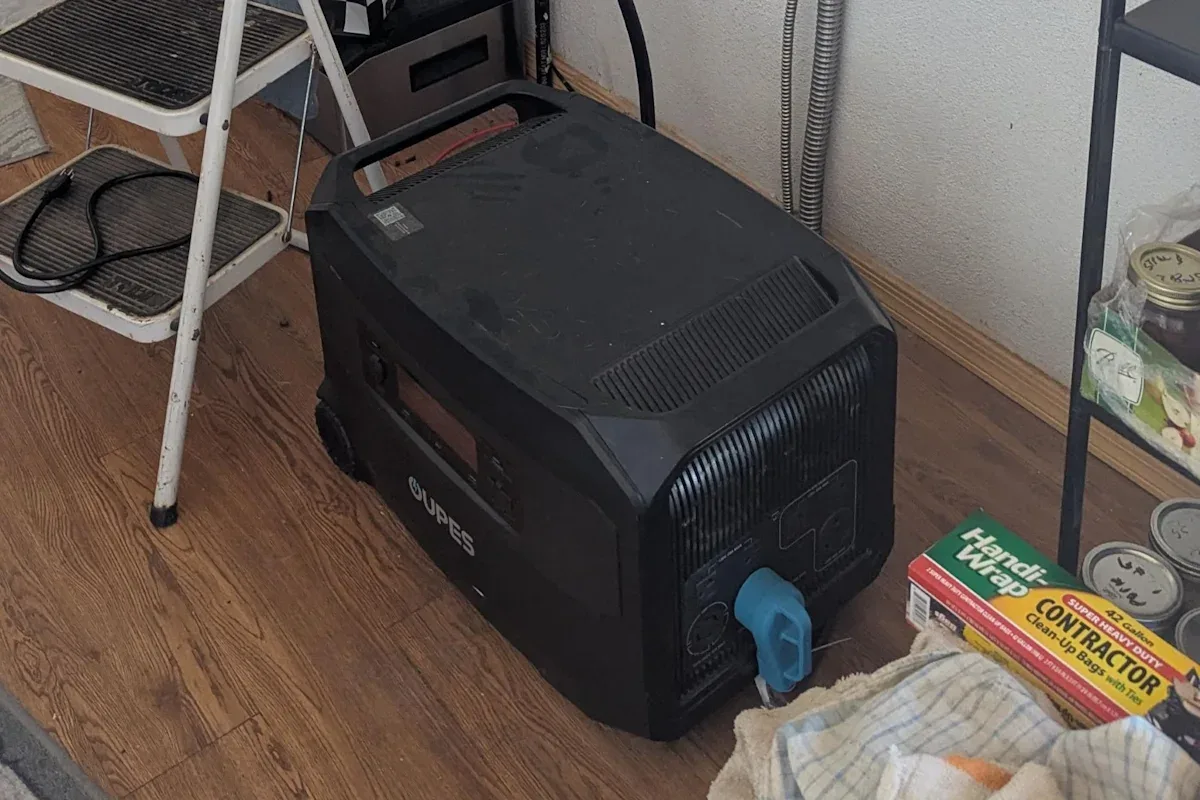
A long-term experiment using the Oupes Guardian 6000 as a daily power source proves that a portable energy storage system can support most of a home—as long as the sun shines. The homeowner who shared his experience on the Reddit forum r/SolarDIY claims the device has been able to supply electricity to about two-thirds of his home continuously since July.
The setup does not simply replace the entire supply from the utility grid. Rather than feeding power to all circuits, he installed an official transfer switch and allocated power to six 20-ampere 120-volt lines plus two 240-volt lines for mini-split heating and cooling units. A 2,400-watt solar panel array is wired in series-parallel to charge the battery. "On a sunny day, the Guardian is fully charged by midday," he wrote, adding that his side of the house can run 24 hours nonstop as long as the weather cooperates.
But when night falls or the weather turns cloudy, the limitations begin to show. The battery lasts only a few hours if the air conditioner or heater stays on, before the device eventually switches to grid power. The homeowner works around this by activating a night mode that shifts heavy loads back to the grid. The strategy reflects a gradual approach: he built the system piece by piece as funds allowed, even adding two solar panels at once rather than buying a large batch outright.
Two technical problems emerged over time. First, the cooling fan that runs whenever there is solar input makes the air ducts prone to dust, raising concerns about dirt buildup inside the unit. Second, the Bluetooth and wireless connections frequently drop; one glitch could only be resolved after the unit was fully shut down and disconnected. Even so, the homeowner stressed that the display glitches never cut off the power flow.
"If you need occasional backup power for a few critical circuits, this is great. Whether it can be relied on as a daily supplier still needs to be proven," the homeowner said in his post.
He also praised the transfer switch's performance, which he considered sturdy and reliable. Meanwhile, a commenter using a different brand of home backup system said EG4 has a capable ecosystem, though he nearly switched to that brand.
The experience highlights a broader trend: households are increasingly looking at battery storage and solar systems as a buffer against outages and rising electricity rates. In Australia, a homeowner reported that a 20 kW solar system made blackouts almost unnoticeable and generated monthly credits of up to USD 545. In Tennessee, an off-grid family claimed to have secured energy independence for decades and barely needs a generator. These examples show that the combination of rooftop solar panels and batteries is maturing as a residential energy solution.
For Indonesian consumers, this phenomenon is relevant given electricity prices that keep adjusting and rooftop solar incentives that the government is starting to push. Even so, local challenges such as high humidity, volcanic dust, and uneven internet connectivity could amplify the risks faced by homeowners in the US—especially for electronic components and wireless sensors. Routine maintenance and choosing devices with an adequate IP rating become deciding factors.
Going forward, the question is no longer whether a portable system like the Guardian 6000 can replace the grid's role, but how quickly manufacturers fix operational weaknesses—especially thermal management and connectivity—so that such devices deserve to be called a daily "workhorse," not just an emergency backup.