Green Line KRL Disrupted Twice in One Day: Person Struck Near Serpong and Signal Failure at Tigaraksa
Baca dalam 60 detik
- Perjalanan Commuter Line Rangkasbitung–Tanah Abang terhambat setelah seorang warga tertabrak kereta di petak Serpong–Sudimara pada Kamis malam.
- Insiden ini melengkapi gangguan pagi hari akibat kerusakan persinyalan di Stasiun Tigaraksa, menciptakan dua titik kendala dalam satu hari operasional.
- KAI Commuter menegaskan layanan telah normal kembali, namun insiden berulang memunculkan pertanyaan soal keselamatan di perlintasan dan keandalan infrastruktur sinyal.
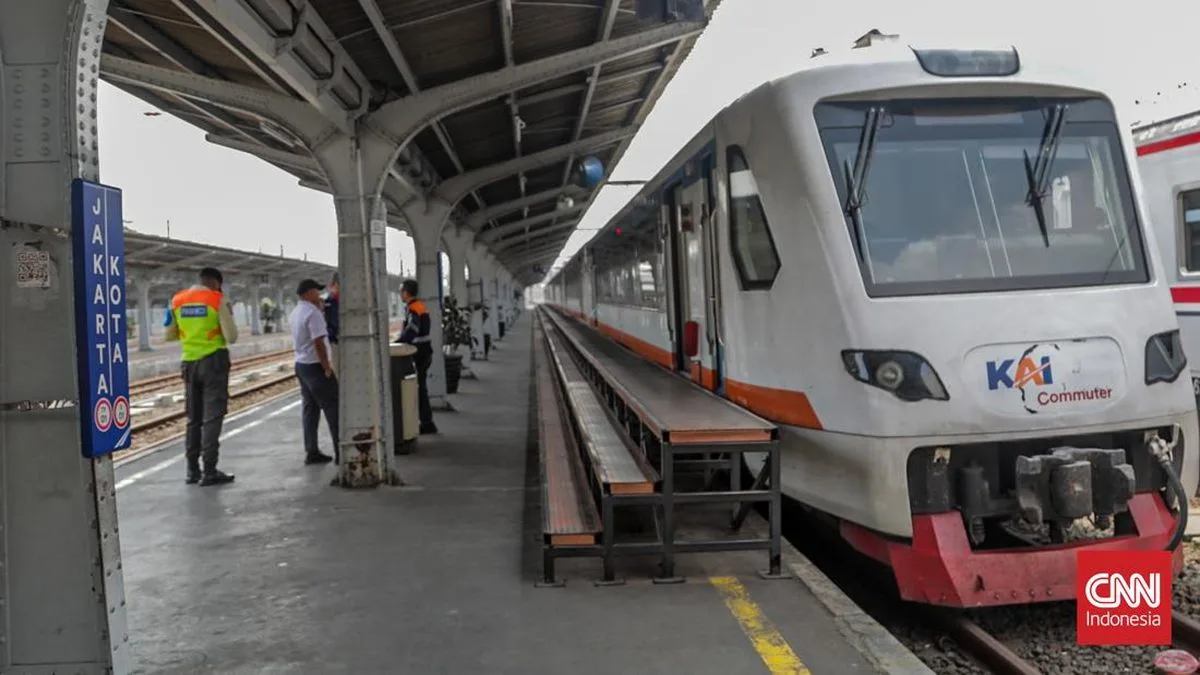
Commuter Line trips on the Rangkasbitung–Tanah Abang route were disrupted again on Thursday (8/10) night after an individual was struck by a train between Serpong and Sudimara stations in South Tangerang. The incident forced KA 1771D, traveling from Rangkasbitung to Tanah Abang, to halt temporarily, causing passenger buildup at several stations along the green line.
KAI Commuter confirmed the incident through its official X account. According to the operator, the train was briefly stopped due to the incident, but staff moved quickly to handle it. "Currently the Commuter Line trip with train number KA 1771D can continue its journey again," KAI Commuter wrote in its post at 19.47 WIB. Nevertheless, the resulting delay caused passenger queues to pile up, especially at Kebayoran Station, South Jakarta, as complained about by several users on social media.
The night incident was not the only disruption to hit the Rangkasbitung line that day. Earlier that morning, the signaling equipment at Tigaraksa Station experienced an operational disruption that stalled Commuter Line trips. KAI Commuter issued an apology through its X account at 06.32 WIB and stated that staff immediately carried out repairs. About 27 minutes later, at 06.59 WIB, the operator reported that the signal disruption had been resolved and service had returned to normal.
The frequency of disruptions on the Rangkasbitung–Tanah Abang line in a single day highlights two interrelated issues: safety at crossing areas and the reliability of signaling infrastructure. The incident of a person struck on the Serpong–Sudimara stretch adds to the long list of accidents involving pedestrians or residents on train tracks. Meanwhile, the signal disruption at Tigaraksa shows that the signaling system remains vulnerable to operational problems, which even if handled quickly, still cause a chain effect in the form of delays and passenger buildup.
For thousands of Commuter Line users, especially those who depend on this line for daily trips from the Rangkasbitung, Tigaraksa, and Serpong areas to Jakarta, disruptions like this are more than just an inconvenience. Delays during morning and evening peak hours can disrupt work schedules, education, and economic activities. Social media has become the main channel for passengers to report conditions on the ground, which the operator then responds to reactively. This pattern shows that two-way communication between KAI Commuter and users is already in place, but has not been fully able to prevent disruptions from occurring.
"We apologize for the delay in the Rangkasbitung Commuter Line trip due to an operational disruption to the signaling equipment at Tigaraksa Station and its handling by staff," said KAI Commuter through its official X account, Thursday (8/10) morning.
From a safety perspective, the incident of a person struck on the train tracks demands more attention than just post-incident handling. Education for communities around crossings, arrangement of barrier fences, and monitoring of vulnerable points are tasks that cannot be solved merely by signal repairs. KAI Commuter and related authorities need to evaluate whether existing preventive measures are adequate to reduce the accident rate on active lines.
Going forward, the big question is whether these two disruptions in one day will trigger systemic improvements, or merely become a routine note that is forgotten once service returns to normal. Commuter Line users deserve schedule certainty and a sense of safety, not just apologies on social media. Without comprehensive improvements to infrastructure and safety aspects, the potential for similar disruptions on the Rangkasbitung–Tanah Abang line will continue to haunt residents' daily commutes.