Sigma Finally Opens Zoom for Nikon Z-Mount: A Signal of a New Trend in Third-Party Lenses
Baca dalam 60 detik
- Sigma resmi merilis lensa zoom 16-300mm F3.5-6.7 DC OS untuk mount Nikon Z, menandai debut pertama lensa zoom non-Nikon di ekosistem APS-C tersebut.
- Lensa ini menawarkan rentang setara 24-450mm dengan stabilisasi hingga 6EV, bersaing langsung dengan Tamron 18-300mm yang lebih dulu hadir.
- Keputusan Sigma membuka peluang masuknya lensa zoom kelas atas lain ke Z-mount, mengubah peta persaingan optik mirrorless yang sebelumnya didominasi pemain tunggal.
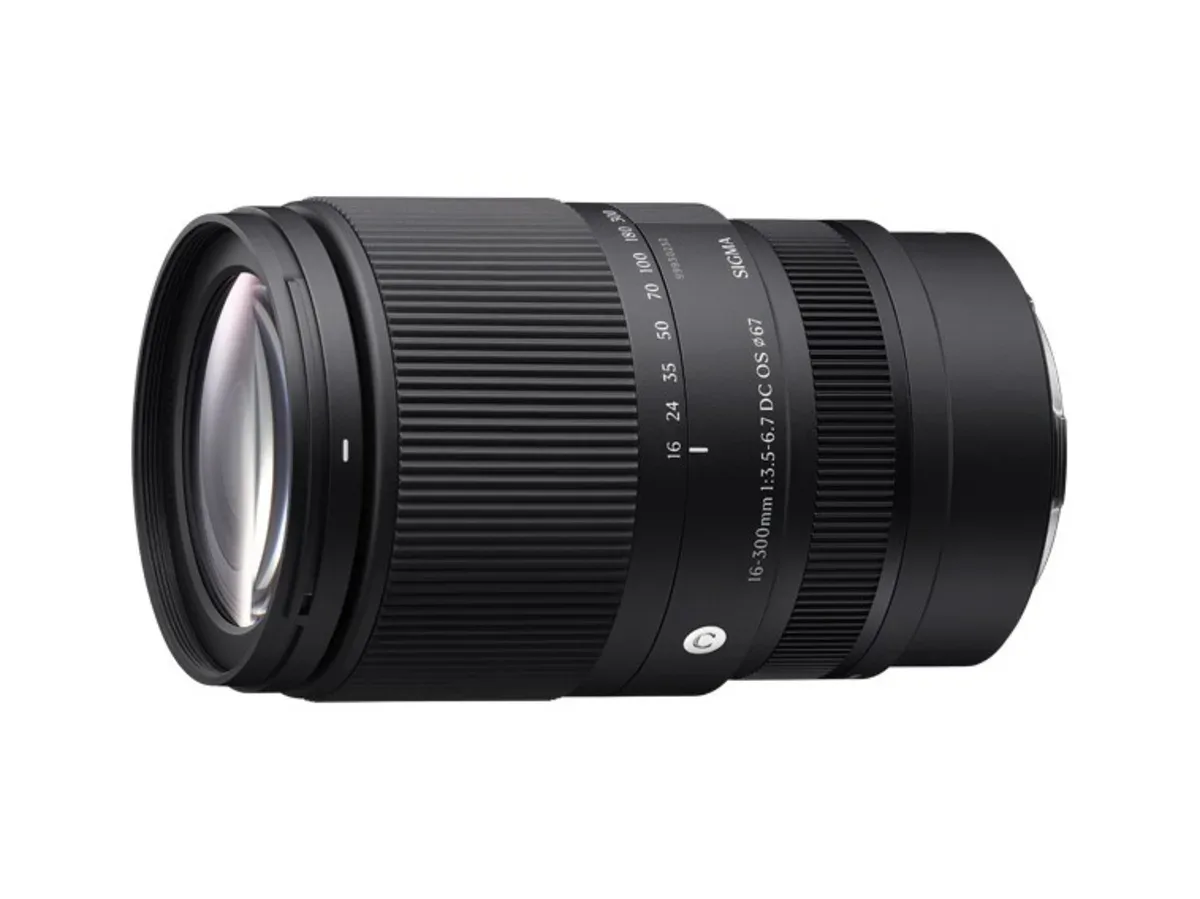
Sigma has officially announced the arrival of its 16-300mm F3.5-6.7 DC OS zoom lens for the Nikon Z system, making it the first third-party zoom lens allowed to run on that mount. The move ends a long wait for Nikon APS-C camera users, who previously had only one similar option from Tamron.
The lens itself is not a new product. Versions for Sony E, Canon RF, Fujifilm X, and L-mount have been on the market for more than a year with the same optical formula: 20 elements in 14 groups, consisting of one FLD element, four SLD elements, one high-refractive-index glass, and four aspherical lenses. Its arrival on Z-mount confirms that Sigma is beginning to receive broader approval from Nikon, though it may not apply to all product lines.
In terms of specifications, the lens can focus at distances from 17 cm (equivalent to 24mm) to 105 cm (equivalent to 450mm), with a maximum magnification of 0.5x at 70mm. A linear motor is used for autofocus, while optical stabilization is claimed to reduce shake by up to 6EV at the wide end and 4.5EV at the tele end. For Z-mount users, this capability is crucial because Nikon has not embedded sensor stabilization in its APS-C camera lineup.
It weighs around 625 grams with a length of 123 mm, and supports 67mm filters. These dimensions position it as a serious competitor to the Tamron 18-300mm F3.5-6.3 Di III-A VC VXD, which is nearly identical in features though it cannot go as wide as the Sigma at the wide end. Tamron itself is noted as the first third-party autofocus zoom lens available for Nikon's APS-C system.
What is more interesting is not merely the presence of this lens, but the implications behind it. Sigma previously offered only a few APS-C prime lenses for Z-mount, and even those did not compete directly with Nikon products. Now, with the entry of one zoom lens, the door to more ambitious options such as the 17-40mm F1.8 DC Art, 50-120mm F2.8 DC Contemporary, or 10-18mm F2.8 DC DN has opened slightly wider. Although there is no guarantee yet, the signal in that direction is growing stronger.
"This is not just the addition of a variant, but an indication that Nikon is beginning to loosen access for its optical partners," said a photography industry observer who declined to be named.
For the Indonesian market, the impact is felt in the activity of hobbyist and professional photography. Nikon Z APS-C camera users in the country—a sizable group, especially in the content creator and event documentation segments—now have an alternative superzoom lens without having to switch to another system. Sigma's competitive selling price is usually an attraction in itself compared to first-party lenses. If this trend continues, it is not impossible that zoom lens prices in the local market will be pushed down as options increase.
Going forward, the question is simple: is this the beginning of full Nikon openness to third-party zoom lenses, or just a strategic exception for one product? The answer will determine how quickly the Z-mount ecosystem catches up with Sony E and Canon RF in terms of optical diversity.