Invasive Rosemary Beetle Sweeps England, a New Threat to Herb Plants
Baca dalam 60 detik
- Kumbang rosemary (Chrysolina americana) pertama kali terlihat di Northumberland, Inggris, dan berpotensi merusak tanaman herbal seperti lavender dan sage.
- Spesies Mediterania ini tidak memiliki predator alami di Inggris dan penyebarannya dipantau oleh Royal Horticultural Society.
- Perubahan iklim mempercepat penyebaran kumbang ini, dan para ahli menyarankan pemetikan manual untuk mengendalikannya.
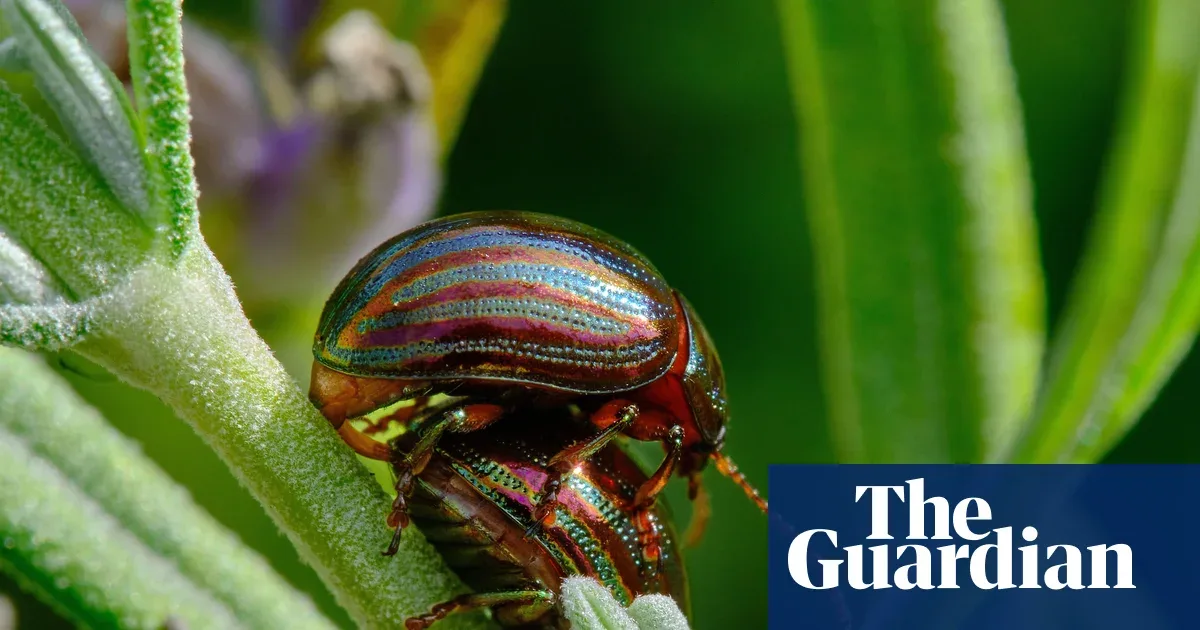
In a garden in Allendale, Northumberland, England, a nature writer found the rosemary beetle (Chrysolina americana) for the first time during a hot autumn. The beetle, with its shimmering purple and green wings, is a Mediterranean native that has no natural predators in England, so its presence raises concerns for plants in the Lamiaceae family, including rosemary, lavender, sage, and thyme.
The rosemary beetle was first found living outdoors in England in 1994 and since then its spread has increased rapidly as the climate has warmed. The Royal Horticultural Society (RHS) is monitoring the insect's spread and asking the public to report sightings. According to the RHS, the beetle can reduce plants to bare stems and cause plant death. The control advice given is to pick them off manually and tolerate their presence "if possible", regarding them as a "colourful addition to the garden".
The writer observed that the beetles appeared in large numbers on a hot autumn day, mating on the tips of branches, and preferred lavender seed heads over the flowers. Touching the stems causes the beetles to drop, a common defence mechanism in beetles, making them hard to spot on the ground. The larvae are dull grey with long dark stripes, and both larvae and adult beetles eat the leaves.
This phenomenon is not just an ordinary horticultural note. Global warming has opened the door for invasive species to settle in areas that were previously too cold. The rosemary beetle, whose wings are short and which prefers walking to flying, may have spread through the plant trade or southern winds that carried them from continental Europe. In England, private gardens are the frontline of the battle against this invasive species, and garden owners face a difficult choice between preserving the beauty of their plants or eradicating an insect that eats their beloved plants.
"The rosemary beetle is a Mediterranean species that has no natural predators in England. It is shiny and beautiful, but it can reduce plants from the Lamiaceae family to bare stems and cause death," the writer said in the nature note.
For Indonesia, the story of the rosemary beetle is an important mirror. This tropical archipelago is also vulnerable to invasions of foreign species that threaten biodiversity and the agricultural sector. For example, brown planthopper and stem borer pests have long been a scourge for rice farmers, while invasive species such as golden apple snails and suckermouth catfish damage aquatic ecosystems. Climate change is also worsening the situation by changing pest migration patterns and allowing species from warmer climates to breed in new areas. The lesson from England is the importance of early monitoring and public participation in reporting the presence of new pests, as the RHS does.
Going forward, whether the rosemary beetle will survive in Northumberland depends on the winter. If the winter is mild, the population can survive and spread further. Scientists estimate that as the climate continues to warm, invasive species like this will appear more often in English gardens. For garden owners, the challenge is not only repelling pests, but also understanding the broader ecological shift. Are we ready to accept the reality that our gardens are now a battleground of climate change?