AfD Makes History in Germany: First Postwar Far-Right Parliamentary President
Baca dalam 60 detik
- Tobias Rausch dari AfD terpilih sebagai presiden parlemen negara bagian Saxony-Anhalt, menandai pertama kalinya politikus kanan jauh memimpin legislatif regional Jerman sejak 1945.
- Dukungan dari partai kiri BSW menembus 'firewall' yang selama ini mengisolasi AfD, membuka jalan bagi partai itu untuk membentuk pemerintahan di tingkat negara bagian.
- Kemenangan ini memperparah tekanan politik terhadap Kanselir Friedrich Merz, sementara AfD terus melonjak dalam survei nasional, memicu kekhawatiran akan normalisasi ekstremisme di jantung demokrasi Eropa.
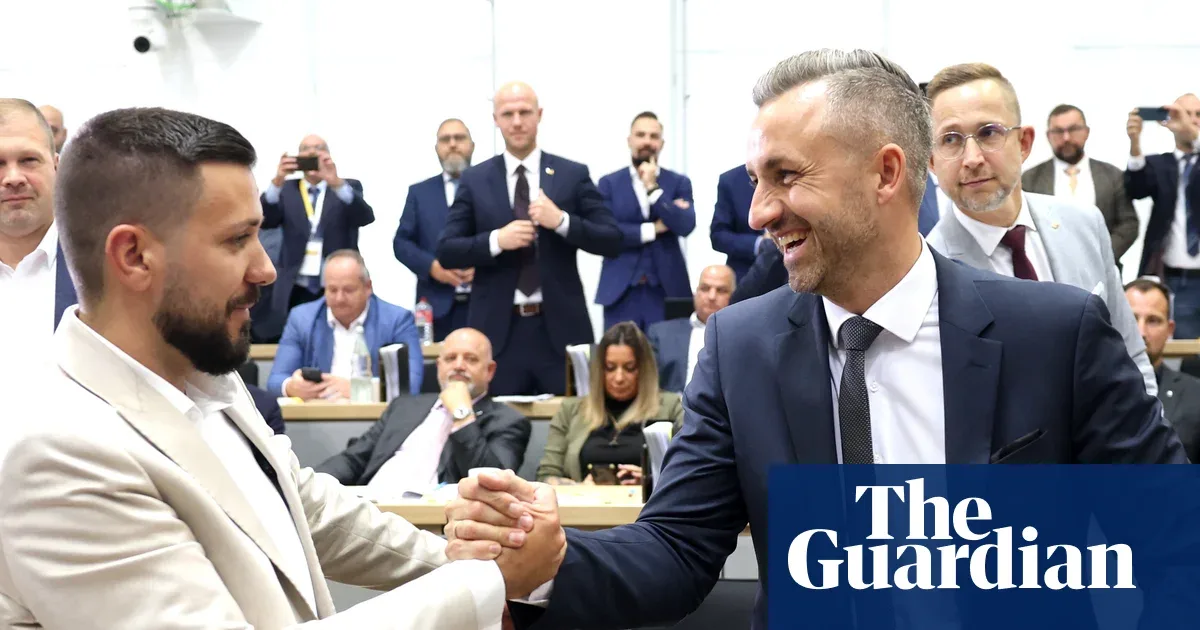
The Alternative for Germany (AfD) marked a dark milestone on Tuesday (6/10) when its politician, Tobias Rausch, was elected president of the state parliament of Saxony-Anhalt. It is the first time a far-right party cadre has occupied the chair of a regional legislature in Germany since the end of World War II. Rausch, a 35-year-old former real estate agent, won the first round of voting with 48 of 82 votes, while 29 members voted against and five abstained.
Rausch's victory is not merely a change in the presiding officer. It marks the collapse of the 'firewall'—a moral agreement among mainstream parties not to cooperate with the AfD. Support came from five politicians of the BSW, a small left-leaning party founded by Sahra Wagenknecht, who judged that isolating the AfD was no longer relevant. "The firewall is not working," BSW deputy leader Christian Leye told German media, adding that the votes of nearly 44% of voters cannot be ignored. "We need a smart way to deal with the AfD, namely by confronting it on the content of its program, not with a firewall."
More worrying, Hans-Thomas Tillschneider—the most extreme figure of the AfD's wing—was also elected deputy speaker of the parliament with 44 votes. Tillschneider, who is touted to become the state's minister of culture and science, is known for his controversial statements: he called Russian President Vladimir Putin "a real man with healthy values" and accused immigrants of "flowing in here in large numbers... wanting to squander our money." As a scholar of Islamic studies, he once described Islam as a "mushroom" growing on the "German oak tree."
The political consequences of this move are enormous. With the firewall broken, the AfD opens the possibility of forming a government in Saxony-Anhalt—something previously considered impossible. Ulrich Siegmund, the AfD's lead candidate in the state, has been given until December to form a cabinet. He claims negotiations are going smoothly, though he has not revealed which parties are willing to coalition. The AfD even admits it is approaching CDU members to defect, an accusation the CDU leadership strongly denies.
"Whoever gives this office to representatives of an extremist and anti-constitutional party will be responsible for the consequences," said Susan Sziborra-Seidlitz, a Green Party lawmaker, to loud applause from the opposition.
The Saxony-Anhalt election is only the peak of a broader political wave. Two other regional elections last September also showed a surge for the AfD, dealing a severe blow to Chancellor Friedrich Merz. When he took office in 2025, Merz promised to cut AfD support in half by fixing the economy and cracking down on immigration. In reality, CDU support has instead declined, while the AfD has soared to 30% in national surveys. Before the vote, Eva von Angern of the Die Linke party even drew a parallel between Rausch's election and the use of the Reichstag speaker's office by Hermann Göring in the 1930s to smooth Adolf Hitler's rise. She also claimed negative effects are already being felt: tourist numbers have fallen and teachers are withdrawing job applications to the region.
For Indonesia, this development is a mirror of how democracy can falter when mainstream parties lose public trust and unwritten norms begin to be violated. A similar phenomenon has appeared in domestic political dynamics, where grand coalitions are often tested by the emergence of populist forces offering an anti-establishment narrative. The question is, will Germany—Europe's largest economy—be able to hold back the normalization of extremism, or will it become a precedent that inspires similar forces in other parts of the world?