Three Computer History Myths That Need Correcting, from 'Bug' to the Bill Gates Quote
Baca dalam 60 detik
- Istilah 'bug' tidak lahir dari ngengat yang terjebak di komputer Mark II pada 1947, melainkan sudah dipakai Thomas Edison sejak 1878.
- Y2K bukan sekadar kepanikan kosong: AS menghabiskan sekitar 100 miliar dolar untuk mencegah gangguan sistem, dan sejumlah reaktor nuklir sempat mati.
- Kutipan '640K cukup untuk siapa pun' yang dikaitkan dengan Bill Gates tidak memiliki sumber primer dan dibantah sendiri oleh Gates pada 1996.
The history of computer technology is often told as a collection of amusing anecdotes that are too good to verify. In fact, several popular stories about the origins of terms and key events in computing have proven inaccurate, even misleading. The following three myths are the ones most often cited in everyday tech discussions.
The first myth concerns the origin of the word "bug". Many believe the term emerged in 1947 when Harvard engineers found a moth inside the Mark II computer. The moth was then taped into a logbook with the note "First actual case of bug being found". The story is funny, but that is precisely why it is a joke. In fact, the word "bug" to describe a technical fault was already in use long before that event. Thomas Edison, according to JSTOR Daily, used the term in 1878. The person who wrote the logbook note was simply making a pun, not coining a new term.
This misunderstanding is reinforced by the figure of Grace Hopper, the legendary computer scientist who worked in the same laboratory. Many versions of the story claim Hopper popularized the term "bug". The Smithsonian Institution states there is no evidence that the logbook belonged to Hopper. Thus, the Mark II moth story remains interesting as a portrait of engineers' work culture, but it is not the starting point of the history of the term "bug".
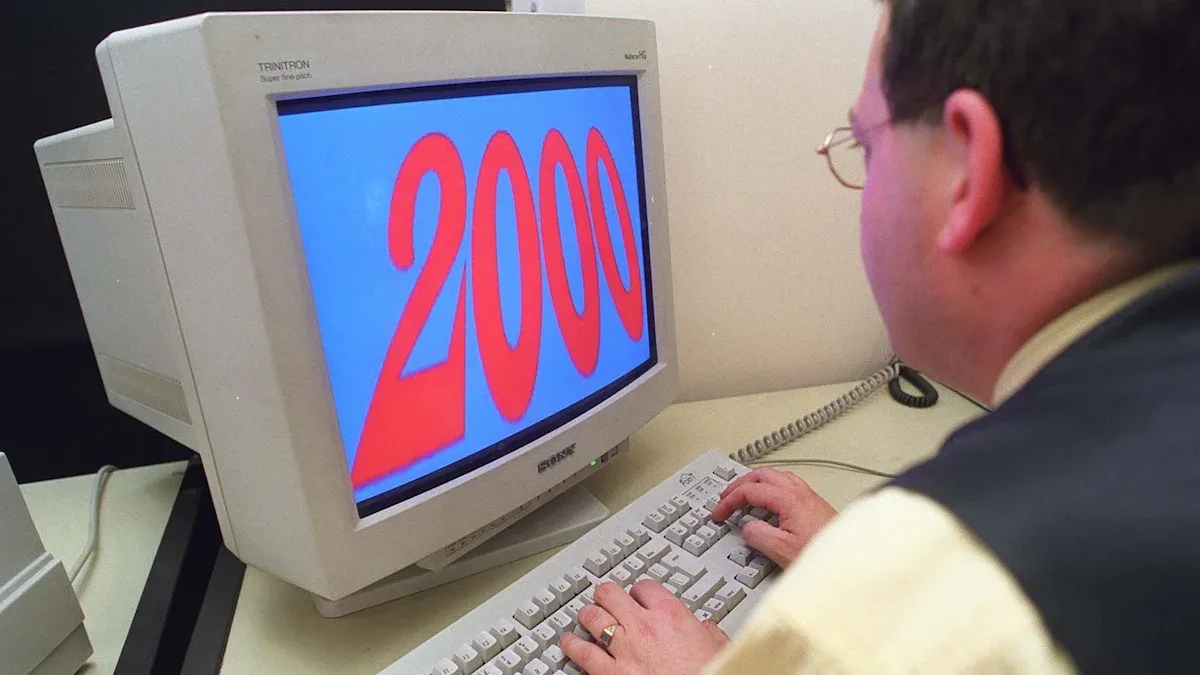
The second myth is the notion that Y2K was merely exaggerated panic. In reality, the problem was real: early-generation computer systems stored the year using only two digits to save storage space. When the year changed from 1999 to 2000, many systems could potentially read the year as 1900. Tests showed serious disruptions could occur. A United States Senate committee report noted the country spent around 100 billion dollars to fix the problem.
Although prevention efforts succeeded, that does not mean there were no problems. Professor Martyn Thomas of Gresham College, in a 2017 retrospective, noted a number of incidents, including the shutdown of 15 nuclear reactors and a video rental bill of 91,250 dollars in New York caused by a film deemed 100 years overdue. Such events were rare because many potential problems had already been resolved in advance. Y2K actually demonstrated humanity's ability to identify a threat and allocate resources to address it.
"I have said some pretty dumb things and wrong things, but not that. No one involved in computers would ever say that a certain amount of memory is enough for all time," Bill Gates wrote in a newspaper column in 1996.
The third myth is the quote attached to Bill Gates: "640K ought to be enough for anybody." The line is said to have been uttered in 1981, when many systems were limited to 640 kilobytes of memory. In fact, 640K is tiny compared with today's standards. Modern computers generally have at least 8GB of RAM, or roughly 13,000 times as much. Wired, through Jon Katz, debunked the quote in 1997, and Fred Shapiro, editor of The Yale Book of Quotations, in 2008 called it apocryphal. Gates himself has denied it since 1996.
For readers in Indonesia, the lesson from these three myths is relevant to how we consume technology information. Narratives that sound neat and entertaining often escape verification, especially on social media. In the context of developing digital human resources, the habit of checking primary sources is becoming an increasingly important skill. Government digital literacy programs and technology communities can use these cases as teaching material so that people do not easily accept circulating claims without evidence.
Going forward, new myths about technology history are almost certain to emerge as the flow of information intensifies. The question is whether the public and the media will be disciplined enough to trace the origins of a claim before spreading it, or instead reinforce a story that is pleasant to hear but wrong.