Not Just About Numbers: Untangling the Difference Between Internet Speed and Bandwidth So You Don't Buy the Wrong Plan
Baca dalam 60 detik
- Penyedia layanan internet kerap menyamakan bandwidth dengan kecepatan, padahal keduanya punya peran berbeda dalam kualitas koneksi.
- Bandwidth adalah kapasitas maksimum, sedangkan kecepatan yang dirasakan pengguna sejatinya adalah throughput yang dipengaruhi perangkat dan kepadatan jaringan.
- Memahami perbedaan ini krusial bagi konsumen Indonesia yang menghadapi beragam paket internet, dari fiber hingga satelit, agar tidak salah investasi.
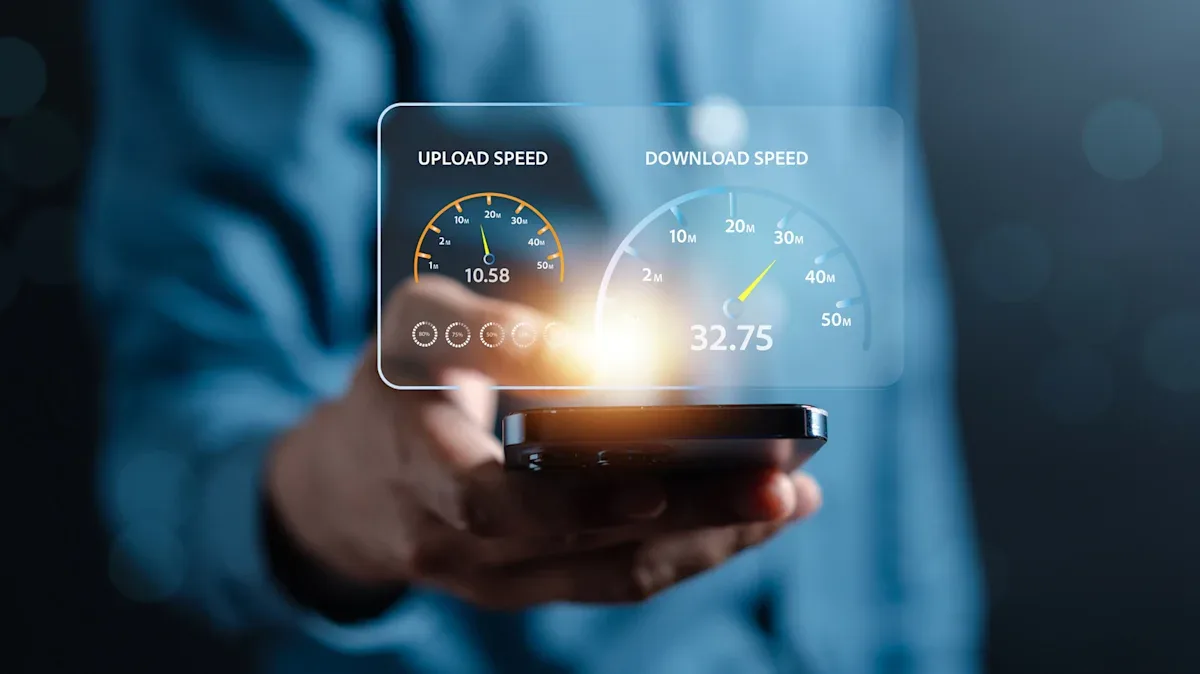
Have you ever felt your internet connection slow down even though the plan you pay for is labeled "100 Mbps"? This phenomenon is not merely a technical glitch, but the fruit of a fundamental misunderstanding between bandwidth and internet speed—two terms often swapped by internet service providers (ISPs) for marketing purposes. Understanding the difference is key so consumers do not get trapped buying a plan that does not fit their needs.
Simply put, bandwidth is the maximum capacity of data your network can carry each second. Meanwhile, internet speed, in everyday practice, refers to the rate of data that actually reaches the device—the technical term is throughput. The relationship between the two is like a highway: bandwidth determines how many lanes are available, while speed is how many cars actually arrive at the exit gate per second. As long as the volume of data does not exceed lane capacity, traffic flows smoothly. Once too many devices access simultaneously, congestion is unavoidable.
A real illustration can be seen when a household has a 100 Mbps plan. Three people watching 4K films on a streaming service (25 Mbps each) consume 75 Mbps, plus a video call at around 4 Mbps, and one device downloading a large game update. The total exceeds capacity, so streaming starts to stutter or lowers resolution, and the video call freezes. This is not a network failure, but a sign that the plan's ceiling has been reached.
Unfortunately, many users get stuck on the assumption that switching to a larger bandwidth plan will automatically solve all complaints. In fact, if the problem is high latency—the travel time of data from the device to the server and back—adding more bandwidth will not help much. Poor latency makes a connection feel slow even when downloads are fast, and this is often experienced by gamers or workers who rely on video conferencing. Factors such as physical distance to the server, connection type, and network congestion are the main causes.
"If you are a gamer or frequently make video calls and experience poor performance, chances are what you are facing is a latency problem, not bandwidth," reads a technical guide summarized from industry explanations.
For consumers in Indonesia, this issue is increasingly relevant. According to a report by the Indonesian Internet Service Providers Association (APJII), internet penetration exceeded 78% in 2023, with the majority of households now depending on fixed connections for work, study, and entertainment. Unfortunately, many users still choose plans based on big numbers in ads without checking latency quality or the capacity of the bundled router. As a result, complaints about "slow" internet often arise even as monthly bills keep rising.
To address the right problem, there are several practical steps. If the connection feels slow when many devices are active, try enabling the Quality of Service (QoS) feature on the router to prioritize certain devices or applications. If you often play games, connect the device with an Ethernet cable and choose the nearest server. If a speed test is consistently far below the plan's bandwidth even without density, chances are your Wi-Fi router is the bottleneck—not the service provider. In this case, switching to the 5GHz or 6GHz band can significantly improve wireless performance.
Going forward, as smart homes and hybrid work become more widespread, this kind of digital literacy understanding will become a basic skill. Smart consumers no longer merely chase the highest Mbps number, but also consider latency, device quality, and usage patterns. The question is, are service providers in Indonesia ready to be more transparent in explaining this difference, or must consumers keep learning on their own so they do not subscribe to the wrong plan?