When Great and Terrible Consoles Both Sank: Lessons from 10 Devices That Were Almost Never Played
Baca dalam 60 detik
- Sepuluh konsol klasik dari era 1980–1990-an tercatat gagal secara komersial, sebagian karena harga selangit, sebagian karena manajemen buruk.
- Kegagalan tidak selalu mencerminkan kualitas: beberapa sistem memiliki pustaka permainan unggulan dan perangkat keras mumpuni, tetapi kalah oleh strategi pemasaran dan waktu peluncuran.
- Bagi pasar Indonesia, kisah ini menjadi cermin bahwa adopsi teknologi hiburan sangat ditentukan oleh daya beli, distribusi, dan ekosistem konten lokal.
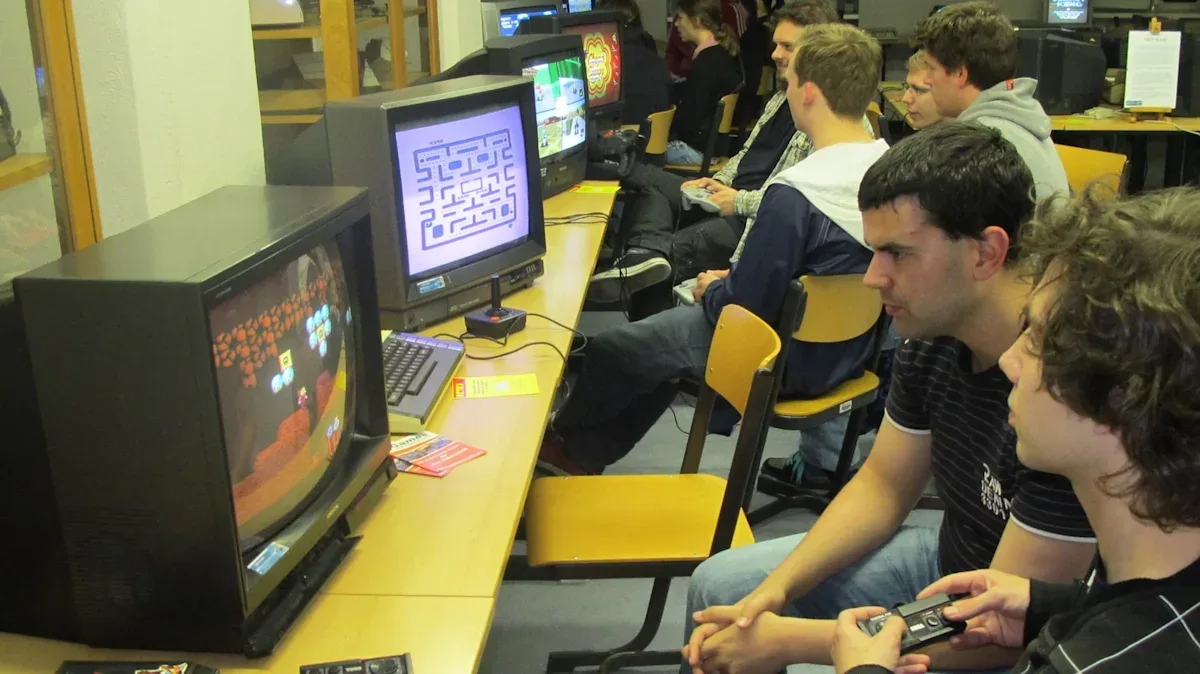
Ten classic video game consoles released between the early 1980s and the mid-1990s were recorded as selling in very small numbers—some not even reaching 50,000 units—even though several of them were technically superior to their competitors. The failure was not always because the product was bad; unreasonable prices, misguided management decisions, and poorly timed launches were the main causes.
The console industry in that decade was indeed booming. Every company with electronics manufacturing capability—from NEC, Panasonic, Philips, SNK, Atari, to Apple—raced to put a device into the living room. However, only a few managed to build a user base large enough to survive. Some of the failed systems actually had interesting architectures and game libraries fondly remembered by the retro community.
One of the most striking examples is the NEC TurboGrafx-16. In Japan, this device was known as the PC Engine and was quite successful. However, when it entered the United States, it arrived late—only 15 days after the Sega Genesis launched—and had to compete with the Nintendo Entertainment System and Super Nintendo. Its claim as a 16-bit system was also disputed because its CPU was still 8-bit. Nevertheless, the TurboGrafx-16 had a strong game collection and was supported by a CD-ROM accessory. Its total global sales were around 10 million units, mostly in Japan.
The Panasonic 3DO is another example. Released in 1993 with a 32-bit processor, this system arrived before the Sega Saturn and Sony PlayStation. However, weak third-party support left its game library sparse. The US$699.99 price—equivalent to more than US$1,600 today—turned consumers away. Only about 2 million units were sold before hardware manufacturers halted production. An attempt to revive the 3DO in 2026 also failed within days due to rights ownership issues.
The Sega Saturn suffered a similar fate. Despite having games such as "Virtua Fighter" and "Panzer Dragoon Saga", the decision to launch suddenly four months early angered retailers. The US$399 price announced in May 1995 was immediately answered by Sony at E3 with a brief announcement: "US$299." The PlayStation went on to sell 102.4 million units, while the Saturn sold only 9.25 million before being discontinued.
"A simple price announcement on stage was enough to change the direction of the console battle."
Nintendo also stumbled. The Virtual Boy, released in 1995, used a 32-bit processor to create 3D effects, but the red monochrome display and the need to bow one's head quickly caused users eye strain and headaches. Only 770,000 units were sold and 22 game titles were released. Nevertheless, Nintendo revived the Virtual Boy library for the Switch in 2026.
The Sega SG-1000, released in 1983, is often forgotten as Sega's first console. This 8-bit system supported only 51 cartridge games and 29 Sega My Card games. Although at its initial appearance Sega released 21 titles in the first six months—surpassing Nintendo, which had only nine titles in 1983—the SG-1000 was ultimately drowned out by the popularity of the Famicom. Its sales were around 2 million units.
The Philips CD-i, developed together with Sony and released in 1991 at US$700, became an example of an expensive system with difficult-to-use controls. Of more than 200 game titles, several—especially the three "Zelda" games and "Hotel Mario"—are remembered as among the worst in history. The SNK Neo Geo AES, released in 1990 at US$649.99 with games priced at US$200, offered an outstanding library such as "Fatal Fury" and "Metal Slug", but sold only around 410,000 units because of its exorbitant price.
The Atari Jaguar (1993) was claimed to be the first 64-bit system, but did not include a CD-ROM from the start. Only 63 games were released, and its sales were around 125,000 units. The Pioneer LaserActive (1993) was a hybrid LaserDisc player and console that required additional expansion devices; the total price for full functionality reached US$2,170 (equivalent to US$5,030 in 2026), and only 10,000 units were sold. The Apple Bandai Pippin (1996) sold for US$600, had only 22 official games in North America, and sold 42,000 units.
For the Indonesian market, these stories are relevant not merely as nostalgia. These consoles almost never entered Indonesia officially in their time, and when they did, their prices were far beyond the reach of ordinary consumers. This phenomenon shows that the adoption of entertainment technology in developing countries depends heavily on purchasing power, distribution networks, and the availability of local content. The same lesson is still visible today, for example in the penetration of the latest-generation consoles constrained by price and taxes.
Going forward, the question is no longer about technical specifications alone. As high-end consoles again compete with cloud gaming services and mobile devices, price, game ecosystem, and clarity of marketing strategy will remain decisive. Will a company repeat the mistakes of the 3DO and LaserActive, or will it learn from the long list of consoles that failed because they were too expensive and too confident?