Eyes Without a Face: The French Horror Classic That Inspired Michael Myers' Mask
Baca dalam 60 detik
- Film horor Prancis tahun 1960, Eyes Without a Face, disebut John Carpenter sebagai salah satu pengaruh untuk topeng ikonik Michael Myers di Halloween (1978).
- Kisahnya tentang seorang ahli bedah plastik yang tega membunuh wanita muda demi memulihkan wajah putrinya yang rusak, disajikan dengan atmosfer puitis dan mencekam.
- Meski telah berusia 65 tahun, citra topeng putih tanpa ekspresi dan tatapan mata yang memohon masih menjadi salah satu ikon paling tak terlupakan dalam sejarah horor.
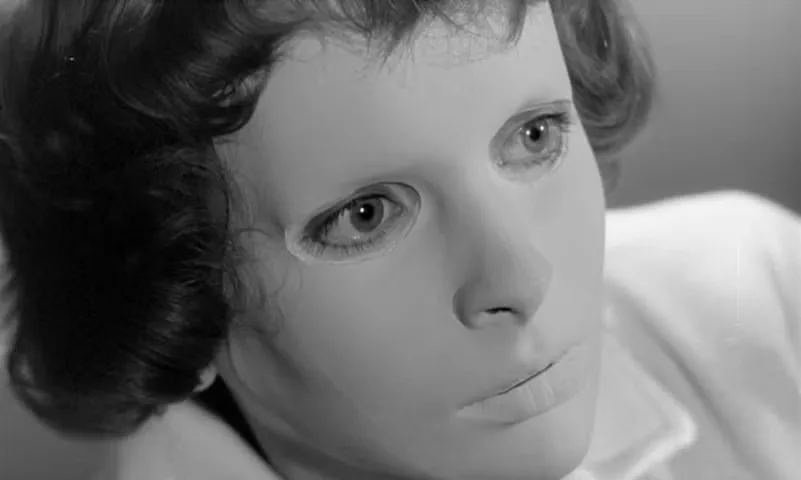
John Carpenter once joked that Michael Myers' mask in Halloween (1978) was made on the cheap due to budget constraints. Yet in a 2003 DVD bonus interview, he admitted he may have been inspired by the French film Eyes Without a Face (1960). The mask in that film is also white and featureless, and if anything, far more terrifying.
The film tells the story of Christiane (Édith Scob), a young woman whose face is severely disfigured in a car accident. The mask covering her face replicates her delicate beauty, but its lack of expression and unshakeable smoothness make it both frightening and pitiful. Christiane's eyes gaze from behind the mask as if imprisoned, full of tragic wonder.
Christiane's father, Dr. Génessier (Pierre Brasseur), is an experimental plastic surgeon. He is seen lecturing a Parisian audience on revolutionary heterograft techniques, promising a future without aging. In reality, he conspires with his mysterious assistant, Louise (Alida Valli), to kidnap young women and steal their faces to restore Christiane's.
After one failed experiment, Génessier and Louise pass off the victim as Christiane. If it succeeds, Christiane must become someone else. She lives in a horrifying limbo: without a face, without a usable name, perhaps without an identity. In some of the most terrifying scenes ever filmed, she drifts through Génessier's mansion like a ghost, with an opaque mask and a white dress that is strangely elegant, as if searching for a reality to inhabit. In the background, the incessant barking of dogs is heard from the basement where the doctor conducts his experiments.
Eyes Without a Face is adapted from a rather gruesome horror novel. Imagine a Gothic adaptation full of drama. But the result is not that, partly to satisfy European censors and partly due to the artistic instincts of director Georges Franju, who considered himself part of the fantastical tradition of early French silent serials and filmmakers like Jean Cocteau.
To adapt the novel, Franju recruited a writer whose work had been adapted into two of the greatest psychological thrillers of the 1950s: Les Diaboliques and Alfred Hitchcock's Vertigo. If you have seen them, you will understand the psychic territory explored by Eyes Without a Face. Beneath the calm surface lies a well of obsession, cruel domination, and a deep, terrifying loss of identity.
"Maybe it was because of that old film Eyes Without a Face," John Carpenter said about the possible influence on Michael Myers' mask.
Yet Eyes Without a Face endures most through its imagery. The film contains a few brief scenes that are truly horrifying, all the more disturbing for their contrast with its calm, poetic atmosphere. But the terrifying emptiness of the mask, and the pleading gaze from behind it, have resonated for the past 65 years as one of the most indelible images in horror.
For Indonesian audiences, the film offers a different perspective on horror that does not rely on jumpscares or excessive effects. Its aesthetic and psychological narrative can serve as a reference for local filmmakers who want to explore terror through silence and unsettling beauty. Moreover, its availability on global streaming platforms makes it easier to access for fans of classic cinema.
Going forward, the legacy of Eyes Without a Face will continue to inspire filmmakers. The question is, will there be an Indonesian horror work capable of leaving a similar mark—an image that haunts across generations?